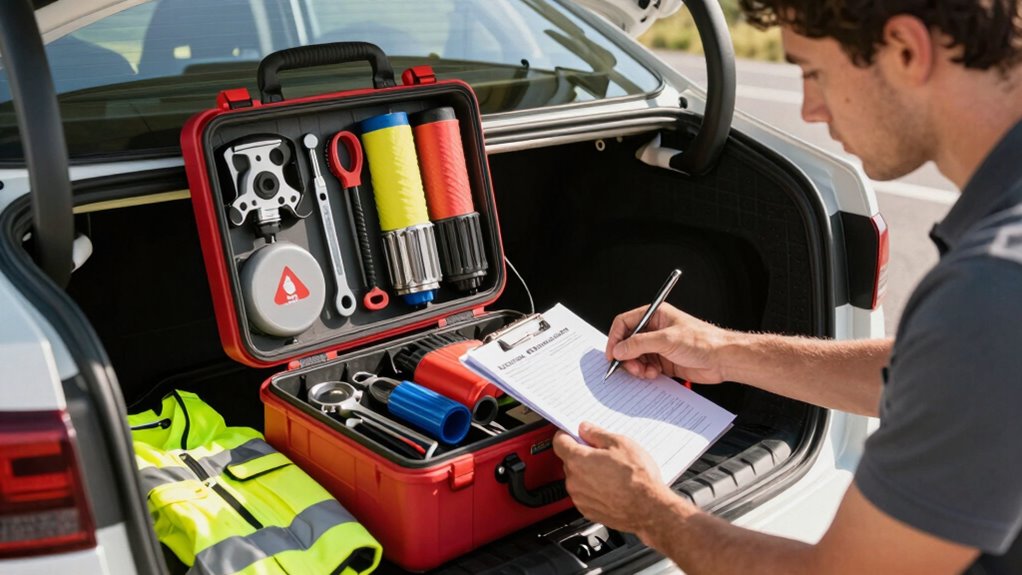
An emergency kit is only effective if you make it a part of your routine. Regularly inspecting and maintaining your kit guarantees you have necessary supplies when unexpected situations arise. When you’re familiar with how to use items like the first-aid kit or jumper cables, it reduces panic and increases your confidence in a crisis. By establishing these habits, you enhance your overall safety and preparedness on the road. There’s more you can do to secure complete readiness.

Get business pricing on garage and car supplies
- Business-only prices and quantity discounts
- Tax-exempt purchasing
- Multiple users, one account, clear invoices
Key Takeaways
- Regularly check and replenish your emergency kit to ensure all supplies are effective and ready for use.
- Establish a habit of inspecting the kit every few months to maintain preparedness for unexpected situations.
- Familiarize yourself with the kit’s contents to boost confidence and reduce panic during emergencies.
- Incorporate learning basic first-aid techniques and tool usage into your routine for enhanced response effectiveness.
- Consider a roadside assistance plan as part of your safety routine for added support during breakdowns.
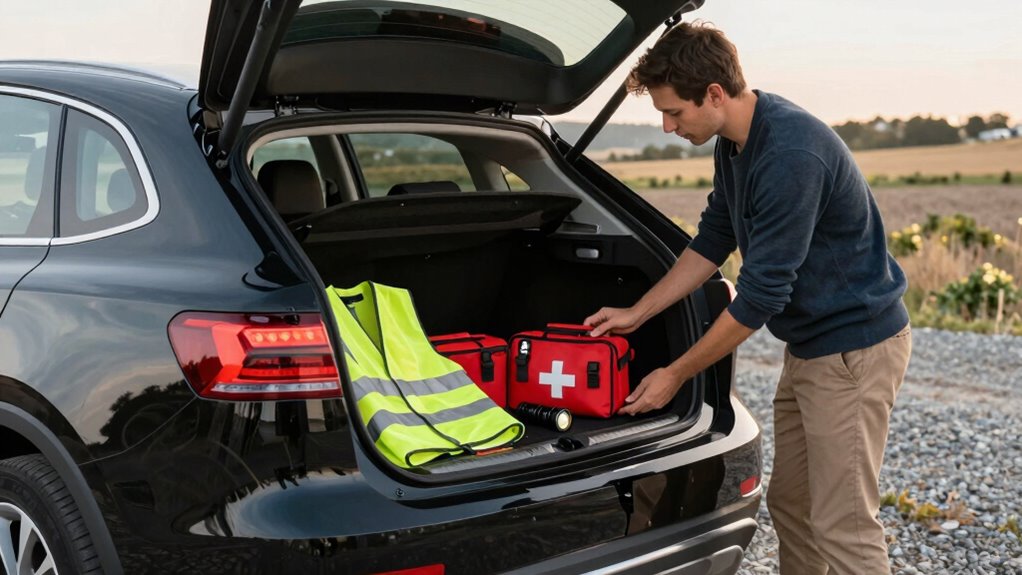
When you hit the road, you never know what might happen, so having an emergency kit in your vehicle is crucial. It’s not just about packing a few items and calling it a day; it’s about establishing a routine that guarantees your kit is ready when you need it. Car safety isn’t just a buzzword; it’s a way to protect yourself and your passengers during unexpected situations. Building a habit around your emergency kit can make all the difference.
Start by gathering necessary supplies. You should include items like a first-aid kit, flashlight, water, non-perishable snacks, and blankets. Don’t overlook tools like a tire gauge, jumper cables, and a basic toolset. These supplies can be lifesavers in a pinch. To enhance your preparation, consider adding a phone charger and a map, just in case your GPS fails. Remember, it’s not just about having these items; it’s about checking them regularly. You wouldn’t leave an empty gas tank; treat your emergency kit the same way. Regular maintenance of your kit ensures its effectiveness and readiness. Additionally, understanding vehicle safety principles can help you extend safety practices beyond your vehicle, making you more prepared for emergencies both on and off the road.
Gather essential supplies for your emergency kit, including a first-aid kit, flashlight, snacks, and tools—regular checks are key!
Once you’ve assembled your kit, make it a habit to inspect it every few months. You might think you can remember what’s inside, but it’s easy to forget items that need replacing or replenishing. This routine can save you headaches later. For instance, batteries in flashlights can die, and food can spoil. Taking a few minutes every quarter to check your kit can guarantee everything is in working order, and it’ll keep you prepared for any scenario. Incorporating regular maintenance into your routine ensures your kit remains effective and ready for use. Additionally, understanding of home security principles can help you extend safety practices beyond your vehicle. Being aware of your surroundings and practicing safety measures can further reduce risks on the road.
While having an emergency kit is crucial, it’s equally important to know how to use the supplies within it. Familiarize yourself with basic first-aid techniques, and practice using tools like a jack or jumper cables. This knowledge can help you feel more confident in emergencies, reducing panic and enabling you to react effectively.
In addition, consider coupling your emergency kit with a roadside assistance plan. Even the best preparations can’t predict everything. Having a reliable service you can call can give you peace of mind. When you know help is just a phone call away, you can focus on staying safe while you wait.
Incorporating these preparation tips into your routine can make all the difference. An emergency kit only works if you’re proactive about maintaining it. By taking these steps, you’ll enhance your car safety and guarantee you’re ready for whatever the road throws your way.
As an affiliate, we earn on qualifying purchases.
Frequently Asked Questions
How Often Should I Check My Emergency Kit?
You should check your emergency kit at least every six months. Incorporate this into your routine maintenance, treating it like a car service. During each check, inspect the contents for expiration dates and replace items as needed. Consider seasonal updates too; for instance, add extra blankets in winter and sunscreen in summer. By making these checks regular, you guarantee your kit’s ready when you need it most. Stay prepared!
What Items Are Essential for a Winter Emergency Kit?
For your winter emergency kit, you’ll want to pack essential winter gear. Include a warm blanket, gloves, and a hat to keep yourself cozy. Don’t forget a flashlight with extra batteries, first aid supplies, and non-perishable snacks for energy. A shovel and ice scraper can help with digging out of snow, while jumper cables are vital for dead batteries. With these winter essentials, you’re better prepared for any unexpected situation on the road.
Can I Use My Kit for Non-Driving Emergencies?
Absolutely, you can use your kit for non-driving scenarios! Emergency preparedness means being ready for various situations. Items like first-aid supplies, flashlights, and non-perishable snacks are useful whether you’re stuck at home or on the go. If you face a power outage or natural disaster, your kit can help. Just make sure to check your supplies regularly and update them as needed, so you’re always ready for anything life throws your way.
How Do I Organize My Emergency Kit Effectively?
To organize your emergency kit effectively, start by separating items into categories like first aid, roadside assistance, and tools. Use clear, labeled containers for easy access. Keep a checklist of essential items, ensuring you include bandages, antiseptic wipes, jumper cables, and flares. Regularly update the kit, replacing expired items. Finally, store it in a designated spot in your vehicle, so you can grab it quickly when you need it.
What Should I Do if My Kit Is Missing Items?
If your kit’s missing supplies, don’t panic! First, check your inventory and identify what’s lacking. It’s easy to overlook essentials, just like how you might forget your keys on a busy morning. Make a list of items to replenish, then shop for them. Regularly review your kit, ensuring it’s stocked for any situation. By staying proactive, you’ll always be prepared, turning those unexpected moments into manageable challenges.
As an affiliate, we earn on qualifying purchases.
Conclusion
Emergency kits can be lifesavers, but they’re only effective if you make them part of your routine. Imagine having everything you need in a crisis, yet forgetting to check your kit; that’s like having a parachute but never knowing how to use it. By incorporating regular checks into your driving habits, you guarantee your kit’s ready when you need it most. Don’t let complacency get in the way—your safety depends on it.
As an affiliate, we earn on qualifying purchases.
As an affiliate, we earn on qualifying purchases.
Fall Picks
fall essentials
As an affiliate, we earn on qualifying purchases.