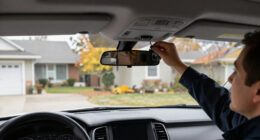
A dash cam for rainy climates should capture useful detail through spray, reflections, and low-light conditions—not just offer a high resolution on its spec sheet. My best overall pick is the VIOFO A329S, whose three-camera setup and 4K front recording balance coverage with detail; the REDTIGER F17 stands out for STARVIS 2 and HDR, while the 70mai A810 Lite adds GPS and parking features. The main tradeoff is between sharper front footage and wider coverage from extra cameras, which can add installation complexity and more footage to manage. Rain also makes lens placement, clean glass, and night glare especially important. Read on for the full breakdown and guidance on matching a camera to your vehicle and driving conditions.

Get garage and car supplies delivered free — and shop member deals
- Fast, free delivery on millions of items
- Access to Prime Big Deal Days deals on October 6–7
- Prime Video, Amazon Music and more included
Complete the kit


Key Takeaways
- The VIOFO A329S leads for balanced coverage: it pairs 4K front recording with 2K cabin and rear cameras, rather than concentrating resolution on the front alone.
- STARVIS 2 and HDR distinguish the REDTIGER F17 and F7NP: these are notable options for drivers who prioritize difficult-light footage, though camera count and configuration still matter.
- Several four-channel models prioritize coverage over simplicity: the IIWEY N5, Neideso N300, and other 360-degree choices can record more of the vehicle, but add cameras and setup demands.
- Included storage varies across the lineup: options list cards from 32GB to 128GB, so buyers should account for how multi-camera recording and frequent rain-day trips affect clip retention.
- Resolution alone does not settle the rainy-weather choice: lens placement, rear-camera installation, HDR or sensor features, and glare management all influence whether footage is useful in wet conditions.
| IIWEY N5 4-Channel Dash Cam for Cars, 360° View, 2K Front & 1080P Rear Inside |  | Best for All-Around Coverage | Channels: 4 | Resolution: 2K front; 1080P rear and interior | View angles: 170° front and rear; 150° side cameras | VIEW ON AMAZON | See Our Full Breakdown |
| REDTIGER F17 4K 3-Channel Dash Cam with STARVIS 2 Sensor, HDR, 64GB Card, and 5.8GHz Wi-Fi |  | Best for Low-Light Three-View Recording | Channels: 3 | Resolution: 4K front; 1080P cabin and rear | Front sensor: STARVIS 2 IMX675 | VIEW ON AMAZON | See Our Full Breakdown |
| Four-Channel 1080p Dash Cam with 128GB Card and 5GHz Wi-Fi |  | Best Value for Four-Sided Recording | Camera channels: 4 | Resolution: Full HD 1080p | Included memory: 128GB card | VIEW ON AMAZON | See Our Full Breakdown |
| VIOFO A329S 3-Channel 4K Front and 2K Cabin and Rear Dash Cam |  | Best Premium for High-Resolution Coverage | Channels: 3 | Front recording: 4K at 30 fps | Cabin and rear recording: 2K | VIEW ON AMAZON | See Our Full Breakdown |
| REDTIGER F7NP 4K Front and Rear Dash Cam with STARVIS 2 Sensor |  | Best for Front-and-Rear Simplicity | Video resolution: 4K front; 1080p rear | Front and rear view angles: 170° front; 140° rear | Screen: 3.16 inches | VIEW ON AMAZON | See Our Full Breakdown |
| Galphi 4K Front Dash Cam with 5GHz Wi-Fi and 32GB Memory Card |  | Best Compact Front-Only Pick | Video resolution: 4K UHD (2160P) | Lens angle: 160 degrees | Aperture: F/1.6 | VIEW ON AMAZON | See Our Full Breakdown |
| 70mai A810 Lite 4K Dash Cam Front and Rear, Wi-Fi 6, GPS, Night Vision, Parking Mode, Voice Control |  | Best for Front-and-Rear Night Recording | Resolution: 4K front, 1080P rear | Wi-Fi: Wi-Fi 6 (5GHz) | Night vision: HDR with F1.55 aperture | VIEW ON AMAZON | See Our Full Breakdown |
| Neideso N300 360° 4-Channel Dash Cam with Front, Rear, and Interior Recording |  | Best for Full-Cabin and Side Coverage | Recording channels: 4 | Maximum video resolution: 2160p (4K) | Field of view: 360 degrees | VIEW ON AMAZON | See Our Full Breakdown |
| 4 Channel 360° Dash Cam Front and Rear, 4K+1080P*3 FHD Car Camera |  | Best for Four-Sided Incident Documentation | Recording channels: 4 | Front resolution: 4K | Other camera resolutions: Three adjustable 1080P cameras | VIEW ON AMAZON | See Our Full Breakdown |
| ROVE R2-4K Dual Dash Cam with Front and Rear Cameras and 128GB Card |  | Best for Low-Light Front-and-Rear Footage | Front video resolution: 2.5K upscaled to 4K (2160p) | Rear video resolution: 1080p Full HD | Image sensor: Sony STARVIS 2 IMX675, 5MP | VIEW ON AMAZON | See Our Full Breakdown |
| 4K+1080P*3 FHD Dash Cam Front and Rear, 360° Car Camera, 5.8GHz WiFi |  | Best for All-Around Exterior Coverage | Channels: 4-channel, 360° coverage | Front resolution: 4K | Side-camera resolution: 1080P | VIEW ON AMAZON | See Our Full Breakdown |
| REDTIGER F7N TOUCH 4K Front and 1080P Rear Dash Cam |  | Best for Simple Front-and-Rear Rainy-Route Recording | Front resolution: 4K UHD | Rear resolution: 1080P FHD | Viewing angles: 170° front; 140° rear | VIEW ON AMAZON | See Our Full Breakdown |
| Terunsoul 3-Channel 4K Dash Cam with 128GB Card |  | Best for High-Detail Front and Rear Recording | Channels: 3 | Front resolution: 4K UHD | Rear resolution: 4K | VIEW ON AMAZON | See Our Full Breakdown |
| 3 Channel 4K Full HD Dash Camera for Cars – Front, Rear, Inside |  | Best for Basic Three-Angle Coverage | Channels: 3: front, rear, and inside | Front resolution: 4K | Rear resolution: 1080P | VIEW ON AMAZON | See Our Full Breakdown |
| 360° Dash Cam Front and Inside 4K+2.5K, 2 Channel Dashcam for Car |  | Best for Rideshare and Temperature Swings | Channels: 2: front and inside | Front resolution: 4K | Interior resolution: 2.5K | VIEW ON AMAZON | See Our Full Breakdown |
| dash cam for rainy climate | Parking mode |
|---|---|
| IIWEY N5 4-Channel Dash Cam fo | — |
| REDTIGER F17 4K 3-Channel Dash | — |
| Four-Channel 1080p Dash Cam wi | Requires optional ACC hardwire kit |
| VIOFO A329S 3-Channel 4K Front | Low-power impact detection; optional hardwire kit required |
| REDTIGER F7NP 4K Front and Rea | — |
| Galphi 4K Front Dash Cam with | 24-hour mode; Type-C hardwire kit required and sold separately |
| 70mai A810 Lite 4K Dash Cam Fr | 24-hour mode with G-sensor and time-lapse |
| Neideso N300 360° 4-Channel Da | Requires a separate hardwire kit |
| 4 Channel 360° Dash Cam Front | 24-hour mode; separate hardwire kit required |
| ROVE R2-4K Dual Dash Cam with | — |
| 4K+1080P*3 FHD Dash Cam Front | Supported; hardwire kit required |
| REDTIGER F7N TOUCH 4K Front an | — |
| Terunsoul 3-Channel 4K Dash Ca | — |
| 3 Channel 4K Full HD Dash Came | Supported; hardwire kit required |
| 360° Dash Cam Front and Inside | — |
More Details on Our Top Picks
IIWEY N5 4-Channel Dash Cam for Cars, 360° View, 2K Front & 1080P Rear Inside
The IIWEY N5 is my pick for drivers who want a view beyond the road ahead: its four cameras cover the front, rear, sides, and cabin, which can help document close passes and incidents around the vehicle in wet, low-visibility traffic. Its 2K front recording is a step up from the four-channel 1080p model in this lineup, and the included 128GB card means it is ready to record without a separate storage purchase. A supercapacitor and stated temperature range from -4°F to 167°F suit cars exposed to temperature swings. Compared with the REDTIGER F17, the N5 gives up built-in GPS and STARVIS 2 low-light sensor details, but adds side-camera coverage. The tradeoff is a wired rear camera and a proprietary cigarette-lighter charger; it cannot be powered by USB or Type-C.
Pros:- Four-camera coverage records front, rear, side, and cabin views.
- 2K front recording offers more detail than the lineup’s all-1080p four-channel option.
- Supercapacitor and a stated -4°F to 167°F operating range suit temperature extremes.
- Includes a 128GB card and supports loop recording.
Cons:- No GPS functionality for location and route data.
- Rear camera requires a cable connection to the front camera.
- Requires the original cigarette-lighter charger and does not support USB or Type-C power.
Best for: Drivers in rainy, crowded urban areas who want front, rear, side, and cabin footage from one system, plus included storage.
Not ideal for: Drivers who need GPS location data, want USB or Type-C power, or prefer a simpler installation without a rear-camera cable.
- Channels:4
- Resolution:2K front; 1080P rear and interior
- View angles:170° front and rear; 150° side cameras
- Screen:3 inches
- Storage:128GB card included; supports up to 256GB
- Connectivity:5GHz Wi-Fi
- Power and temperature:Supercapacitor; -4°F to 167°F
- Parking modes:Time-lapse and impact detection
Our verdict“Choose the IIWEY N5 if broad coverage around the car matters more to you than GPS or a simpler, cable-free installation.”
REDTIGER F17 4K 3-Channel Dash Cam with STARVIS 2 Sensor, HDR, 64GB Card, and 5.8GHz Wi-Fi
The REDTIGER F17 earns its place for drivers who want front, cabin, and rear footage without giving up features that help manage difficult lighting. Its STARVIS 2 front sensor and HDR/WDR processing are relevant on rainy commutes, when dim skies, reflections, and headlight glare can challenge a camera; they do not guarantee clear footage in every downpour. Unlike the IIWEY N5, the F17 includes GPS and uses three cameras rather than four, so it trades side coverage for location data and a specified low-light sensor. It also offers 4K front recording, but only with the cabin camera turned off; three-channel recording is a better fit if capturing the cabin matters more than maximum front resolution. The 64GB card is a smaller starting point than the 128GB cards bundled with several alternatives, and parking monitoring needs an optional hardwire kit.
Pros:- STARVIS 2 front sensor and HDR/WDR are designed to handle varied and low-light conditions.
- Three-channel recording covers the front, cabin, and rear.
- Built-in GPS and dual-band Wi-Fi add route data and wireless access.
- Supercapacitor supports operation without relying on a conventional battery.
Cons:- 4K front recording is available with the inside camera turned off.
- Parking monitoring requires an optional hardwire kit.
- Included 64GB card provides less storage than the 128GB cards supplied with several alternatives.
Best for: Drivers who regularly travel at night or in gloomy weather and want front, cabin, and rear footage with GPS data.
Not ideal for: Drivers who require simultaneous cabin recording and 4K front footage, want side cameras, or need parking monitoring without buying a hardwire kit.
- Channels:3
- Resolution:4K front; 1080P cabin and rear
- Front sensor:STARVIS 2 IMX675
- Field of view:150° front; 160° cabin; 155° rear
- Recording modes:2.5K dual-channel; 4K front with 1080P rear recording mode
- Connectivity and GPS:2.4GHz and 5GHz Wi-Fi; built-in GPS
- Included memory:64GB card
- Parking monitoring:Time-lapse and collision detection with optional hardwire kit
- Power and warranty:Supercapacitor; 18-month warranty
Our verdict“Pick the F17 if low-light-focused front recording, GPS, and three-camera coverage matter more than side views or 4K operation with all cameras active.”
Four-Channel 1080p Dash Cam with 128GB Card and 5GHz Wi-Fi
This four-channel camera is the straightforward coverage pick: it records 1080p from the front, rear, left, and right, giving drivers a record of surrounding traffic without stepping up to the IIWEY N5’s 2K front resolution. That tradeoff may suit buyers who care more about seeing all sides than gaining extra front-camera detail in rain. The supplied 128GB card, incident locking, and loop recording provide a practical starting setup, while night vision and WDR are intended for low-light and changing conditions. Compared with the REDTIGER F17, this model adds side views but lacks listed GPS and the F17’s STARVIS 2 sensor. Its add-on costs matter: parking mode needs a separate hardwire kit, and GPS tracking needs a separate logger. I would shortlist it for coverage-first buyers who can accept those limitations.
Pros:- Four cameras cover front, rear, left, and right views.
- Includes a 128GB memory card.
- Night vision and WDR support recording in low light and varied lighting.
- Loop recording and incident locking help retain important clips.
Cons:- All four cameras record at 1080p, below the front resolution offered by the IIWEY N5 and REDTIGER F17.
- Parking mode requires a separately sold ACC hardwire kit.
- GPS tracking requires a separately sold logger.
Best for: Budget-conscious drivers who want four-direction coverage and included storage, and do not need GPS or a higher-resolution front camera.
Not ideal for: Drivers who prioritize detailed front footage in heavy rain, need built-in GPS, or expect parking monitoring to work without extra wiring.
- Camera channels:4
- Resolution:Full HD 1080p
- Included memory:128GB card
- Wi-Fi:5GHz
- Night vision:8 infrared lights
- Recording features:Loop recording, incident lock, and time-lapse
- Parking mode:Requires optional ACC hardwire kit
- GPS:Requires optional GPS logger
- App and support:iOS and Android; 24-month support period
Our verdict“Choose this model for four-sided recording and included storage if you can do without built-in GPS and higher-resolution front footage.”
VIOFO A329S 3-Channel 4K Front and 2K Cabin and Rear Dash Cam
The VIOFO A329S is the high-resolution choice for drivers who want more than a sharp front view: it records 4K up front and 2K in the cabin and rear, with STARVIS 2 sensors and HDR aimed at retaining detail across varied lighting. That combination gives it a stronger resolution brief than the REDTIGER F17, whose cabin and rear cameras record at 1080P, while also covering three views rather than the IIWEY N5’s four. For rainy routes, its included anti-glare CPL filter may help reduce reflections, though it is not a substitute for clear lenses or careful placement. Storage flexibility is a draw for long recordings, with support for a large external SSD. The catch is setup: no card, SSD, or hardwire kit is included, and parking mode depends on the optional kit.
Pros:- Records 4K front and 2K cabin and rear footage.
- STARVIS 2 sensors and HDR support detail capture in varied lighting.
- Supports external SSD storage up to 4TB or microSD cards up to 512GB.
- Includes GPS, voice control, and an anti-glare CPL filter.
Cons:- Neither a microSD card nor an SSD is included.
- Parking mode requires an optional hardwire kit.
- Three channels do not provide the side coverage offered by the IIWEY N5 and four-channel models.
Best for: Drivers seeking high-resolution front, cabin, and rear footage, flexible high-capacity storage, and built-in GPS systems.
Not ideal for: Drivers who want a ready-to-record bundle, four-sided coverage, or parking mode without buying an additional hardwire kit.
- Channels:3
- Front recording:4K at 30 fps
- Cabin and rear recording:2K
- Image sensors:STARVIS 2; front IMX678, cabin and rear IMX675
- Cabin lens angle:210°
- Connectivity:Wi-Fi 6 and Type-C
- Storage support:External SSD up to 4TB or microSD up to 512GB
- Parking mode:Low-power impact detection; optional hardwire kit required
- GPS and included accessory:GPS, BeiDou, Galileo, and GLONASS; anti-glare CPL filter
Our verdict“Choose the A329S if high-resolution three-view recording and flexible storage outweigh the extra purchases needed before installation.”
REDTIGER F7NP 4K Front and Rear Dash Cam with STARVIS 2 Sensor
The REDTIGER F7NP keeps the setup focused on the views most drivers ask for: 4K front and 1080p rear recording, with STARVIS 2, WDR, and HDR listed to support capture in varied lighting. For rain-focused buyers, those image-processing features are relevant when roads are dark and headlights or wet surfaces create contrast challenges, though the listed specifications do not promise rain-proof image clarity. Unlike the REDTIGER F17, the F7NP is a two-camera system rather than a three-channel cabin-and-rear setup, and it includes a 128GB card rather than the F17’s 64GB. Built-in GPS and Wi-Fi make clip review and route data easier without adding a separate logger. Parking monitoring still requires an optional hardwire kit, and the listed 1 FPS frame rate may limit smoothness if it applies to the recording mode you intend to use.
Pros:- 4K front and 1080p rear recording cover the primary road views.
- STARVIS 2, WDR, and HDR are designed to support recording in varied lighting.
- Built-in GPS, 5.8GHz Wi-Fi, and app control support route data and clip access.
- Includes a 128GB memory card and supports storage up to 512GB.
Cons:- Parking mode requires a separately purchased hardwire kit.
- Two cameras do not record the cabin or sides, unlike the F17 and four-channel options.
- The stated 1 FPS frame rate may limit smoothness.
Best for: Drivers who want front and rear coverage, built-in GPS, and included storage without adding a cabin camera.
Not ideal for: Drivers who need cabin footage, want four-sided views, or require smooth motion in a mode limited to the listed 1 FPS.
- Video resolution:4K front; 1080p rear
- Front and rear view angles:170° front; 140° rear
- Screen:3.16 inches
- Connectivity and GPS:5.8GHz Wi-Fi; built-in GPS
- Included memory:128GB card
- Maximum storage:512GB
- Aperture:F1.5
- Power component:Supercapacitor
- Mount and warranty:Windshield mount; 18-month warranty
Our verdict“Pick the F7NP if you want a two-camera front-and-rear setup with GPS and included storage, but skip it if cabin coverage or smooth 1 FPS recording is a concern.”
Galphi 4K Front Dash Cam with 5GHz Wi-Fi and 32GB Memory Card
For rainy commutes where I want a small camera focused on the road ahead, the Galphi pairs 4K recording with a 160-degree lens, an F/1.6 aperture, and WDR. Those exposure features may help balance dim, gray conditions and bright headlights, though they cannot remove rain or windshield glare from footage. Its screen-free design keeps the unit compact, while 5GHz Wi-Fi provides app access without a built-in display. Compared with the ROVE R2-4K Dual, it is simpler and front-only; the ROVE adds rear coverage, GPS, and a larger included card. The Galphi’s 32GB card is ready to use but offers less recording capacity, and continuous parking coverage requires a separately purchased Type-C hardwire kit. Choose it for a discreet setup, not all-around vehicle coverage.
Pros:- 4K UHD front recording with a 160-degree lens
- F/1.6 aperture and WDR provide tools for handling low-light and high-contrast scenes
- 5GHz Wi-Fi and app access support phone-based clip viewing
- Compact screen-free design includes a preinstalled memory card
Cons:- Records only the front view, unlike the ROVE R2-4K Dual’s front-and-rear setup
- Included 32GB card offers limited capacity compared with larger-card alternatives
- 24-hour parking mode requires a separately purchased Type-C hardwire kit
Best for: Drivers who want a compact, front-only camera for rainy daily commutes and prefer reviewing clips on a phone rather than a dash-mounted screen.
Not ideal for: Drivers who need rear-camera evidence, GPS route data, or long recording capacity without upgrading the included 32GB card.
- Video resolution:4K UHD (2160P)
- Lens angle:160 degrees
- Aperture:F/1.6
- Wi-Fi:5GHz
- Included memory card:32GB
- Maximum supported memory card:256GB
- Display:Screen-free design
- Parking mode:24-hour mode; Type-C hardwire kit required and sold separately
Our verdict“Choose the Galphi for discreet front-only recording in wet-weather commutes, but pick a dual-camera model if rear coverage matters.”
70mai A810 Lite 4K Dash Cam Front and Rear, Wi-Fi 6, GPS, Night Vision, Parking Mode, Voice Control
The 70mai A810 Lite suits drivers who want evidence from both ends of the car when rain, spray, or poor visibility complicates an incident. It records 4K at the front and 1080P at the rear, while HDR and an F1.55 aperture are aimed at challenging light rather than rain removal itself. Its supercapacitor is a useful alternative to a conventional battery in a camera exposed to temperature swings, and Wi-Fi 6 supports quick transfers. Compared with the Galphi, the 70mai adds rear coverage, GPS, and voice control, but needs a more involved two-camera installation. Parking mode is listed as a feature, yet it requires a separately purchased hardwire kit; the description also gives limited detail about app functions. I’d favor it for drivers who value night-oriented front-and-rear recording over a simpler, front-only setup.
Pros:- Records 4K front and 1080P rear footage
- HDR and F1.55 aperture are specified for improved night-scene handling
- Wi-Fi 6 supports fast video transfers
- GPS, voice control, and a supercapacitor add practical daily-use features
Cons:- 24-hour parking mode requires a hardwire kit that is not included
- Dual-camera installation is more involved than the Galphi’s compact front-only setup
- Available description provides limited detail about app functions
Best for: Commuters and rideshare drivers who want front-and-rear footage, GPS trip data, and a supercapacitor-equipped camera for variable weather and temperatures.
Not ideal for: Drivers seeking a simple plug-in front camera or those unwilling to arrange hardwiring for parking surveillance.
- Resolution:4K front, 1080P rear
- Wi-Fi:Wi-Fi 6 (5GHz)
- Night vision:HDR with F1.55 aperture
- GPS:3-mode GPS: GPS, GLONASS, and BDS
- Parking mode:24-hour mode with G-sensor and time-lapse
- Power:Supercapacitor
- Warranty:18 months
Our verdict“Pick the 70mai if you want front-and-rear recording with GPS and night-focused features and can accommodate hardwiring for parking mode.”
Neideso N300 360° 4-Channel Dash Cam with Front, Rear, and Interior Recording
Rainy weather can make side impacts and cabin events harder to document, and the Neideso N300 is the broadest-coverage choice in this group: its four channels and adjustable 360-degree coverage can record around the vehicle, with selectable modes up to 4K front video. The 128GB included card gives it more starting capacity than the Galphi’s 32GB card, while GPS, 5GHz Wi-Fi, and a 3.18-inch display offer several ways to manage clips. Night vision and a G-sensor add useful recording functions, but neither guarantees readable detail through heavy rain or a wet windshield. Compared with the 70mai A810 Lite, the N300 favors cabin and side coverage over a specifically described 4K-front/1080P-rear pairing. It must use its original cigarette-lighter charger, and parking mode needs a separate hardwire kit.
Pros:- Four-channel adjustable 360-degree coverage can record around the vehicle
- Selectable recording modes reach up to 4K front video
- 128GB card is included, more capacity than the Galphi’s 32GB card
- Built-in GPS, 5GHz Wi-Fi, display, night vision, and voice commands
Cons:- Requires the original cigarette-lighter charger rather than a wireless power setup
- Parking mode requires a separately purchased hardwire kit
- No cloud storage or remote monitoring is specified
Best for: Rideshare drivers, families, and owners who want footage from the front, rear, cabin, and sides rather than only front-and-rear coverage.
Not ideal for: Drivers who want a wireless or low-clutter installation, cloud monitoring, or a straightforward parking-mode setup without buying a hardwire kit.
- Recording channels:4
- Maximum video resolution:2160p (4K)
- Field of view:360 degrees
- Display:3.18 inches
- Connectivity:5GHz Wi-Fi
- Included memory card:128GB
- Maximum supported memory:256GB
- Power:Original cigarette-lighter charger
- Parking mode:Requires a separate hardwire kit
Our verdict“Choose the N300 when documenting cabin and side activity matters as much as rainy-road footage, and accept its wired setup.”
4 Channel 360° Dash Cam Front and Rear, 4K+1080P*3 FHD Car Camera
This four-channel camera is aimed at drivers who want a synchronized record of the road, rear, and both sides—not just a clear forward view through wet-weather traffic. It combines a 4K front camera with three adjustable 1080P lenses and a 3-inch IPS screen, making live framing and playback more direct than on the screen-free Galphi. WDR, an F1.6 aperture, and infrared lights are specified for difficult lighting, but heavy rain can still obscure a lens or reduce detail. The included 64GB card is a middle ground between the Galphi’s 32GB and the Neideso N300’s 128GB. GPS, app control, and a G-sensor add useful incident context. The tradeoffs are a more involved multi-camera installation and parking surveillance that requires a separately purchased hardwire kit.
Pros:- Four synchronized views cover front, rear, left, and right
- 4K front recording plus three adjustable 1080P cameras
- WDR, F1.6 aperture, and infrared lights target difficult lighting
- Includes a 64GB card, GPS, app control, and a 3-inch IPS display
Cons:- Parking mode requires a separately purchased hardwire kit
- Four-camera coverage means more installation and positioning than the Galphi
- Included 64GB card is smaller than the Neideso N300’s 128GB card
Best for: Drivers who want a built-in screen and simultaneous front, rear, left, and right recording to document close-quarters incidents in wet weather.
Not ideal for: Drivers who prefer a discreet one-camera installation, larger included storage, or parking surveillance without additional hardwiring.
- Recording channels:4
- Front resolution:4K
- Other camera resolutions:Three adjustable 1080P cameras
- Display:3-inch IPS
- Included memory card:64GB
- Connectivity:Dual-band 5GHz Wi-Fi
- GPS:Built-in
- Low-light features:WDR, F1.6 aperture, and 8 infrared LED lights
- Parking mode:24-hour mode; separate hardwire kit required
Our verdict“Pick this model for a screen-equipped, four-sided view; choose the Neideso N300 if its larger included card matters more.”
ROVE R2-4K Dual Dash Cam with Front and Rear Cameras and 128GB Card
For drivers who want front-and-rear coverage with a strong emphasis on dim conditions, the ROVE pairs a Sony STARVIS 2 sensor with HDR and wide F1.5 front and F1.8 rear apertures. Those features can support exposure in rainy commutes, tunnels, and at night, although the front image is 2.5K upscaled to 4K, not native 4K. That distinction matters if maximum fine detail is the priority: the 70mai A810 Lite specifies native 4K front recording, while the ROVE’s listed strengths include a 3-inch screen, GPS stamps, and a 128GB card. Its 150-degree front and 140-degree rear views cover more than the Galphi’s front-only design. Parking options include time-lapse, motion, and collision detection, but using them requires a separate hardwire kit.
Pros:- STARVIS 2 sensor, HDR, and wide apertures are suited to low-light recording
- Records both front and rear views, unlike the front-only Galphi
- Built-in GPS adds route, location, and speed stamps
- Includes a 128GB card and supports cards up to 1TB
Cons:- Front resolution is 2.5K upscaled to 4K rather than native 4K
- Parking modes require a separately purchased hardwire kit
- Requires installation and positioning of a rear camera in addition to the front unit
Best for: Drivers who regularly travel in wet, dim conditions and want front-and-rear footage, GPS stamps, and a generous included card.
Not ideal for: Buyers who require native 4K front capture or want parking surveillance without purchasing and installing a hardwire kit.
- Front video resolution:2.5K upscaled to 4K (2160p)
- Rear video resolution:1080p Full HD
- Image sensor:Sony STARVIS 2 IMX675, 5MP
- Aperture:F1.5 front, F1.8 rear
- Viewing angles:150 degrees front, 140 degrees rear
- Wi-Fi:Dual-band 5.8GHz and 2.4GHz
- Included storage:128GB microSD card
- Maximum supported storage:1TB microSD card
- Parking modes:Time-lapse, motion detection, and collision detection; hardwire kit required
Our verdict“Choose the ROVE for low-light-focused front-and-rear coverage and GPS, but select the 70mai if native 4K front resolution is your priority.”
4K+1080P*3 FHD Dash Cam Front and Rear, 360° Car Camera, 5.8GHz WiFi
For rainy commutes where incidents may happen beside the car as well as ahead or behind, this model’s four-channel, 360° coverage is its main advantage. The 4K front lens is paired with three 1080P side lenses, giving it a broader view of surrounding traffic than the REDTIGER F7N TOUCH, which records front and rear only. Its infrared night vision and F1.6 aperture are useful when rain and darkness combine, though the supplied details do not establish how well it resolves distant plates through spray. The 3.18-inch screen and included 64GB card make basic operation and setup more self-contained. The tradeoff is installation: wiring several cameras can be more involved, and parking mode needs a separate hardwire kit. Choose it for coverage breadth, not the simplest rainy-day setup.
Pros:- Four-channel layout records the front and both sides as well as the rear-facing area.
- 4K front recording provides more detail potential than a front camera limited to 1080P.
- Infrared night vision and an F1.6 aperture are suited to dim, wet-weather driving.
- Includes a 64GB memory card and supports 5.8GHz Wi-Fi.
Cons:- Parking mode requires a separately purchased hardwire kit.
- Installing and positioning multiple cameras can take more effort than fitting a dual-channel unit.
- Rear-camera resolution and other rear-camera details are not specified.
Best for: Drivers who regularly travel in dense traffic and want side views alongside front and rear recording.
Not ideal for: Drivers seeking a simple plug-in installation or dependable parked-car monitoring without buying and fitting a hardwire kit.
- Channels:4-channel, 360° coverage
- Front resolution:4K
- Side-camera resolution:1080P
- Screen:3.18 inches
- Night vision:Infrared; F1.6 aperture
- Wi-Fi:Dual-band 5.8GHz
- Included memory card:64GB
- Parking mode:Supported; hardwire kit required
Our verdict“Choose this model if side coverage matters more to you than a quick installation or plug-and-play parking monitoring.”
REDTIGER F7N TOUCH 4K Front and 1080P Rear Dash Cam
The F7N TOUCH is a strong fit for drivers who want front-and-rear evidence without adding cabin or side cameras. Its 4K front and 1080P rear recording, plus STARVIS 2, HDR, and WDR, give it a more clearly specified low-light toolkit than the 4K+1080P*3 model, whose rear-camera details are limited. For wet roads, wide views of 170° front and 140° rear can capture more surrounding traffic, while the touchscreen and voice control make adjustments less fiddly. GPS adds route and location information that can help make a clip more useful after an incident. The included 128GB card also provides more recording room than the 64GB card supplied with the four-channel 360° model. The compromise is coverage: there is no cabin or side-channel recording, and parking monitoring needs a separate hardwire kit.
Pros:- Records 4K UHD in front and 1080P FHD at the rear.
- STARVIS 2, HDR, and WDR provide dedicated tools for challenging light and contrast.
- Includes a 128GB memory card, GPS, touchscreen, and voice control.
- 5.8GHz Wi-Fi supports downloads, and the G-sensor can protect impact footage.
Cons:- Parking monitoring requires a separately purchased hardwire kit.
- Front-and-rear coverage misses cabin and side views offered by four-channel alternatives.
- The rear camera records at 1080P rather than the 4K rear resolution offered by the Terunsoul.
Best for: Commuters who want clearly specified front-and-rear footage, low-light processing, and straightforward on-device controls.
Not ideal for: Rideshare drivers or drivers who need cabin and side views, or parked-car monitoring without hardwire installation.
- Front resolution:4K UHD
- Rear resolution:1080P FHD
- Viewing angles:170° front; 140° rear
- Sensor:STARVIS 2
- Image processing:HDR and WDR
- Wi-Fi:5.8GHz; stated download speed up to 20MB/s
- Included memory card:128GB
- Controls and tracking:Touchscreen, voice control, and built-in GPS
- Parking monitoring:Requires a separate hardwire kit
Our verdict“Pick the F7N TOUCH for feature-rich front-and-rear recording in rain, provided you do not need cabin coverage.”
Terunsoul 3-Channel 4K Dash Cam with 128GB Card
Among these options, the Terunsoul is the clearest choice when rear-video detail matters as much as the view ahead: both cameras record in 4K, while the cabin channel records 1080P. That gives it an advantage over the REDTIGER F7N TOUCH, whose rear camera is 1080P, and adds interior coverage absent from that dual-channel model. Its 170° front and 150° rear views cover broad stretches of road, while built-in GPS can attach location information to trips. For rainy climates, the main limitation is that the supplied features do not specify a particular weather-proofing treatment or claim that rain glare is eliminated; high resolution alone cannot guarantee legible details through water and spray. Wi-Fi 6, a 128GB card, and support for up to 512GB help with access and longer recording. Parking monitoring still requires a hardwire kit.
Pros:- Records 4K UHD from both front and rear cameras, with a separate 1080P cabin channel.
- Includes a 128GB card and supports storage up to 512GB.
- Wi-Fi 6, app control, and built-in GPS support clip access and trip information.
- Infrared cabin lights support interior recording in darkness.
Cons:- Parking monitoring requires a separately purchased hardwire kit.
- Three-channel wiring and positioning are more involved than setting up a front-and-rear-only camera.
- The supplied product details do not specify a rain-specific lens treatment or anti-glare performance.
Best for: Drivers who want 4K front and rear clips, plus cabin recording, for frequent highway or rideshare use.
Not ideal for: Buyers who want a minimal setup, or anyone expecting high resolution alone to solve rain glare and obscured plates.
- Channels:3
- Front resolution:4K UHD
- Rear resolution:4K
- Cabin resolution:1080P
- Viewing angles:170° front; 150° rear; 150° cabin
- Display:3.18-inch full-laminated screen
- Connectivity:Dual-band Wi-Fi 6: 5.8GHz and 2.4GHz
- Storage:128GB card included; supports up to 512GB
- Parking monitoring:Time-lapse and collision detection; hardwire kit required
Our verdict“Choose the Terunsoul when detailed rear evidence and cabin recording outweigh installation simplicity.”
3 Channel 4K Full HD Dash Camera for Cars – Front, Rear, Inside
This three-channel camera suits drivers who want the front, rear, and cabin recorded without paying attention to fine-grained feature distinctions. It pairs 4K front video with 1080P rear and interior recording, making it a broader coverage choice than the REDTIGER F7N TOUCH, which has only front and rear channels. The stated 170° front, 160° rear, and 150° cabin angles give a useful view of surrounding activity, while Wi-Fi and app control make clips easier to manage. For rainy driving, that coverage can help document an incident from more than one direction, but the product details do not list HDR, WDR, or a named image sensor like the REDTIGER. It also includes just 32GB of storage, less than the 128GB cards supplied with the REDTIGER and Terunsoul. Parking mode needs a hardwire kit, adding cost and installation work.
Pros:- Records front, rear, and cabin views at the same time.
- 4K front resolution is paired with 170° front coverage.
- Wi-Fi and app control provide a way to access and manage recordings.
- G-sensor, loop recording, and night vision are listed features.
Cons:- The included 32GB card offers less recording capacity than the 128GB cards supplied with the REDTIGER F7N TOUCH and Terunsoul.
- Parking mode requires a separate hardwire kit.
- The supplied specifications do not identify HDR, WDR, or a specific sensor for challenging rainy or low-light scenes.
Best for: Drivers who want front, rear, and cabin recording with app access, and are comfortable managing a smaller included card.
Not ideal for: Drivers who prioritize named low-light processing, extensive included storage, or parking mode without hardwiring.
- Channels:3: front, rear, and inside
- Front resolution:4K
- Rear resolution:1080P
- Interior resolution:1080P
- Viewing angles:170° front; 160° rear; 150° cabin
- Included memory card:32GB
- Connectivity:Wi-Fi and app control
- Recording features:Loop recording and G-sensor
- Parking mode:Supported; hardwire kit required
Our verdict“Choose this model for three-angle recording and app access if you can accept modest included storage and less-detailed low-light specifications.”
360° Dash Cam Front and Inside 4K+2.5K, 2 Channel Dashcam for Car
For rideshare drivers, the standout pairing here is 4K forward recording and 2.5K cabin video, backed by a 185° cabin angle that can capture more of the interior than the Terunsoul’s 150° cabin view. Its infrared night vision and WDR are useful features for trips that continue after dark or through changing light, while GPS can record trip information. The supercapacitor and stated -22°F to 158°F operating range also make this a more specifically documented choice for temperature extremes than the other products in this batch. That matters for year-round use, though it is not proof of superior performance in rain itself. Unlike the Terunsoul, it has no dedicated rear camera, so wet-road evidence behind the vehicle is a gap. Only 32GB is included, and extended recording calls for a larger card.
Pros:- Records 4K front video and 2.5K interior video.
- The 185° cabin angle and infrared night vision support broad interior coverage after dark.
- WDR and built-in GPS add useful image processing and trip information.
- Supercapacitor power and a stated -22°F to 158°F operating range suit varied seasonal conditions.
Cons:- There is no dedicated rear camera, unlike the REDTIGER F7N TOUCH and Terunsoul.
- Only a 32GB memory card is included, and extended recording calls for additional storage.
- Setup may be complex for drivers seeking a basic front-and-rear dash cam.
Best for: Rideshare and delivery drivers who prioritize cabin evidence, wide interior coverage, and operation across broad temperature swings.
Not ideal for: Drivers who need a dedicated rear-facing camera or want ample included storage without upgrading the memory card.
- Channels:2: front and inside
- Front resolution:4K
- Interior resolution:2.5K
- Lens angles:146° front; 185° cabin
- Night vision:Infrared with WDR
- Connectivity:Wi-Fi and GPS
- Included storage:32GB card
- Maximum supported storage:512GB
- Power and operating temperature:Supercapacitor; -22°F to 158°F
Our verdict“Pick this for rideshare-focused cabin coverage and temperature resilience, but skip it if rear-window recording is a priority.”

How We Picked
I compared the 15 listed models by the features that can shape evidence quality and everyday usability in wet-weather driving: front and rear resolution, camera count, named image-processing features such as HDR and STARVIS 2, included storage, connectivity, and driver-facing functions. I treated these as product specifications, not proof that any camera will capture readable footage through heavy rain; water on glass, road spray, darkness, and reflections can limit every camera.
The ranking logic favors cameras that combine useful front detail with practical coverage and a clearly described feature set. The VIOFO A329S ranks first for its balanced three-channel resolution, while the REDTIGER F17 and 70mai A810 Lite stand out for distinct low-light or usability features. Multi-channel and 360-degree models suit buyers who value coverage more than simple installation, and single-front or dual-camera models may be easier to manage. Where a listing gives limited detail about weather-specific performance, I avoid treating that omission as a strength.
Factors to Consider When Choosing Dash Cam For Rainy Climates
Rain changes what matters: a camera can record continuously yet still produce footage with glare, droplets, or obscured plates. I would choose around your vehicle layout and recording priorities first, then check installation, storage, and the limits of any image-enhancement claims.
Prioritize usable footage over resolution labels
A 4K label describes pixel count, not how clearly a camera records through a rain-streaked windshield. Lens quality, exposure handling, motion, and the condition of the glass all affect detail. HDR or a sensor feature such as STARVIS 2 may help in challenging light, but neither can remove water droplets or guarantee readable plates. Avoid assuming that more pixels automatically beat a well-balanced camera in a dark, wet scene. Think about the conditions you face most: city glare, unlit roads, or spray from highway traffic. When possible, check sample footage recorded in similar weather before buying.
Choose camera coverage to match your exposure
A front camera may be enough for a commuter who mainly wants a record of the road ahead, while a rear camera can add context when another vehicle approaches from behind in poor visibility. Cabin cameras and four-channel layouts serve different needs, such as rideshare recording or views around the interior, but they do not automatically improve forward-road image quality. Extra cameras also mean more wiring, more installation points, and more files to review. A common mistake is choosing a 360-degree label without checking which directions the lenses actually record. Match each channel to a real blind spot or use case before paying for added coverage.
Plan for placement, water, and glare
The best sensor cannot compensate for a lens placed behind a heavily tinted area, outside the wiper-cleared zone, or where the mirror blocks its view. Mount the front camera where it sees through glass swept by the wipers while staying within local rules for windshield-mounted devices. Rear-camera installation needs extra care: confirm that the camera can be mounted inside the rear glass and that the cable route suits your vehicle. Keep both sides of the glass clean, since condensation, dirt, and water film can soften footage. Nighttime reflections from wet roads and headlights may also reduce clarity, so test the angle after dark. A careful installation often matters more than adding another camera.
Estimate storage needs before relying on continuous recording
Multi-channel recording can fill a card faster than front-only recording because several video streams are written at once. In this lineup, listed included cards range from 32GB to 128GB, but an included card does not tell you how many hours you will retain; resolution, channel count, and recording settings also matter. Check the camera’s supported card capacity and use a compatible card suited to repeated recording. If you drive long distances in rain, confirm how loop recording handles old files and how quickly an important clip can be protected from overwriting. Do not count on an included card as a long-term archive. Download important footage promptly and keep another copy.
Weigh app access, controls, and setup effort
Wi-Fi can make it easier to retrieve a clip without removing the memory card, while GPS can add route or location context when supported. These conveniences do not improve the recorded image by themselves, and app connection quality can affect how quickly you get a file. Touch controls and voice commands may help when parked, but any adjustment while driving should wait until it is safe. Multi-camera kits often take more time to route and position than a simpler front-and-rear setup. Before choosing, check whether you are comfortable with the installation or will need professional help. A feature-rich system makes less sense if its controls and footage workflow feel burdensome.
Treat parking mode as a separate power decision
Parking mode is useful when a vehicle is left unattended, but it usually calls for a compatible hardwire kit or another approved power arrangement. Check whether the kit is included, whether it supports your vehicle, and how the camera manages battery protection. Rain outside does not make parking mode weatherproof: most of these cameras are mounted inside the vehicle and record through glass. If you park outdoors, consider whether the windshield is likely to be wet or fogged when an incident occurs. Do not assume that a parking-mode feature alone means the camera will run all night or capture a clear event. Confirm power requirements and test the setup before relying on it.
Frequently Asked Questions
Will a 4K dash cam reliably capture license plates in heavy rain?
No resolution can promise readable plates in every downpour. Water on the windshield, spray, motion blur, distance, glare, and darkness can all obscure details before the video reaches the sensor. A 4K front camera gives more recorded detail to work with than a lower-resolution front camera, but it cannot correct a blocked view. Keep the lens within the wiper-cleared area and clean the glass inside and out. If plate capture is your priority, compare real sample footage from wet and night conditions rather than relying only on the resolution label.
Should I choose three or four cameras for a rainy commute?
Choose the number of cameras based on what you need to document, not on weather alone. A front-and-rear setup can cover the two road directions most relevant to many commuters, while a cabin or additional interior-facing camera may suit rideshare drivers or buyers who want broader coverage. More channels increase wiring work, storage use, and the effort needed to find a specific clip. They do not guarantee a clearer forward view through rain. If your main concern is road detail ahead, a well-placed front camera with suitable image features may be a better fit than an elaborate system.
Is HDR or STARVIS 2 more useful than a higher resolution in wet conditions?
They address different parts of the image problem, so there is no universal winner. HDR and sensor technology can be relevant when lighting changes sharply or headlights reflect off wet roads, while resolution affects the amount of recorded detail. Rain droplets, dirty glass, and poor camera placement can limit both. In this lineup, the REDTIGER F17 combines STARVIS 2 and HDR with a 4K front camera, while the VIOFO A329S offers a different balance through its three-channel configuration. Match the feature to your usual conditions and review footage examples if available.
Do I need a larger memory card for a multi-channel dash cam?
Usually, more channels mean more video files and faster card use, especially when recording at high resolutions. The listed included cards in this roundup range from 32GB to 128GB, but those figures alone do not tell you how long footage will remain available. Check the camera’s card compatibility, supported capacity, and loop-recording behavior before buying a replacement or spare. Make a habit of saving important clips elsewhere, since continuous recording may overwrite unprotected files. Buyers who drive for long stretches may want to pay particular attention to storage limits when comparing four-channel options.
Can I use a dash cam’s parking mode without draining my car battery?
Parking mode requires a power plan, and its effect on the vehicle battery depends on the camera setup and power protection. Check whether the camera needs a hardwire kit, whether that kit is included, and whether it has a low-voltage cutoff compatible with your vehicle. Do not assume that a parking-mode feature means the camera will run indefinitely without battery impact. Installation quality and settings also affect operation. If you rarely leave your vehicle parked for long periods, a simpler recording setup may be easier to manage.
Conclusion
For the strongest balance of front detail and multi-direction recording, I recommend the VIOFO A329S as best overall. The best value depends on whether you need broad coverage or a simpler setup: compare the included storage and camera count on the Four-Channel 1080p model with the more focused dual-camera options before choosing. For a best premium-style feature mix, the VIOFO’s 4K front and 2K cabin and rear configuration is the clearest fit in this lineup; buyers focused on challenging light should also weigh the REDTIGER F17’s STARVIS 2 and HDR. The 70mai A810 Lite is my pick for beginners who want GPS, voice control, and parking mode in a defined front-and-rear setup. For drivers who need 360-degree or interior coverage, compare the IIWEY N5, Neideso N300, and other four-channel models, accepting the extra installation and storage demands. Whichever you choose, careful placement and clean glass matter as much as the feature list in rainy weather.
Fall Picks
fall essentials
As an affiliate, we earn on qualifying purchases.