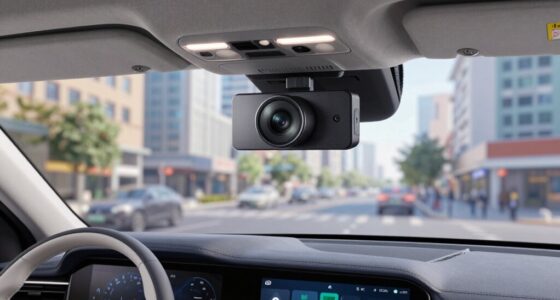
A dash cam with reliable firmware updates can stay compatible with its app and features while fixing bugs or improving performance. My best overall pick is the Vantrue N4S, which pairs three-channel coverage with STARVIS 2 night vision; the 70mai A810 Lite stands out for Wi-Fi 6 connectivity, while the ROVE R2-4K offers a simpler front-and-rear setup. The main tradeoff is that more cameras and connected features can mean more setup and update steps, while simpler systems may cover fewer angles. Update frequency and long-term support can vary, so buyers should check the maker’s current firmware notes and update instructions before purchase. Read on for the full comparison and guidance on choosing a setup that fits your car and update habits.

Get business pricing on garage and car supplies
- Business-only prices and quantity discounts
- Tax-exempt purchasing
- Multiple users, one account, clear invoices
Complete the kit


Key Takeaways
- The Vantrue N4S is my best overall fit for buyers who want front, cabin, and rear coverage alongside STARVIS 2 night vision; its broader coverage also means more cameras and wiring to manage.
- The 70mai A810 Lite is the connectivity-focused option in this lineup, with Wi-Fi 6 and GPS, but buyers should verify firmware availability and update steps for their specific model and region.
- The ROVE R2-4K and REDTIGER F7NP focus on front-and-rear recording, a less involved setup than four-channel or cabin-facing systems.
- Coverage needs shape the choice more than headline resolution: the IIWEY N5 records four directions, while the Vantrue N2X targets drivers who specifically want cabin footage.
- Bundled memory cards and advertised night vision do not prove long-term update support. Check the manufacturer’s support pages, firmware history, and update method before relying on a camera for years.
| 4K+4K+1080P 3 Channel Dash Cam with 128GB Card and Night Vision |  | Best for Maximum Detail Across Three Views | Video resolution: 4K front, 4K rear, 1080P cabin | Viewing angles: 170° front, 150° rear, 150° cabin | Night vision: AProX HD Night Vision with IR lights | VIEW ON AMAZON | See Our Full Breakdown |
| Vantrue N4S 2.7K 3-Channel Dash Cam with STARVIS 2 Night Vision |  | Best Three-Channel Pick for Low-Light Recording | Video resolution: 1944P front, 1440P cabin, 1440P rear at 30 FPS | Field of view: 158° front, 165° cabin, 160° rear | Night recording: STARVIS 2 and HDR | VIEW ON AMAZON | See Our Full Breakdown |
| ROVE R2-4K Dual Dash Cam with Front and Rear Cameras |  | Best for Firmware-Update Transparency | Front resolution: 2160p upscaled from 2.5K QHD | Rear resolution: 1080p Full HD | Front image sensor: Sony STARVIS 2 IMX675, 5MP | VIEW ON AMAZON | See Our Full Breakdown |
| REDTIGER F7N TOUCH 4K Front and 1080P Rear Dash Cam |  | Best for On-Device Controls | Front recording resolution: 4K UHD | Rear recording resolution: 1080P FHD | Viewing angles: 170° front, 140° rear | VIEW ON AMAZON | See Our Full Breakdown |
| IIWEY N5 4-Channel Dash Cam for Cars, 360° View, 2K Front & 1080P Rear Inside |  | Best for Broad 360-Degree Coverage | Camera resolution: 2K front; 1080P rear and interior | View angles: 170° front and rear; 150° side cameras | Display: 3-inch IPS screen | VIEW ON AMAZON | See Our Full Breakdown |
| Vantrue N2X 2.7K Dual Dash Cam with Front and Interior Recording |  | Best for Rideshare Drivers | Front video: 1944p at 30 fps; 1440p at 60 fps supported | Interior video: 1080p at 30 fps | Field of view: 158° front; 165° interior | VIEW ON AMAZON | See Our Full Breakdown |
| 70mai A810 Lite 4K Dash Cam Front and Rear, Wi-Fi 6, GPS, Night Vision, Parking Mode, Voice Control |  | Best for Fast Wireless Transfers | Video resolution: 4K front; 1080p rear | Night vision: HDR with F1.55 aperture | Wi-Fi: 5GHz Wi-Fi 6 | VIEW ON AMAZON | See Our Full Breakdown |
| REDTIGER F7NP 4K Front and Rear Dash Cam with STARVIS 2 Sensor |  | Best Value with Included Storage | Front video: 4K (2160p) | Rear video: 1080p | Field of view: 170° front; 140° rear | VIEW ON AMAZON | See Our Full Breakdown |
| 4K+4K Dual Dash Cam Front and Rear with 128GB Card and Night Vision |  | Best for 4K Front-and-Rear Detail | Front resolution: 3840 × 2160 | Rear resolution: 3840 × 2160 | Lens angles: 170° front; 150° rear | VIEW ON AMAZON | See Our Full Breakdown |
| dash cam with reliable firmware update | GPS | Connectivity | Maximum storage | Field of view |
|---|---|---|---|---|
| 4K+4K+1080P 3 Channel Dash Cam | Built-in | Dual-band WiFi 6 and app control | 512GB microSD | — |
| Vantrue N4S 2.7K 3-Channel Das | Quad-mode GPS and BeiDou | 5GHz Wi-Fi and USB | 1TB microSD; card sold separately | 158° front, 165° cabin, 160° rear |
| ROVE R2-4K Dual Dash Cam with | Built-in; records routes, location, and speed | — | 1TB microSD | 150° front, 140° rear |
| REDTIGER F7N TOUCH 4K Front an | Built-in | 5.8GHz Wi-Fi; up to 20MB/s download speed | — | — |
| IIWEY N5 4-Channel Dash Cam fo | — | 5GHz Wi-Fi and app control for Android and iOS | 256GB SD card | — |
| Vantrue N2X 2.7K Dual Dash Cam | Integrated GPS logger | Built-in 5G Wi-Fi | — | 158° front; 165° interior |
| 70mai A810 Lite 4K Dash Cam Fr | GPS, GLONASS, and BDS | — | — | 140° |
| REDTIGER F7NP 4K Front and Rea | Built-in | 5.8GHz Wi-Fi | 512GB | 170° front; 140° rear |
| 4K+4K Dual Dash Cam Front and | — | — | — | — |
More Details on Our Top Picks
4K+4K+1080P 3 Channel Dash Cam with 128GB Card and Night Vision
This model stands out for pairing 4K front and rear recording with a 1080P cabin view, so drivers can capture traffic behind them as well as activity inside the car. Its included 128GB card and three-year warranty are useful strengths for a system intended to record continuously. The listing provides no specific firmware-update method or schedule, though, so I would not rank it ahead of the ROVE R2-4K for buyers who prioritize documented app-based update access. WiFi 6, GPS, and a 3.18-inch screen add convenience, but three cameras and parking features bring more setup complexity than the REDTIGER F7N TOUCH. Parking monitoring also needs a separately purchased hardwire kit. Choose it for broad, high-resolution coverage; skip it if simple installation or clear firmware support is your main requirement.
Pros:- Records 4K from both front and rear cameras plus 1080P inside the cabin.
- Includes a 128GB card and supports microSD cards up to 512GB.
- Built-in GPS and WiFi 6 support location stamping and app-based sharing.
- Three-year warranty is longer than the 18-month coverage listed for the Vantrue N4S and REDTIGER F7N TOUCH.
Cons:- Product information does not specify a firmware-update process or update cadence.
- Parking monitoring requires a separately purchased hardwire kit.
- Three-camera installation and setup may be more involved than a two-channel system.
Best for: Drivers who want high-resolution front, rear, and cabin footage, along with an included memory card and a longer warranty.
Not ideal for: Buyers who need a clearly documented firmware-update process or a straightforward installation, since update details are not provided and the three-channel setup may take more effort.
- Video resolution:4K front, 4K rear, 1080P cabin
- Viewing angles:170° front, 150° rear, 150° cabin
- Night vision:AProX HD Night Vision with IR lights
- Included memory card:128GB
- Maximum storage:512GB microSD
- Connectivity:Dual-band WiFi 6 and app control
- GPS:Built-in
- Parking monitoring:24-hour time-lapse and collision detection; hardwire kit required
- Warranty:3 years
Our verdict“Choose this model for detailed three-view recording and longer stated warranty coverage, but not if firmware-update transparency is your deciding factor.”
Vantrue N4S 2.7K 3-Channel Dash Cam with STARVIS 2 Night Vision
The Vantrue N4S is the three-channel choice for drivers who value low-light recording and flexible camera positioning more than an included memory card. Its front, cabin, and rear views record at up to 1944P, 1440P, and 1440P, with STARVIS 2 and HDR supporting visibility after dark. The rear camera can rotate inward or outward, a useful difference from the fixed-view coverage of the 4K+4K+1080P model. For this roundup, the firmware picture is less complete: the supplied details mention 5GHz Wi-Fi and app control but do not specify an update schedule or method. The ROVE R2-4K explicitly lists smartphone firmware updates, making it a clearer choice for update-focused buyers. The N4S also requires a separate microSD card and careful rear-camera wiring.
Pros:- Three-channel recording covers the front, cabin, and rear.
- STARVIS 2 and HDR support recording in dim conditions.
- Rotating rear camera can face inward or outward.
- Supports microSD cards up to 1TB and includes motion and collision parking modes.
Cons:- MicroSD card is sold separately.
- Firmware-update method and cadence are not specified in the supplied details.
- Rear-camera wiring must be connected correctly to avoid malfunction.
Best for: Drivers who need front, cabin, and rear recording with a repositionable rear camera and strong low-light features.
Not ideal for: Buyers seeking an included memory card or clearly documented firmware updates, since neither the card nor an update process is specified in the supplied product details.
- Video resolution:1944P front, 1440P cabin, 1440P rear at 30 FPS
- Field of view:158° front, 165° cabin, 160° rear
- Night recording:STARVIS 2 and HDR
- Display:2-inch LCD
- Connectivity:5GHz Wi-Fi and USB
- GPS:Quad-mode GPS and BeiDou
- Maximum storage:1TB microSD; card sold separately
- Parking modes:Motion and collision detection
- Warranty:18 months
Our verdict“Pick the N4S for adaptable three-channel coverage and low-light features, but choose the ROVE R2-4K if explicit firmware-update access matters more.”
ROVE R2-4K Dual Dash Cam with Front and Rear Cameras
Among these five options, the ROVE R2-4K makes the clearest case for an update-focused roundup: its product details specifically list firmware updates through smartphone app support, alongside dual-band Wi-Fi. That gives buyers a stated route for updates, unlike the 4K+4K+1080P model and Vantrue N4S, whose supplied details do not explain how firmware is maintained. Its front recording is described as upscaled 4K from 2.5K, so buyers should not mistake the label for native 4K capture. The 1080P rear camera also trails the REDTIGER F7N TOUCH’s 4K front and 1080P rear combination in front resolution claims. A 128GB card is included, GPS records route and speed data, and parking modes need a separate hardwire kit. It is the most defensible pick here when update access is the priority, though update frequency is not stated.
Pros:- Product details specifically list smartphone firmware updates.
- Dual-band Wi-Fi supports app access to recordings.
- Includes a 128GB microSD card and supports storage up to 1TB.
- Built-in GPS records routes, location, and speed.
Cons:- Front 2160p footage is upscaled from 2.5K rather than native 4K.
- Parking mode requires a separately purchased hardwire kit.
- The product details do not state a firmware-update schedule.
Best for: Drivers who want a dual-camera system with a stated smartphone route for firmware updates, GPS logging, and an included memory card.
Not ideal for: Buyers who require native 4K front footage or included hardwired parking monitoring; its front 4K is upscaled and the hardwire kit is separate.
- Front resolution:2160p upscaled from 2.5K QHD
- Rear resolution:1080p Full HD
- Front image sensor:Sony STARVIS 2 IMX675, 5MP
- Field of view:150° front, 140° rear
- Wi-Fi:Dual-band 5.8GHz and 2.4GHz
- Included memory card:128GB microSD
- Maximum storage:1TB microSD
- GPS:Built-in; records routes, location, and speed
- Parking modes:Time-lapse, motion detection, and collision detection; hardwire kit required
Our verdict“Choose the ROVE R2-4K if a stated app-based firmware-update route matters more than native 4K front capture.”
REDTIGER F7N TOUCH 4K Front and 1080P Rear Dash Cam
The REDTIGER F7N TOUCH is a sensible fit for drivers who want to adjust a dash cam at the device rather than depend on an app for every task. Its touchscreen and voice control sit alongside GPS, 5.8GHz Wi-Fi, and a supplied 128GB card. It records 4K front and 1080P rear, giving it a stronger stated front resolution than the ROVE R2-4K, whose 4K footage is upscaled from 2.5K. That comparison does not settle the firmware question: the available details do not identify a firmware-update method or schedule, whereas ROVE explicitly lists smartphone firmware updates. The F7N also lacks a stated warranty term in the supplied specs, while the ROVE lists a supercapacitor and thermal protection. Parking monitoring requires a separate hardwire kit, so its convenience features do not remove installation work.
Pros:- Records 4K UHD front and 1080P rear footage.
- Touchscreen and voice control offer alternatives to app-based operation.
- Includes GPS and a 128GB memory card.
- STARVIS 2 and WDR/HDR support low-light recording.
Cons:- Firmware-update method and cadence are not specified in the supplied product details.
- Parking monitoring requires a separate hardwire kit.
- The supplied specs do not state a warranty term.
Best for: Drivers who prefer touchscreen or voice controls and want a front-and-rear camera with GPS and an included memory card.
Not ideal for: Firmware-first buyers who need a stated update path, or drivers who want parking monitoring without purchasing and installing a hardwire kit.
- Front recording resolution:4K UHD
- Rear recording resolution:1080P FHD
- Viewing angles:170° front, 140° rear
- Sensor:STARVIS 2
- Connectivity:5.8GHz Wi-Fi; up to 20MB/s download speed
- Included storage:128GB card
- GPS:Built-in
- Controls:Touchscreen and voice control
- Parking monitoring:G-sensor and time-lapse modes; separate hardwire kit required
Our verdict“Choose the F7N TOUCH for straightforward on-device controls and stated 4K front recording, but favor the ROVE if firmware-update access is the priority.”
IIWEY N5 4-Channel Dash Cam for Cars, 360° View, 2K Front & 1080P Rear Inside
The IIWEY N5 is the coverage-first option: its four-camera arrangement records the front, rear, sides, and cabin, a broader set of viewpoints than the three-channel Vantrue N4S. That makes it useful for drivers who want evidence around the vehicle, but it is not the strongest match for an update-led purchase. The supplied details mention 5GHz Wi-Fi and app control without explaining firmware updates, while the ROVE R2-4K specifically lists smartphone firmware-update support. The N5 also has no GPS, so it cannot add the location and speed records available from ROVE or the REDTIGER F7N TOUCH. An included 128GB card and supercapacitor add practical value, but its maximum storage is 256GB, below the other listed options that support larger cards. Wi-Fi must be activated manually each time, and the listed warranty is 12 months.
Pros:- Four-camera layout provides front, rear, side, and interior coverage.
- Includes a 128GB card and supports loop recording.
- Supercapacitor and stated operating range support use across a wide range of temperatures.
- Adjustable bracket and 360° rear camera allow camera positioning changes.
Cons:- Firmware-update process is not specified in the supplied product details.
- No GPS functionality is included.
- Wi-Fi must be activated manually each time, and storage support tops out at 256GB.
Best for: Drivers who want front, rear, side, and cabin views in one system and value broad coverage over GPS or documented firmware support.
Not ideal for: Buyers prioritizing firmware-update transparency, GPS route records, or higher-capacity storage; the supplied details do not specify updates, GPS is absent, and storage tops out at 256GB.
- Camera resolution:2K front; 1080P rear and interior
- View angles:170° front and rear; 150° side cameras
- Display:3-inch IPS screen
- Included storage:128GB card
- Maximum storage:256GB SD card
- Connectivity:5GHz Wi-Fi and app control for Android and iOS
- Power:Original cigarette lighter charger; supercapacitor
- Parking modes:Time-lapse and impact detection
- Warranty:12 months
Our verdict“Choose the IIWEY N5 for four-direction coverage, but select the ROVE R2-4K if firmware-update access and GPS records matter more.”
Vantrue N2X 2.7K Dual Dash Cam with Front and Interior Recording
The Vantrue N2X is the most targeted choice here for drivers who need a record of both the road and the cabin. Its 2.7K front and 1080p interior recording, paired with infrared LEDs and HDR, suits rideshare work where passengers may be recorded in changing light. Built-in 5G Wi-Fi and GPS logging make clips and trip details easier to access, while voice control and the magnetic mount reduce routine handling. Unlike the REDTIGER F7NP, which records a rear-facing road view and includes a memory card, the N2X prioritizes the vehicle interior and does not include rear-camera coverage. The product details provided do not describe a firmware update policy, so I would verify update support before buying for this roundup’s main concern. Parking modes need a separate hardwire kit, and USB Power Delivery chargers and cables are incompatible.
Pros:- Records both the forward road and vehicle interior
- HDR and four infrared LEDs support cabin recording in low light
- Built-in 5G Wi-Fi and GPS logger aid clip access and trip documentation
- Voice control and adjustable magnetic mount simplify everyday operation
Cons:- Does not include a rear-facing road camera
- Parking mode requires a separately sold hardwire kit
- Not compatible with USB Power Delivery fast chargers or cables
Best for: Rideshare and taxi drivers who need cabin footage alongside forward-road recording, plus quick wireless access to clips.
Not ideal for: Drivers who need rear-window road coverage, want an included memory card, or require documented firmware update support before purchase.
- Front video:1944p at 30 fps; 1440p at 60 fps supported
- Interior video:1080p at 30 fps
- Field of view:158° front; 165° interior
- Night recording:Dual HDR and four infrared LEDs
- Connectivity:Built-in 5G Wi-Fi
- GPS:Integrated GPS logger
- Parking modes:Motion/collision detection, low frame rate, and low bitrate; hardwire kit required
- Power and temperature:Supercapacitor; operating range from -4°F to 158°F
- Rear camera:Not included
Our verdict“Choose the N2X for rideshare-focused cabin coverage, but confirm firmware update support and skip it if rear-road footage is a priority.”
70mai A810 Lite 4K Dash Cam Front and Rear, Wi-Fi 6, GPS, Night Vision, Parking Mode, Voice Control
The 70mai A810 Lite suits drivers who expect to review footage on a phone and value quick transfers as much as high-resolution recording. It pairs 4K front and 1080p rear video with 5GHz Wi-Fi 6, while three-system GPS adds location and route data. HDR and an F1.55 aperture are intended to help in low light, and voice, button, and app controls give buyers several ways to operate it. Compared with the REDTIGER F7NP, the A810 Lite specifies Wi-Fi 6 and a larger stated maximum card capacity, but it does not include a memory card; the REDTIGER supplies 128GB. The provided details list an 18-month warranty but no firmware update schedule or policy, so buyers focused on long-term software support should check with the manufacturer. Parking mode also requires a hardwire kit.
Pros:- Records 4K front and 1080p rear video
- 5GHz Wi-Fi 6 supports fast wireless transfers
- GPS uses GPS, GLONASS, and BDS positioning systems
- Offers app, push-button, and voice controls
Cons:- Memory card is not included
- Parking mode requires a hardwire kit
- Setup may feel involved, and firmware update support is not detailed in the provided information
Best for: Drivers who regularly transfer clips to a phone, want 4K forward footage with a rear camera, and are comfortable arranging their own storage and hardwiring.
Not ideal for: Buyers who want an included memory card, a simple plug-in parking setup, or clear firmware update commitments in the product information.
- Video resolution:4K front; 1080p rear
- Night vision:HDR with F1.55 aperture
- Wi-Fi:5GHz Wi-Fi 6
- GPS:GPS, GLONASS, and BDS
- Parking mode:24-hour mode with G-sensor and loop recording; hardwire kit required
- Field of view:140°
- Display:3.18-inch screen
- Memory card support:Up to 512GB; card not included
- Warranty:18 months
Our verdict“Pick the A810 Lite if fast phone transfers and 4K front recording matter more than included storage or a clearly stated update policy.”
REDTIGER F7NP 4K Front and Rear Dash Cam with STARVIS 2 Sensor
The REDTIGER F7NP is the practical pick for buyers who want front-and-rear recording without having to source a memory card separately. It captures 4K front and 1080p rear footage, and the included 128GB card means it is ready for recording once installed. STARVIS 2, WDR, and HDR are aimed at preserving detail across uneven lighting; built-in Wi-Fi and GPS add convenient clip access and location data. Compared with the 70mai A810 Lite, the F7NP gives up the listed Wi-Fi 6 connection but includes storage, making it a more complete starting package. Its 18-month warranty is stated, but the supplied product information does not specify a firmware update schedule or policy. Parking monitoring also depends on a separately purchased hardwire kit, so it is less turnkey for parked-car surveillance.
Pros:- Records 4K front and 1080p rear video
- Includes a 128GB memory card
- STARVIS 2, WDR, and HDR support varied lighting conditions
- Built-in Wi-Fi and GPS provide app access and location data
Cons:- Parking monitoring requires a separate hardwire kit
- Uses 5.8GHz Wi-Fi rather than the Wi-Fi 6 specified for the 70mai A810 Lite
- Firmware update policy is not stated in the provided product information
Best for: Drivers seeking a dual-camera 4K setup with a memory card included and who prefer a straightforward feature set over the latest specified Wi-Fi standard.
Not ideal for: Buyers who prioritize Wi-Fi 6, want parking monitoring without extra wiring, or need a clearly stated firmware update plan.
- Front video:4K (2160p)
- Rear video:1080p
- Field of view:170° front; 140° rear
- Image processing:STARVIS 2 sensor, WDR, and HDR
- Connectivity:5.8GHz Wi-Fi
- GPS:Built-in
- Included storage:128GB memory card
- Maximum storage:512GB
- Power and warranty:Supercapacitor; 18-month warranty
Our verdict“Choose the F7NP for a ready-to-record dual-camera package with included storage, provided its unspecified update policy and hardwire requirement fit your needs.”
4K+4K Dual Dash Cam Front and Rear with 128GB Card and Night Vision
This dual dash cam stands out for buyers who want the same headline resolution at both ends of the car: 4K recording from the front and rear. That can preserve more detail in rear footage than the REDTIGER F7NP’s 1080p rear camera, though the product information does not specify frame rates or identify the imaging hardware. It also includes a 128GB card, dual-band Wi-Fi, GPS, voice guidance, and an emergency-lock function for protecting incident clips. The listed parking mode includes collision detection, but it requires a hardwire kit, and setup may be more involved than a basic plug-in camera. Most importantly for this roundup, no firmware update process, schedule, or support policy is provided. I would confirm ongoing software support before choosing it over models with clearer documentation.
Pros:- Records 4K video from both front and rear cameras
- Includes a 128GB memory card
- Dual-band 5GHz and 2.4GHz Wi-Fi supports wireless video access
- GPS, collision sensing, emergency lock, and loop recording add trip and incident functions
Cons:- Parking mode requires a hardwire kit
- Firmware update policy and update schedule are not stated
- Product details do not specify frame rates or the night-vision system
Best for: Drivers who want 4K resolution from both front and rear cameras and are willing to verify software support and handle a more involved installation.
Not ideal for: Buyers who need a documented firmware update policy, clearly specified imaging details, or parking monitoring without hardwiring.
- Front resolution:3840 × 2160
- Rear resolution:3840 × 2160
- Lens angles:170° front; 150° rear
- Night vision:Listed; specific system not provided
- Wi-Fi:Dual-band 5GHz and 2.4GHz
- Included storage:128GB card
- Parking mode:Listed; hardwire kit required
- Incident features:GPS, collision sensor, emergency lock, and loop recording
- Temperature resistance:Described as resistant to extreme cold and heat; specific range not provided
Our verdict“Choose this model for 4K recording at both ends, but verify firmware support before buying if long-term updates are your main priority.”

How We Picked
I compared these nine models around the needs behind the search: useful recording coverage, practical update access, ease of maintenance, and the likelihood that a buyer can keep the camera working as intended. I gave weight to clear connectivity and control features, such as Wi-Fi, app access, and voice control, but treated those as update conveniences—not proof of a strong firmware record. The listed product details do not establish update frequency, support duration, or regional availability, so I avoid claiming that any model receives more dependable updates than another.
The ranking reflects how well each stated configuration suits common buyer priorities while keeping update-related caveats visible. The Vantrue N4S leads as a balanced three-channel choice; the 70mai A810 Lite is a strong alternative for connected features, and front-and-rear systems rank well for drivers who want less coverage complexity. Multi-camera and less-documented configurations remain useful for specific needs, but buyers should confirm current firmware files, installation instructions, and support for their exact model before choosing.
| dash cam with reliable firmware update | GPS |
|---|---|
| 4K+4K+1080P 3 Channel Dash Cam | Built-in |
| Vantrue N4S 2.7K 3-Channel Das | Quad-mode GPS and BeiDou |
| ROVE R2-4K Dual Dash Cam with | Built-in; records routes, location, and speed |
| REDTIGER F7N TOUCH 4K Front an | Built-in |
| IIWEY N5 4-Channel Dash Cam fo | — |
| Vantrue N2X 2.7K Dual Dash Cam | Integrated GPS logger |
| 70mai A810 Lite 4K Dash Cam Fr | GPS, GLONASS, and BDS |
| REDTIGER F7NP 4K Front and Rea | Built-in |
| 4K+4K Dual Dash Cam Front and | — |
Factors to Consider When Choosing Dash Cam With Reliable Firmware Updates
Firmware reliability is partly a product question and partly a maintenance question. I would judge the manufacturer’s update process alongside camera coverage, power setup, and how long you expect to keep the device. These checks can prevent a feature-rich camera from becoming harder to maintain than the simpler system it replaced.
Check the Update Record, Not Just the Update Promise
Before buying, search the manufacturer’s official support pages for firmware notes tied to the exact model name and hardware revision. A dated update history shows that files and instructions have been published, though it cannot guarantee future support. Check whether the notes explain fixes and compatibility changes, rather than listing only a version number. A vague statement that a camera is updateable is weaker evidence than accessible downloads and clear steps. If the product is sold under several similar names, confirm that the support page matches the version you plan to buy.
Choose an Update Method You Can Actually Maintain
Updates may rely on an app, Wi-Fi connection, memory card, or computer, and each method has different failure points. App-based updates can be convenient, but depend on app availability, phone compatibility, and a stable connection. Memory-card updates avoid some wireless problems but require careful file handling and the correct card format. Before buying, read the instructions and decide whether you can follow them without disrupting recording. A camera with a straightforward manual process may suit a driver better than one whose update workflow depends on an app they rarely use.
Match Camera Channels to the Job
More cameras cover more angles, but they also add cables, mounting decisions, and more footage to manage. A front-and-rear system can be a sensible fit for daily road incidents, while cabin recording may matter for rideshare drivers or families. Four-channel coverage can help document activity around the vehicle, though not every driver needs that complexity. Do not choose a channel count solely because it sounds more complete; think through where each camera will sit and what view it will capture. More components can also make troubleshooting after an update or installation change less simple.
Treat Connectivity as Convenience, Not Proof of Support
Wi-Fi and phone apps can make settings and file access easier, but they do not establish how often firmware is released or how long a maker supports a model. Check that the app is available for your phone and that its instructions describe firmware maintenance, not only video downloads. If you drive where cellular service is limited, remember that local Wi-Fi features may still work differently from cloud services. GPS and voice control can improve everyday use, yet they add little if your priority is a stable update path. Give more weight to documented support than to a long feature list.
Plan for Power, Storage, and Safe Update Timing
Firmware maintenance should not leave the camera without reliable recording when you need it. Use a compatible memory card and follow the manufacturer’s formatting guidance; a bundled card is a starting point, not a guarantee of long-term suitability. Check whether parking mode needs a separate hardwire kit and whether your vehicle’s battery setup supports it. Perform updates while parked, with stable power, and follow the maker’s instructions rather than interrupting the process. Keeping a note of the current version and a copy of the official instructions can make later troubleshooting less stressful.
Frequently Asked Questions
How can I tell whether a dash cam still receives firmware updates?
Look up the exact model on the manufacturer’s official support site and check for dated firmware files, release notes, and installation instructions. Confirm that the listed hardware revision and region match the unit you intend to buy, since similar product names can refer to different versions. A recent file is useful evidence of past support, not a promise of future updates. If no update history is available, contact the maker and ask whether firmware is still maintained and how long support is expected to continue. Save the response and support link so you can refer to them later.
Should I choose Wi-Fi updates or a memory-card update process?
Neither method is automatically more reliable; the better choice depends on the instructions and tools you can use consistently. Wi-Fi or app updates can reduce manual file handling, but they rely on compatible software and a stable connection. Memory-card updates can work without a phone app, though they require the correct file, card format, and careful handling. Read the model’s update guide before buying rather than assuming its wireless features include firmware updates. If the maker documents both methods, that gives you another route if one process fails.
Will a firmware update erase my recordings or settings?
That depends on the camera and the specific update, so check the release notes and update instructions before starting. Some procedures may reset settings, and recordings on a card can be affected by formatting or other maintenance steps. Back up important clips to another device first, then follow the maker’s directions about whether to remove or keep the card in place. After the update, check the date, recording resolution, camera channels, and parking settings. Do not assume the camera returned to your preferred configuration automatically.
Is a three- or four-channel dash cam harder to keep updated than a front-and-rear model?
Channel count alone does not determine firmware quality, but a multi-camera setup can add more connections and settings to check after maintenance. Confirm that the update applies to the complete system and does not require separate steps for a rear or cabin camera. Also consider whether the maker provides clear troubleshooting guidance for each camera feed. If your main need is road coverage, a simpler front-and-rear configuration can reduce installation and setup work. Choose additional channels when the extra views serve a real purpose, such as cabin recording or broad vehicle coverage.
What should I do if the manufacturer stops publishing updates?
First, determine whether the camera still records reliably and whether the missing update affects a feature you use. Check official support notices for known issues, app compatibility changes, or recommended settings; avoid firmware files from unofficial sources. If the app or connected features stop working, ask the maker whether a supported manual method remains available. Keep important footage backed up and test recording after any change to your phone or vehicle setup. For a future replacement, favor a model with accessible support documentation and a clear update procedure.
Conclusion
My best overall recommendation is the Vantrue N4S for drivers who want three-channel coverage and STARVIS 2 night vision, provided they are comfortable managing a more involved setup. For best value in practical coverage, I would compare the ROVE R2-4K and REDTIGER F7NP as front-and-rear alternatives, then verify the current support documentation for the exact model. The 70mai A810 Lite is my connected-feature pick for buyers who value Wi-Fi 6 and app convenience, while the Vantrue N2X is better suited to cabin recording without moving to a four-channel system. Beginners may prefer a straightforward front-and-rear kit over the IIWEY N5’s broader four-direction setup. Before choosing any of them, confirm firmware files and instructions on the manufacturer’s support page: the listed features distinguish these cameras, but they do not by themselves prove a long-term update record.