A police report provides official, detailed documentation of the incident, including scene details, violations, witness statements, and physical evidence, which helps support your insurance claim and legal case. An insurance claim, on the other hand, relies on evidence like photos, medical records, and witness statements to process your compensation. Both need accurate, credible information, but knowing what each specifically requires can improve your chances of a successful resolution as you explore further.

Get business pricing on garage and car supplies
- Business-only prices and quantity discounts
- Tax-exempt purchasing
- Multiple users, one account, clear invoices
Key Takeaways
- Police reports provide official, detailed documentation of incident facts, violations, and scene conditions; insurance claims rely on this and supplementary evidence.
- Insurance claims often require supporting documents like photos, witness statements, and medical records to substantiate damages and liability.
- Police reports include citations and fault assessments, which influence the insurance company’s liability decision-making process.
- Accurate, complete police reports can expedite claims processing and increase settlement accuracy; missing or inaccurate reports can delay or reduce payouts.
- Both rely on different types of evidence: police reports serve as authoritative records, while insurance claims depend on corroborating proof like photos and testimony.
As an affiliate, we earn on qualifying purchases.
Understanding the Role of a Police Report in Your Insurance Process

A police report plays a crucial role in your insurance process because it provides objective documentation of the incident. It records the exact time, date, and location, giving a clear factual basis for your claim. The report also notes visible injuries, vehicle damage, and environmental conditions like weather and lighting, helping reconstruct what happened. Statements from involved parties and witnesses preserve firsthand accounts that insurers and courts can rely on. Visual evidence such as photographs and diagrams further support your case. This detailed documentation helps establish liability, with officer observations and citations influencing fault determination. Additionally, submitting a police report often speeds up claim processing by offering an authoritative incident summary, reducing delays and administrative hurdles in settling your claim. Police reports are considered official records that can be used in legal proceedings if necessary. Understanding the importance of incident documentation is essential for a smooth insurance claim process. Moreover, having comprehensive supporting evidence can significantly strengthen your case and facilitate quicker resolution. For example, proper storage and preservation of Visual evidence like photographs can be critical in establishing the extent of damages. Including detailed environmental details in your report can also help demonstrate the conditions at the time of the incident, further supporting your claim. Recognizing the significance of factual accuracy in your report can also impact the outcome of your claim and potential legal matters.
auto accident insurance claim kit
As an affiliate, we earn on qualifying purchases.
As an affiliate, we earn on qualifying purchases.
When Is a Police Report Legally Required After an Incident?
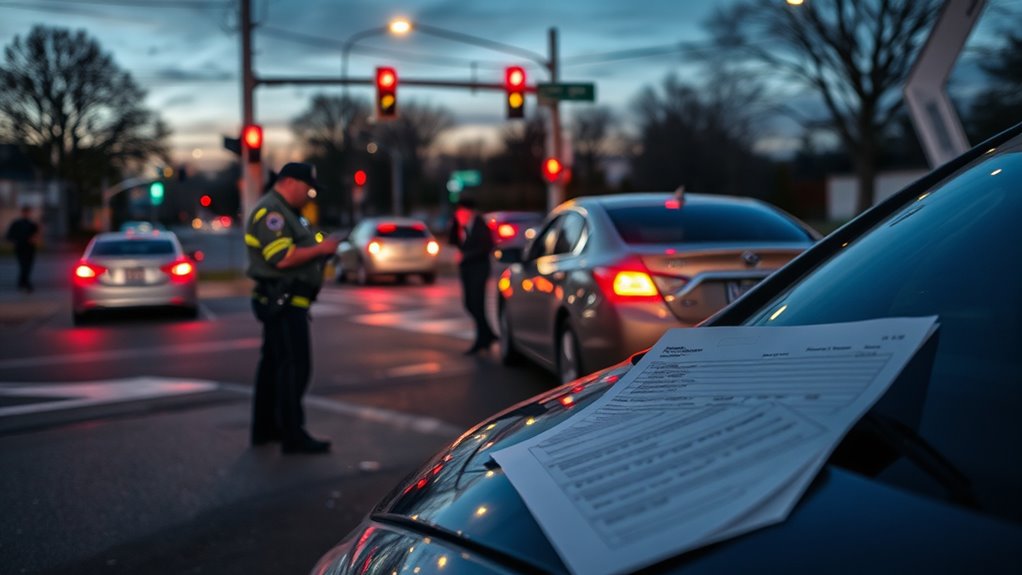
Understanding when a police report is legally required depends on specific circumstances following an incident. If there’s bodily injury or death, you must notify police or state police immediately. Property damage exceeding $500 also mandates reporting. If damages are over $500, you’re required to file a written report within 10 days with the Motor Vehicle Commission. In some cases, visible damage to another vehicle suggests reporting, even if damages are below $500. You should contact the police promptly at the scene using the quickest communication method. If no officer responds, submitting a self-report form online within 24 hours is recommended. Failing to report when legally required can lead to license suspension, fines up to $100, or court fees. Always err on the side of reporting for severe incidents. Additionally, proper documentation of the incident can facilitate damage assessment and insurance claims processing, which is crucial for accurate claim valuation and settlement procedures.
As an affiliate, we earn on qualifying purchases.
Essential Elements Found in a Police Report and Why They Matter
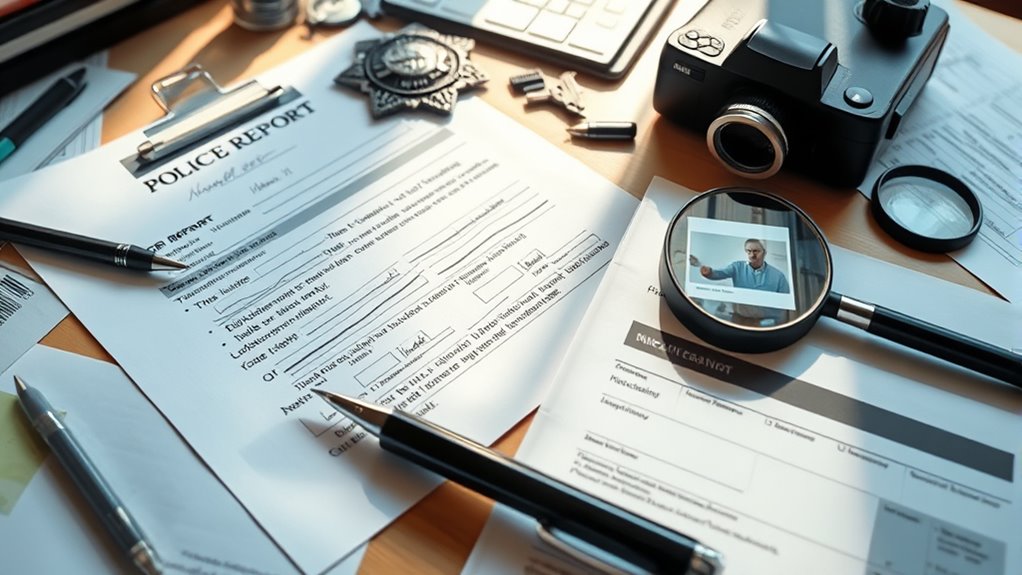
Understanding the key elements in a police report helps you see how cause and fault are assessed, scene details are documented, and injuries or damages are recorded. These elements provide the factual foundation that influences both legal outcomes and insurance claims. Clear and organized presentation of these details facilitates accurate analysis and ensures that all critical information is communicated effectively, reducing misunderstandings and aiding in case resolution. Additionally, accurate scene documentation is vital for establishing the sequence of events and supporting claims. Precise damage assessment and thorough documentation can help in damage assessment and facilitate smoother insurance processing. Incorporating kitchen science & materials principles, such as precise measurements and thorough documentation, can improve the quality and reliability of the report. Being aware of report accuracy helps prevent errors that could impact legal or insurance proceedings.
Cause and Fault Assessment
The cause and fault assessment in a police report plays a crucial role in determining responsibility for a crash. It highlights specific factors that contributed to the incident, guiding insurance and legal decisions. Here are key elements you should know:
- Charges and Citations: Noted violations like failure to yield or unsafe lane changes indicate law breaches that support fault claims and negligence arguments. These violations often serve as direct evidence linking driver behavior to the accident’s outcome. Sound healing science can sometimes be used to reduce stress during the stressful process of insurance claims, aiding in clearer decision-making. Proper documentation of citations is essential to establish a clear connection between violations and fault determination. Recognizing European cloud innovation and their role in secure data handling can also be relevant when reviewing official records and reports. Additionally, understanding wave and wind in data security can help ensure sensitive information remains protected throughout the process.
- Contributing Factors: Officer opinions, such as speeding or intoxication, help identify primary causes and reinforce fault hypotheses. Recognizing contributing factors can influence insurance liability and legal proceedings.
- Observations and Evidence: Vehicle damage, skid marks, and witness statements provide visual and physical proof, aligning facts with officer assessments to establish responsibility. Accurate documentation from the scene is essential in corroborating the officer’s findings and strengthening your case.
Scene and Witness Details
Scene and witness details in a police report are essential because they provide a factual foundation for reconstructing the incident and verifying claims. You should guarantee the report includes the date, time, and location precisely, establishing the incident’s chronology. Physical descriptions of the scene—such as road conditions or weather—help recreate what happened. Document observed behaviors and conditions without assumptions, and avoid vague language to prevent misinterpretation in court. Witness statements should detail what they saw, heard, or experienced, with clear attribution and no speculation. Collect full names, contact info, and ID numbers for witnesses. Sworn statements, signed under oath, add credibility. Accurate scene and witness details strengthen your case, support insurance verification, and reduce disputes. Incorporating environmental considerations like weather conditions can further clarify the circumstances of the incident. Including electric bike specifications such as speed and horsepower can also help establish the nature of the incident if a bike was involved. Additionally, understanding Personality Test insights, such as traits identified through assessments like 16PF, can sometimes support witness credibility or provide context in complex cases. Moreover, ensuring detailed documentation of auditory cues observed during the incident can assist in establishing a clearer sequence of events. A thorough review of floating on water phenomena might also be relevant in cases involving water-related incidents, providing additional context for the scene.
Injury and Damage Documentation
When documenting injuries and vehicle damage in a police report, accuracy and detail are essential for supporting insurance claims and legal processes. To do this effectively, focus on these key elements:
- Visible Injuries: Clearly note injuries observed at the scene, including descriptions and photos, to establish medical needs and liability. Providing detailed descriptions can help in assessing injury severity later. Including information about floating on water can also be relevant if injuries involve water-related accidents, ensuring comprehensive documentation.
- Injury Severity: Classify injuries based on potential outcomes, such as death within 30 days, to determine reporting requirements and support negligence claims.
- Vehicle Damage: Record visible damage with descriptions and photos, ensuring damage over thresholds (like $2,000) is documented to meet legal and insurance standards.
Accurate injury and damage documentation helps insurers verify claims, proves fault, and strengthens your case if liability is disputed.
vehicle damage photo documentation
As an affiliate, we earn on qualifying purchases.
As an affiliate, we earn on qualifying purchases.
How a Police Report Can Accelerate and Strengthen Your Insurance Claim

A police report can considerably speed up and strengthen your insurance claim by providing clear, official documentation of the incident. It records the exact time and location, giving verifiable proof that the event occurred as you describe. Officer observations of scene conditions, such as skid marks or debris, offer physical evidence insurers rely on to validate damage claims. Including involved parties’ contact details reduces delays by streamlining identity verification. Additionally, citations or toxicology results can clarify fault or impairment, influencing liability decisions. The report’s photographs and diagrams serve as high-weight visual evidence, often more credible than claimant photos taken later. An officer’s neutral narrative supports your credibility, and witness statements add further validation, helping insurers process your claim faster and with greater confidence. Police reports are among the most reliable evidence to support fault and liability, which can be crucial in complex cases like hit-and-run or uninsured motorist incidents. Moreover, understanding the warranty considerations related to the incident can help you better navigate claims involving damages to property or vehicles. Incorporating scene condition details from the report can significantly bolster your case by providing additional context, especially when scene documentation is thorough and detailed.
What You Need to Submit an Insurance Claim Without a Police Report
If you don’t have a police report, you’ll need to gather alternative evidence to support your claim. Photos, videos, witness statements, and repair estimates can help establish fault and document damages. Acting quickly to collect and preserve this evidence strengthens your case and improves your chances of a successful claim. Proper documentation is essential even if police reports are not mandated, as it provides a solid foundation for your insurance claim. Additionally, understanding home electrical safety can prevent incidents that might otherwise lead to disputes and claims. Being aware of the history of pinball machines can also offer insights into how accidents or damages might be perceived from a historical perspective, emphasizing the importance of thorough documentation. Recognizing the significance of accurate record-keeping can further enhance your ability to substantiate your claim effectively.
Alternative Evidence Collection
Even without a police report, you can still build a strong insurance claim by gathering and submitting alternative evidence that clearly documents the incident. This evidence provides a detailed picture of what happened and supports your case. Having proper evidence is essential because police reports, while highly credible, are not always available or accurate, and strong supporting documentation can help verify your account. 1. Photos and Videos: Capture the accident scene, vehicle damage, skid marks, weather conditions, and nearby surveillance footage. These visuals help establish the context and specifics of the incident. 2. Witness Statements: Collect contact information and signed accounts from witnesses. Their independent perspectives can corroborate your version of events and strengthen your claim. 3. Incident Details Documentation: Record the date, time, location, vehicle and driver details, insurance information, and your personal account of the accident. Supporting records like medical reports and repair estimates add credibility. This thorough approach ensures your claim remains strong, even without a police report.
Demonstrating Fault and Damage
When building an insurance claim without a police report, providing solid evidence that demonstrates fault and damage is key. You should include clear photos of vehicle damage, the crash scene, license plates, and road conditions to establish physical facts. Medical records and bills link injuries directly to the incident and show damages. Witness statements with contact info and signatures offer independent accounts. A detailed timeline with location data (date, time, GPS) helps replace officer-recorded details. Repair estimates and damage appraisals substantiate repair costs and scope.
| Evidence Type | Purpose |
|---|---|
| Photos | Document physical damage and scene details |
| Medical Records/Bills | Show injury treatment and costs |
| Witness Statements | Confirm fault and circumstances |
| Timeline & Location Data | Establish incident timing and place |
| Repair Estimates | Quantify damage and repair expenses |
Comparing Evidence: Police Report Versus Alternative Documentation
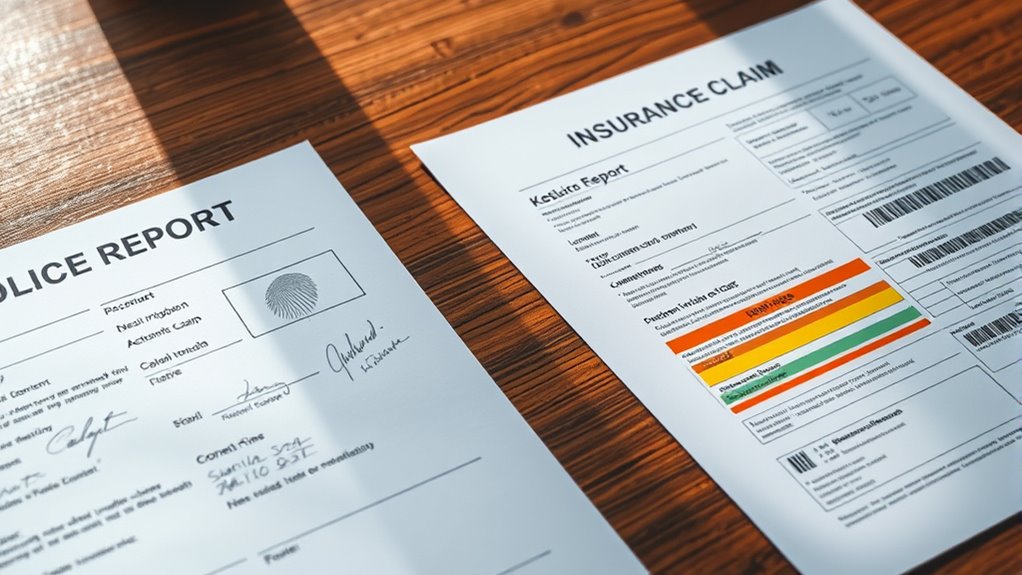
Comparing evidence from police reports and alternative documentation reveals key differences in reliability and perspective. Police reports provide an objective third-party account, including details like date, location, witness statements, and officer observations. Alternative documentation, such as photos, videos, and medical records, offers visual verification and personal testimony. Chemical insights highlight that each type of evidence has unique strengths and limitations that influence their credibility and usefulness. Additionally, the source credibility of police reports can be affected by reporting errors or biases, while alternative evidence may be challenged by questions of authenticity or context.
- Police reports contain official observations and preliminary fault assessments, often with citations.
- Photos and videos serve as unbiased visual evidence of scene conditions and damage.
- Witness statements and medical records support or challenge the police account, adding context.
While police reports carry authority and official weight, they can contain inaccuracies or omissions. Alternative evidence provides direct, tangible proof but lacks formal status in some cases.
The Impact of Police Reports on Legal and Compensation Outcomes

Police reports markedly influence legal and compensation outcomes because they serve as official, objective records that courts and insurers rely on to determine fault and liability. Their formal nature and officer training lend credibility, making them highly trusted sources of factual data. Reports establish fault through documented violations, officer observations, and diagrams, which clarify crash details and negligence. They also support claims for higher compensation by providing evidence of recklessness or violations, often leading to faster resolutions and higher settlement values. During settlement negotiations, insurers assess report content to adjust claim values, with well-documented reports pushing for early, favorable settlements. Although not admissible at trial, police reports are essential for legal preparations, shaping charges, plea negotiations, and defense strategies. Their integrity greatly impacts legal and financial outcomes, since they provide a comprehensive and reliable foundation for building a case and pursuing appropriate remedies.
Frequently Asked Questions
Can I File an Insurance Claim Without a Police Report?
Yes, you can file an insurance claim without a police report. You should promptly notify your insurer and provide a detailed account of the incident, including date, location, and vehicle details. Gather alternative evidence like photos, videos, witness statements, medical records, and repair estimates. Keep personal notes and preserve digital timestamps. However, be aware that some insurers or jurisdictions might require a police report, especially for injuries or significant damage.
How Does a Police Report Influence Claim Approval Times?
Think of a police report as the compass guiding your insurance claim—without it, your journey stalls. It directly influences approval times because insurers rely on it for verification and evidence. When the report is delayed, your claim faces longer processing, turning what could be a swift resolution into a waiting game. To speed things up, get that report filed promptly and stay in touch with authorities.
Are Police Reports Necessary for Small or Minor Accidents?
Police reports aren’t always necessary for small or minor accidents. If there’s no injury and damages are minimal, exchanging information, taking photos, and documenting the scene may suffice. However, check your state’s reporting thresholds—if damages or injuries exceed them, you’ll need to file a crash report, even if police don’t supply one on scene. Always follow local laws and DMV requirements to guarantee your claim process remains smooth and properly documented.
What Happens if the Police Report Contains Incorrect Information?
If the police report has incorrect information, you might face serious consequences. It could delay your claim, weaken your case, or even cause legal issues. You need to act quickly—request a correction, provide supporting evidence, or challenge inaccuracies in court. Ignoring errors can lead to higher premiums or wrongful liability. Stay proactive, stay informed, and verify that the report accurately reflects what truly happened to protect your rights.
Do All States Require Police Reports for Vehicle Accidents?
No, not all states require police reports for vehicle accidents. You typically need a police report if there’s injury, death, or significant property damage, but minor accidents often don’t need one. Some states, like Maryland, only require exchanging information, while others, such as Texas or Montana, mandate reporting within specific deadlines. Always check your state’s rules to determine when police involvement is necessary after an accident.
Conclusion
Ultimately, whether you need a police report or not, it’s a reminder that sometimes, the smallest details can make the biggest difference. Just like a chance encounter or an unexpected turn, these documents can shape your claim’s outcome in ways you might not anticipate. Stay prepared, gather what you can, and remember—sometimes, it’s the quiet moments that reveal the true story behind every incident.
Halloween Picks
halloween
As an affiliate, we earn on qualifying purchases.