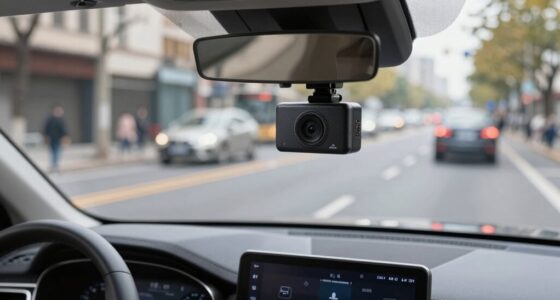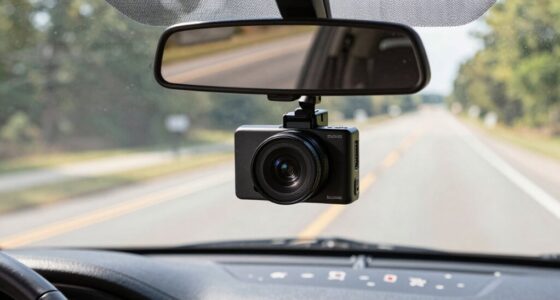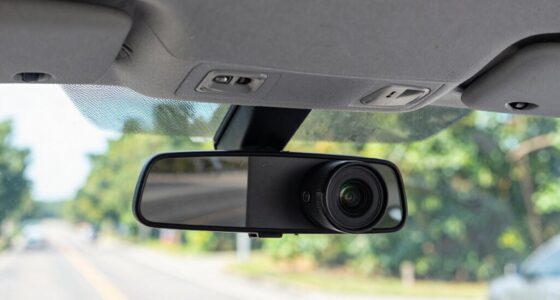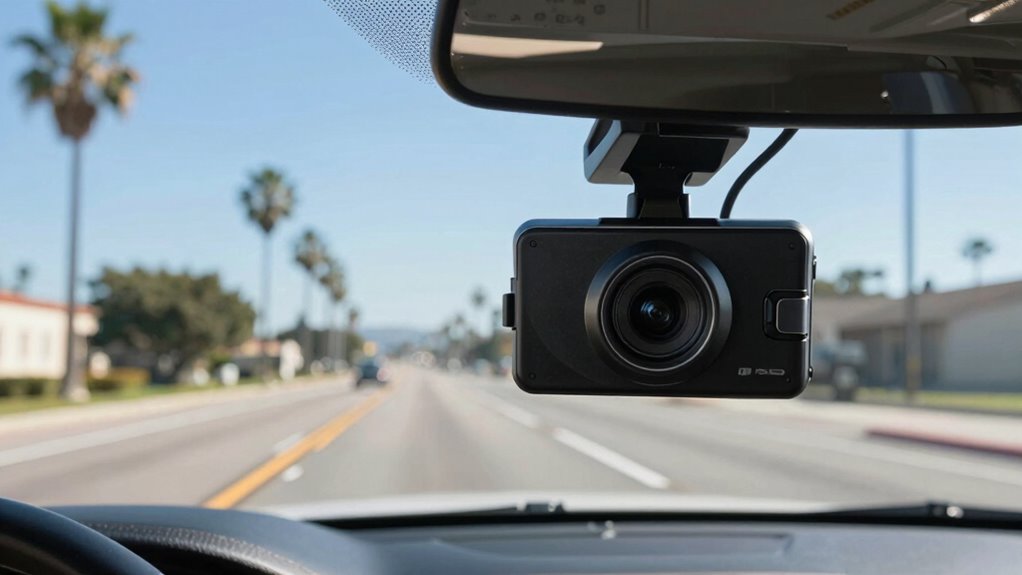
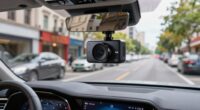
In California, you must mount your dash cam in approved spots like the lower right corner of the windshield, ensuring it doesn’t block your view or airbags. For audio recording, you’ll need consent from everyone involved, as state law requires two-party approval, or switch to video-only. Respect privacy by informing passengers and handling footage responsibly. If you want to stay compliant and protect your footage’s integrity, there’s more to take into account—just continue exploring these guidelines.
Key Takeaways
- Dash cams must be mounted in approved zones (lower right, lower left, or upper center) without obstructing the driver’s view or airbags.
- California law requires two-party consent for audio recording; inform passengers and obtain their permission before recording audio.
- Video recordings in public spaces generally have minimal privacy concerns, but privacy rights must be respected, especially with audio.
- Securely mount and regularly inspect the device to ensure compliance, safety, and prevent tampering or obstruction of views.
- Use cryptographic hashes and proper documentation to maintain data integrity and support evidence validity in legal situations.

Pelsee S12 Native 4K + 2.5K Mirror Dash Cam, 64GB Card Included, GPS
- Dual 4K and 2.5K Recording: Front 4K and rear 2.5K dual footage
- Wi-Fi 6 & OTA Updates: Fast video download and automatic updates
- Starlit Color Night Vision: Clearer night footage with minimal glare
As an affiliate, we earn on qualifying purchases.
Proper Mounting Locations and Safety Considerations

When mounting a dash cam in California, you need to select a location that complies with state regulations and guarantees safety. You can place the device in specific zones: a 7-inch square area in the lower right corner, a 5-inch square in the lower left corner, or a 5-inch square in the upper center of the windshield. The lower right corner is preferred closest to the driver. Make certain your device doesn’t obstruct the driver’s view or interfere with safe vehicle operation. Mounting must avoid airbags and not block forward visibility. You can also attach it to the dashboard if it doesn’t obstruct your view. Keep safety in mind, and avoid positioning the camera where it could cause distractions or safety hazards. Proper placement helps you stay compliant and safe. Innovative European Cloud Servers prioritize safety and compliance in their deployment, emphasizing the importance of proper mounting locations. Ensuring your dash cam placement aligns with vehicle safety regulations is crucial for legal compliance and optimal performance. Additionally, choosing a mount that adheres to manufacturer guidelines can help prevent damage and ensure stability during driving. Proper mounting techniques, as outlined in vehicle safety best practices, can further enhance your safety and compliance. For example, considering electric bike horsepower and speed capabilities can inform your choice of device placement, especially in high-speed scenarios.

4K Rear View Mirror Camera with Carplay&Android Auto,12" Mirror Dash Cam Front and Rear with Voice Control for Cars&Trucks,Smart Touch Screen,64GB Card Included/Loop Record/Reverse Assist
- 4K Front and 1080P Rear Cameras: Sharp recordings with wide angles
- Voice Control & Touch Screen: Hands-free operation for safety
- 12-Inch IPS Split Screen: Dual view of front and rear
As an affiliate, we earn on qualifying purchases.
Legal Requirements for Audio Recording and Consent
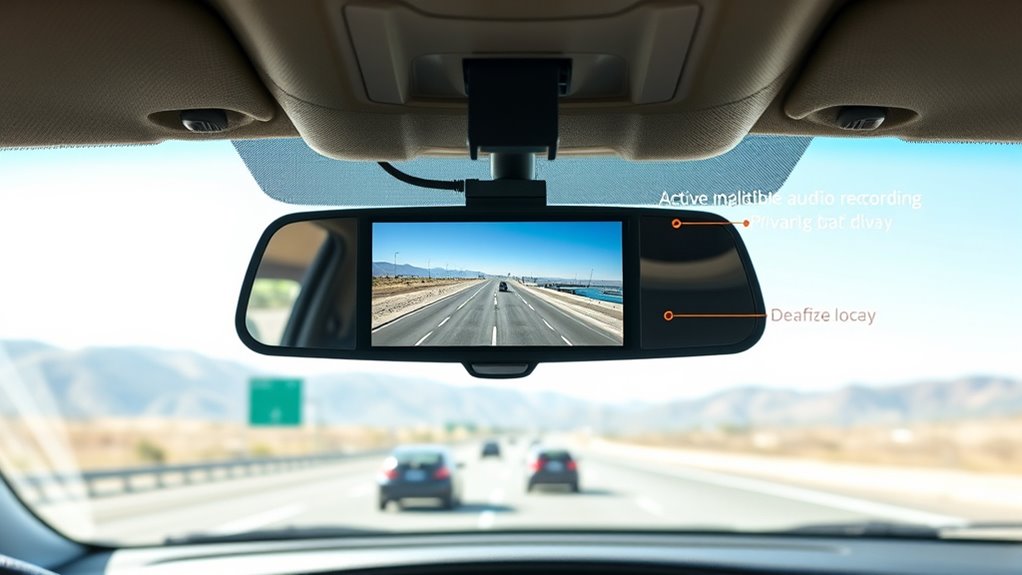
In California, audio recording inside your vehicle is governed by strict two-party consent laws, meaning you must obtain permission from everyone involved in the conversation before recording. You can’t record audio without all passengers’ consent, or you risk violating privacy laws. If someone refuses, you should disable the audio feature or switch to a video-only dash cam. Always inform passengers beforehand that their conversations may be recorded, and post visible notices in the vehicle. Rideshare drivers must display signage alerting passengers to audio recording. Failing to get proper consent can lead to legal consequences, including civil lawsuits, penalties, and the inadmissibility of audio footage in court. To stay compliant, obtain explicit consent from all parties and keep clear, unedited recordings for legal purposes. Recording laws also specify that recordings must be kept secure and used only for lawful purposes. Understanding privacy regulations is essential for ensuring that your dash cam use aligns with state laws and protects everyone’s rights. Additionally, being aware of storage and security requirements can help prevent unauthorized access to sensitive recordings. Moreover, staying informed about legal recording practices is crucial to avoid inadvertent violations and safeguard your rights, especially considering the technology’s evolving nature. Being familiar with precise laws can help you navigate complex legal landscapes and prevent unintentional breaches.

2026 4K Mirror Dash Cam 4 Channel, 12" Touch Screen Rear View Mirror Camera for Cars,4K Dashcam Front Rear Inside, IR Night Vision,WiFi,APP,GPS, Voice Control,Free 128GB SD
- 360° Full Coverage: Rotatable cameras for complete surveillance
- 4K Front Recording: High-resolution front camera footage
- Interior & Rear Recording: 1080P inside and rear cameras
As an affiliate, we earn on qualifying purchases.
Privacy Implications of Dash Cam Footage

Recording dash cam footage in public spaces generally poses minimal privacy concerns because there’s no reasonable expectation of privacy on public roads. There’s also a well-sourced understanding that you’re legally allowed to record external events, and this footage typically meets privacy standards since it captures only public activities. To prevent privacy invasions, you must notify passengers when recording, especially in rideshare settings, and they can request audio deactivation. Failing to inform passengers risks penalties and breaches privacy laws. Courts treat dash cam footage like private security recordings, requiring it to be lawfully obtained and unedited for admissibility. Sharing footage responsibly involves avoiding selective edits and ensuring full disclosure during legal processes. Agencies must follow strict privacy protocols, including redacting personal info and releasing footage within set timeframes, to balance transparency with privacy protections. In some cases, authorities may have specific procedures for handling and sharing dash cam footage to further protect individual privacy rights, especially in scenarios involving privacy regulations. Additionally, implementing secure storage methods helps safeguard footage from unauthorized access and potential misuse, ensuring compliance with applicable privacy standards and data protection laws.

AZDOME PG17 Max 4K+2.5K Mirror Dash Cam, 12" Front and Rear Camera with Night Vision AR Effects, ADAS BSD & LCA, Voice Control, 5.8GHz WiFi GPS, 24H Parking Monitor, for Cars Trucks RVs, 64GB Card
- 4K Front and 2.5K Rear Recording: High-resolution front and rear cameras for clear footage
- Voice Control: Operate camera with 10 voice commands
- Enhanced BSD & LCA: Blind spot and lane change alerts
As an affiliate, we earn on qualifying purchases.
Ensuring Evidence Validity and Data Integrity
To guarantee dash cam footage remains a reliable piece of evidence, you must follow strict procedures for maintaining data integrity and verifying authenticity. First, verify the device’s timestamp is synchronized to an accepted standard, like GPS time, at the incident moment. When seizing the device or SD card, document the person, time, location, and reason, and create a photographed inventory with a written receipt to prevent authenticity challenges. Preserve original media in a read-only state or as a forensic image, and log every transfer with detailed custody records. Use cryptographic hashes, such as SHA-256, to confirm file integrity before and after copying. Ensure metadata—timestamps, GPS, device ID—is retained and note any drift or anomalies. Avoid editing original files; if necessary, document all processing steps thoroughly to maintain an auditable trail. Additionally, understanding smart home technology can help ensure the secure storage and transfer of footage within connected systems.
Technical Tips for Staying Compliant and Protected

Ensuring your dash cam remains compliant and protected requires careful attention to mounting locations, device size, and installation techniques. Use the lower-right windshield zone for a 7-inch square, or the lower-left zone for a 5-inch square. The upper-center position within a 5-inch square is also typically compliant. Avoid airbag deployment zones and ensure the device doesn’t obstruct driver sightlines or safety features. Opt for low-profile mounts and route cables neatly along the headliner and A-pillars to prevent obstruction. Before driving, verify the device doesn’t block any critical view. Regularly inspect and re-secure mounts to prevent sagging or shifting. Using a small, compliant camera makes adherence easier. Proper placement is essential to avoid legal issues and ensure safety. Additionally, understanding dash cam laws and regulations can help you stay within legal limits and avoid fines or other penalties. Awareness of installation best practices can further enhance both safety and compliance. For optimal safety, consider smart‑home integrations that can alert you to mounting issues or tampering. These steps help you stay within legal limits and ensure your dash cam remains both effective and safe. Incorporating automated alerts can also provide real-time notifications if your device is moved or tampered with. Moreover, selecting approved mounting accessories can assist in maintaining compliance and securing the device effectively.
Frequently Asked Questions
Can I Record Audio in My Vehicle Without All Passengers’ Consent?
No, you can’t record audio in your vehicle without all passengers’ consent. California law requires all-party consent for confidential communications, including in-vehicle conversations. You must obtain explicit verbal or written permission from everyone in the vehicle before recording audio. If someone refuses, you must disable audio recording and only record video. Posting notices and obtaining documented consent help ensure compliance and protect you legally.
Are There Specific Mounting Height Restrictions for Dash Cams in California?
You might find it surprising, but California doesn’t specify exact mounting height restrictions for dash cams. Instead, you should focus on placement that doesn’t obstruct your view or interfere with airbags—keeping the device within the allowed size limits in key areas like the lower corners or upper center of your windshield. By following these guidelines, you stay compliant, ensuring your dash cam is both legal and effective without risking fines or safety issues.
How Long Can My Dash Cam Footage Legally Be Stored Before Deletion?
You can store your dash cam footage as long as needed until the purpose for which it was recorded is fulfilled, like resolving a claim or investigation. There’s no fixed California law specifying a maximum retention period. However, you should keep footage related to incidents until legal or insurance processes conclude, and avoid deleting it prematurely. Be mindful of privacy laws, especially regarding audio recordings, to stay compliant.
Is It Legal to Record Private Conversations Inside My Vehicle?
You’re walking a tightrope when recording private conversations inside your vehicle. In California, it’s generally illegal to record these chats without everyone’s consent because of the two-party consent law. If you record conversations without permission, you risk criminal charges and evidence being thrown out. To stay on the safe side, always get clear consent before recording audio, and disable the microphone if unsure. Protect yourself and respect privacy boundaries.
Do Insurance Companies Require Specific Dash Cam Features for Discounts?
Insurance companies don’t typically require specific dash cam features for discounts, but they value certain qualities. You should have clear, timestamped, high-resolution footage that’s reliable and shows lane details to support claims. Features like loop recording, G-sensors, and good low-light performance help produce admissible evidence. While direct discounts are rare, having these features can speed up claims, prevent fault disputes, and potentially maintain or lower your premiums.
Conclusion
Understanding California’s dash cam laws helps you stay compliant and protect your privacy. Did you know that nearly 80% of drivers use dash cams for safety and evidence? By mounting your camera properly, securing consent for audio, and respecting privacy, you can confidently record your drives without legal worries. Stay informed and responsible—your peace of mind and others’ rights depend on it. Drive safely, and let your dash cam be a trusted witness.