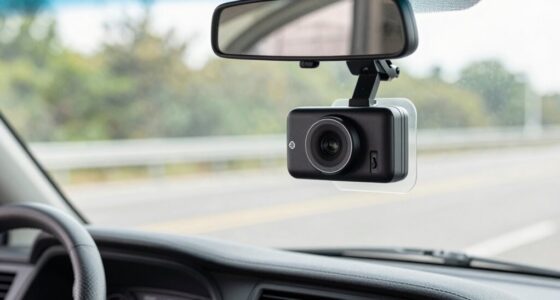
Mounting devices on your windshield can block your view, obscure pedestrians, and distract you while driving. It may also violate safety regulations, risking fines or invalidating footage. Improper placement can interfere with safety systems like airbags or crash sensors, and distract your attention from the road, increasing accident risk. To stay safe and compliant, consider alternative mounts or proper placement techniques. If you want to know more about safe mounting practices, keep exploring the topic further.
Key Takeaways
- Windshield mounts can obstruct the driver’s line of sight, increasing the risk of accidents and pedestrian collisions.
- Improper placement may block airbags or sensors, compromising vehicle safety features during a crash.
- Mounting devices in certain areas can distract drivers, reducing attention to the road and increasing reaction times.
- Legal restrictions often prohibit windshield mounts in critical visibility zones, risking fines or invalidated footage.
- Environmental factors like extreme temperatures can cause mounts to loosen or fall, reducing stability and safety.
Visibility and Line-of-Sight Hazards
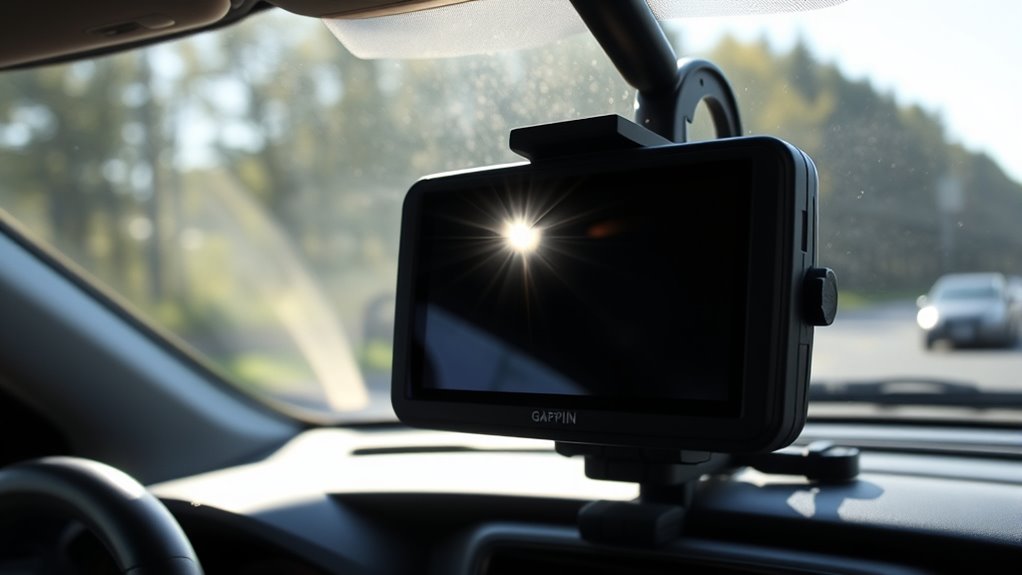
Have you ever considered how dashboard mounting devices can create blind spots and obstruct your view of the road? When you place a mount high on your windshield or dashboard, it blocks critical forward views, making it harder to see pedestrians, cyclists, or vehicles ahead. Even small obstructions can cause you to miss hazards, increasing accident risks. These mounts often line up with your line of sight, reducing your overall field of vision during driving. This limited view can delay your reaction to sudden obstacles or changes in traffic. With impaired visibility, you’re more vulnerable to side impacts or collisions with pedestrians. High-mounted devices compromise your ability to monitor your surroundings effectively, heightening the danger of accidents caused by unseen hazards. Blocked sightlines can also lead to distracted driving by encouraging drivers to divert their attention away from the road. Additionally, these obstructions can contribute to field of view limitations, which directly affect your ability to anticipate and respond to road conditions. A clear and unobstructed view helps maintain safe reaction times, which are vital for avoiding accidents. Introducing proper mounting techniques can help ensure your visibility remains unobstructed and your driving remains safe. Using appropriate placement methods aligned with safety guidelines minimizes the risk of impairing your overall visibility while still securing your devices effectively.
Legal and Regulatory Considerations

Understanding the legal and regulatory landscape for dashboard mounting devices is essential to guarantee compliance and avoid penalties. Federal rules now permit devices up to 8.5 inches below the windshield’s upper edge and 7 inches above the lower edge, as long as they don’t obstruct your view of the road, signs, or signals. The definition of vehicle safety tech now includes cameras, lidar, radar, sensors, and video systems, with recent rule changes removing the need for exemptions. State laws vary: California allows dash cams in specific lower corners, while others restrict or prohibit windshield mounts entirely. Proper placement is vital—mounts behind the rearview mirror or in upper/lower corners are generally acceptable, but improper positioning can lead to fines, citations, or invalidated footage. Additionally, understanding regulatory compliance and their market regulations can help with related multimedia content. Awareness of home security systems standards and regulations can also inform safe and legal installation practices. Being aware of vehicle safety standards can further ensure that your dashboard mount remains within legal limits and does not compromise vehicle safety.
Mount Performance and Reliability

When selecting a dashboard mounting device, you need to contemplate its performance and reliability under real-world conditions. Dashboard mounts often struggle with stability, especially in extreme weather. For example, they can lift after 24 hours in heat despite temperature ratings, and suction mounts frequently fall off during potholes or sharp turns. Uneven or wavy dashboards hinder secure adhesion, and consumer-grade mounts can fail under vibrations and shocks. To emphasize:
- Aluminum mounts with 3M VHB adhesives offer superior durability, resisting corrosion and extreme temperatures. Proper surface preparation and high-quality adhesives are crucial for long-term adhesion. Additionally, understanding mount performance in various conditions can help you select the most reliable option. Recognizing environmental factors such as temperature fluctuations can also impact adhesive performance over time. Being aware of adhesive longevity can assist in choosing mounts that last longer in challenging environments.
- Magnetic mounts outperform dashboard options in hold strength and consistency.
- Vented mounts excel in vibration resistance but lack overall stability. Additionally, understanding cloud infrastructure and environmental factors can help optimize mounting choices and device longevity. Considering temperature fluctuations is essential, as they can impact the adhesive’s performance over time.
Choosing the right mount depends on your environment and driving style, ensuring your device stays secure and functional.
Impact on Vehicle Safety Systems

Choosing the right dashboard mount isn’t just about stability; it also plays a vital role in maintaining vehicle safety systems. Improperly placed mounts can obstruct airbags, altering their deployment or preventing them from activating properly. Dashboard mounts can block or interfere with knee airbags, which control leg movement during crashes, increasing injury risks. They may also hinder occupant monitoring sensors that detect seat position, posture, and head tilt, causing deployment delays or reduced effectiveness. Additionally, mounts that interfere with crash sensors or adaptive systems compromise targeted airbag deployment, risking over- or under-inflation. They can also impair safety features like pedestrian detection and autonomous driving systems. Improper mounting can also lead to electrical interference, affecting the operation of various safety systems. Moreover, proper installation, including secure placement, ensures that all vehicle safety features function as intended, maintaining optimal protection for occupants. A poorly mounted device can also cause distraction hazards that compromise driver focus and overall safety. Improper positioning may also disrupt the vehicle’s sensor calibration, leading to malfunctions in advanced driver-assistance systems. Overall, improper mounting can reduce vehicle safety ratings, increase injury severity, and undermine the effectiveness of advanced safety technologies designed to protect you during accidents.
Effects on Driver Attention and Behavior

Improperly mounted dashboards can considerably disrupt your attention and driving behavior, increasing the risk of accidents. When your focus shifts toward the dashboard instead of the road, your reaction times suffer. This distraction leads to:
- Increased eye fixation on the dashboard, reducing the time spent scanning the road.
- Elevated cognitive load, causing slower responses, decreased accuracy, and higher mental effort during multitasking.
- Greater vehicle drift, more driving errors, and delayed reactions, especially under time pressure or high workload.
These effects result in visual tunneling, lane departures, and riskier behaviors like speeding or centerline crossing. As your eye movements become erratic and attention less focused on driving, your likelihood of accidents rises. Proper mounting minimizes these risks by maintaining better driver attention and behavioral control. Research shows that visual attention and perception demands significantly influence driving safety, especially when secondary tasks divert focus from the roadway. Additionally, the use of appropriate mounting can help reduce mental distractions and keep your focus aligned with driving tasks.
Alternative Mounting Options

If you want to keep your device within easy reach without obstructing your view, alternative mounting options offer practical solutions. Vent mounts attach directly to air vents, giving you quick access and minimal windshield blockage, especially in compact cars. They’re compatible with wireless charging models like ESR and iOttie Velox and can be adjusted for the perfect angle. Adhesive dashboard mounts use sticky pads to secure your device on flat, smooth surfaces, providing stability on uneven dashboards and avoiding legal issues in states like California. Magnetic mounts utilize MagSafe or universal magnets for fast, discreet attachment and removal, ideal for temporary use or rentals. Mirror mounts position devices behind the rearview mirror, preventing dashboard issues and supporting versatile angles. Specialized mounts incorporate recent innovations like improved suction cups and AI features for enhanced performance. Choosing the right mount ensures safe and convenient device use while driving.
Best Practices for Safe Device Placement
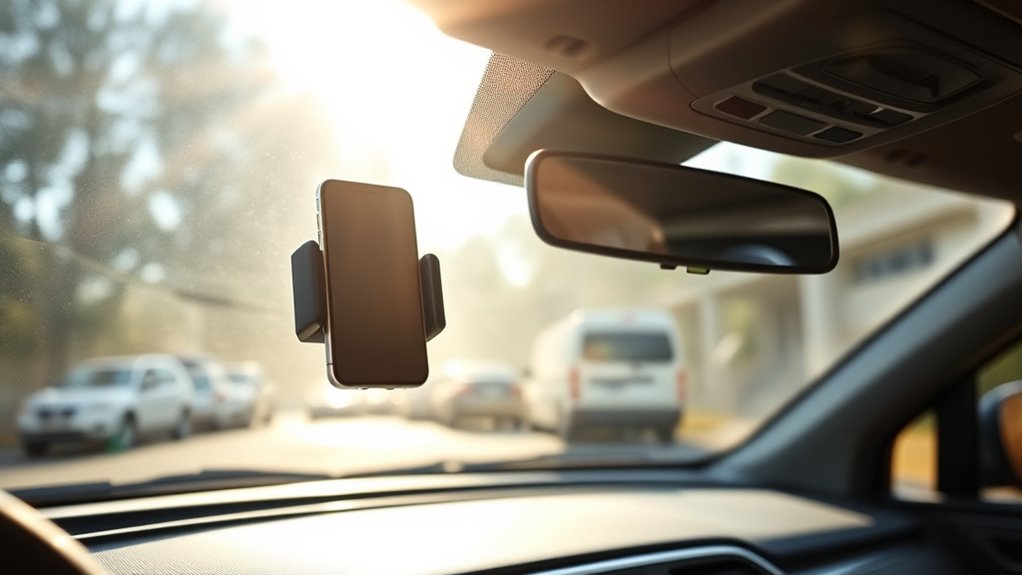
To guarantee safe device placement, you should prioritize positions that minimize driver distraction and maximize visibility. Avoid mounting devices in areas that block your view of the road, such as the windshield’s primary sightlines, or within the wiper sweep zone. Position your device below rearview-mirror height or at eye level to reduce glances-away time. Ensure mounts are secure and stable to prevent vibrations or movement that could distract you. Additionally, limit the number of devices clustered on the windshield to avoid occlusion and cognitive overload. Proper placement also considers visual clarity to maintain unobstructed sightlines while ensuring the device remains accessible.
Frequently Asked Questions
Can Windshield Mounts Cause Permanent Damage to My Vehicle’s Interior?
Yes, windshield mounts can cause permanent damage to your vehicle’s interior. They often rely on adhesives or suction cups that can leave tacky residue, discolor the dash, or strip paint if removed improperly. Heavy-duty suction mounts may deform or warp softer plastics or vinyl, leading to dents or warping. Over time, heat and UV exposure can cause cracking, fading, or material breakdown around the mount area, resulting in lasting damage.
Are There Specific Vehicle Models That Are More Compatible With Windshield Mounts?
Some vehicles are like fortress walls for windshield mounts, especially those with near-vertical windshields like older trucks, SUVs, and vans, which provide stable suction surfaces. Flat dashboards with dedicated mounting pads also work well, such as in many modern sedans and trucks. Avoid highly raked windshields or curved, textured glass, which weaken suction and are less compatible. Your best bet is to choose models with smooth, flat surfaces for safer, more reliable mounts.
How Do I Legally Determine the Best Mounting Zone for My Device?
You should verify your vehicle’s specific laws and manufacturer guidelines to find the legal mounting zones. Look for markings like AS-1 lines or safe distance recommendations from airbags and wipers. Avoid obstructing your view or interfering with safety features. Stick to approved areas such as behind the rearview mirror or within the designated windshield zone. When in doubt, consult your vehicle manual or local regulations to ensure compliance.
What Are the Signs That My Mount Is Losing Adhesion or Suction?
You’ll notice your mount is losing adhesion or suction when it starts slipping or falls off unexpectedly. If you see reduced grip, the mount may be detaching from the surface. Over time, you might also observe visible wear, grime buildup, or the adhesive’s surface looking dull or cracked. Frequent reattachment attempts, mounts falling overnight, or needing to press harder to secure the device are clear signs of weakened suction or adhesion.
Do Windshield-Mounted Devices Interfere With Any Car Safety Features?
Windshield-mounted devices can interfere with your car’s safety features if they obstruct cameras or sensors used for collision avoidance or lane departure systems. If the mount blocks these sensors, it can impair their functionality, reducing safety. Additionally, improper placement might damage interior components or cause calibration issues. To avoid these problems, make certain your device is positioned so it doesn’t obstruct sensors and complies with manufacturer and regulatory guidelines.
Conclusion
Choosing the wrong dashboard mount can block your view and distract you, increasing accident risks. Did you know that over 80% of crashes involve some form of driver inattention? By understanding the hazards and exploring safer mounting options, you can keep your focus on the road. Prioritize visibility and safety, and always follow best practices for device placement. Your eyes and everyone else’s lives depend on making smart, informed choices every time you drive.