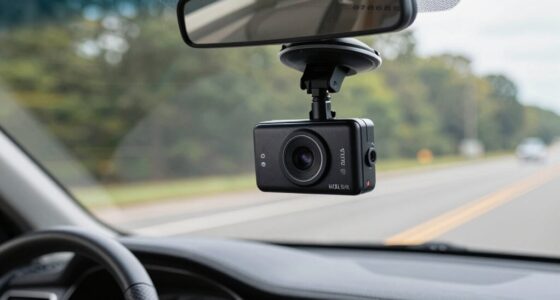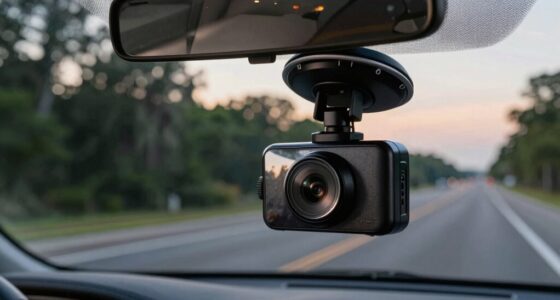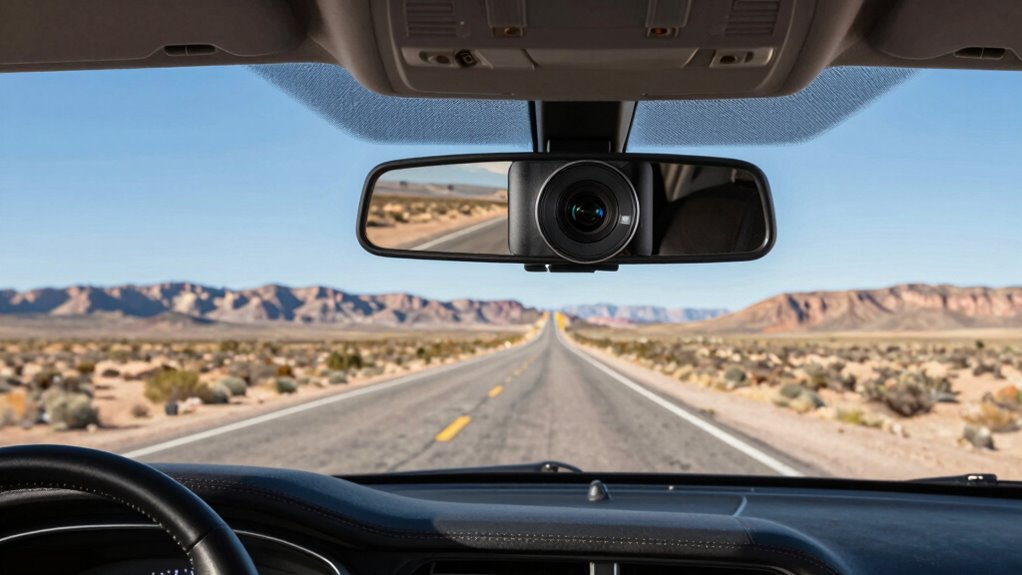

In New Mexico, you can legally mount your dash cam on your dashboard or behind the rearview mirror, avoiding obstructions and glare, and keep it below the AS-1 line for best compliance. You must guarantee proper placement to prevent distracting yourself or obstructing views. When recording audio, remember that New Mexico is a one-party consent state, so only one participant needs to agree. To avoid legal issues, it’s important to learn about privacy notices and proper footage handling—more details ahead can help you stay compliant.
Key Takeaways
- Dash cams are legal in New Mexico when mounted properly, typically on the dashboard or behind the rearview mirror to avoid obstruction.
- Mounting should not block your view or violate windshield laws; avoid obstructive or glare-prone locations.
- New Mexico is a one-party consent state; recording inside your vehicle is lawful if you are a participant.
- Audio recording is permitted with proper consent, but recording private conversations without permission may raise privacy issues.
- Proper documentation and preservation of footage, including timestamps and metadata, are essential for legal admissibility.
Understanding New Mexico’s Vehicle Equipment Regulations
Understanding New Mexico’s vehicle equipment regulations is essential for ensuring your dash cam complies with state laws. The law prohibits driving with nontransparent materials on the front windshield if they interfere with your visibility. This includes attaching opaque objects or coverings to the windshield or the windows immediately to the right and left of the driver. Since dash cams are often mounted on the windshield, they can pose a risk of violating these rules if obstructing the view. To stay within legal limits, it’s recommended to mount your dash cam on the dashboard rather than on the windshield. Proper placement behind the rearview mirror or on the dashboard helps maintain a clear view, avoiding glare and ensuring compliance with visibility laws. Proper placement also ensures that your dash cam does not violate tint laws or obstruct safety features like airbags. Additionally, being aware of dash cam regulations can help prevent inadvertent legal issues related to recording and privacy laws in the state. It’s important to note that privacy laws may restrict recording conversations without consent, so understanding these regulations is also crucial. Furthermore, choosing the right mounting position can help you avoid accidental violations of the equipment laws and ensure your dash cam functions optimally without legal concerns. Properly understanding these regulations will help you avoid penalties and ensure legal compliance while recording your drives. Considering the specific audio recording laws in New Mexico can also prevent unintentional violations when capturing conversations.
Best Practices for Dash Cam Placement and Size
To guarantee your dash cam complies with New Mexico’s visibility laws, careful placement and sizing are essential. Proper positioning ensures your device doesn’t obstruct your view or violate regulations.
- Mount behind the rearview mirror to stay within your natural sightline and minimize distractions.
- Place on the passenger side dashboard or lower windshield corner if size limits are met, avoiding areas that could block your view.
- Use low-profile, matte-finish mounts and cameras under 4 inches to prevent glare and obstruction claims.
- New Mexico law specifies that dash cams should not be reflective or metallic, so choosing non-reflective materials helps avoid dazzling other drivers.
- Selecting a suitable field of view is crucial to ensure your dash cam captures necessary details without compromising visibility or violating size restrictions.
- Adjust the camera angle slightly downward to optimize camera positioning for clear horizon and license plate capture.
- Secure it firmly with quality adhesives or mounts, checking regularly to prevent shifting.
- Keep your dash cam unobtrusive, safe, and compliant with all rules.
- Considering product weight is important to prevent mounting failures or additional distractions while driving.
- Proper thermal behavior management, such as avoiding direct sunlight or excessive heat exposure, can help maintain the device’s performance and longevity.
Legal Considerations for Audio Recording in Vehicles
Since New Mexico is a one-party consent state, you can legally record conversations inside your vehicle as long as you’re a participant. This means your own consent covers in-car recordings, including dash cam audio. However, covertly recording private conversations where there’s a reasonable expectation of privacy can lead to legal issues. Federal wiretap laws also apply, so be aware of their restrictions alongside state rules. Additionally, understanding state-specific laws is essential for lawful recording and can help you avoid unintentional violations. Audio recordings obtained with proper consent are generally admissible in court and insurance claims, but you should authenticate and preserve metadata like timestamps and GPS data. Being aware of the privacy implications can help you avoid unintentional violations. Avoid recording private phone calls or sensitive conversations without explicit consent, as doing so may result in civil or criminal penalties. To stay compliant, consider posting notices or obtaining explicit verbal consent from passengers. Furthermore, staying informed about audio recording regulations can help ensure your dash cam usage remains within legal boundaries. It’s also wise to familiarize yourself with the limitations on recording to prevent inadvertent breaches of privacy laws.
Passenger Privacy and Noticing Requirements
Passenger privacy and noticing requirements are essential for lawful dash cam operation in New Mexico, especially when audio recording is involved. You need to clearly inform passengers about recording practices to avoid legal issues. Here are key methods to guarantee proper notice:
- Visible signage—stickers or placards on doors or dashboards that indicate recording, making passengers aware immediately.
- Verbal or automated alerts—pre-ride announcements or app prompts that notify passengers about audio and video recording.
- Written policies—posted notices inside vehicles or onboarding documents explaining recording purposes, retention, and how to exercise privacy rights. Consistent and clear communication about these policies helps foster trust. Incorporating privacy best practices ensures passengers feel secure and informed about their rights. Staying up-to-date with legal requirements is crucial to maintaining compliance and avoiding potential legal issues.
- Ensuring that the notices are legally compliant with state laws prevents potential legal complications and promotes transparency. Providing clear, visible, and consistent notices helps build trust and assures compliance with privacy laws, protecting both you and your passengers. Proper notice ensures passengers understand their privacy rights and helps prevent potential legal disputes. Additionally, state-specific regulations may impose further requirements to safeguard passenger privacy, so staying informed is crucial.
Using Dash Cam Footage in Legal Cases
When you use dash cam footage in legal cases, it’s important to understand the admissibility standards in New Mexico, which require the footage to be authentic and relevant. You’ll need to verify the evidence hasn’t been altered to maintain its integrity, and be aware that audio recordings are only legal if made with single-party consent. Properly authenticating and preserving your footage can markedly strengthen your case and help establish fault or liability. Additionally, understanding privacy policies and regulations can help ensure that your use of footage complies with applicable laws and guidelines. Being aware of who makes dash cams and their recording capabilities can also aid in understanding the potential legal implications of the footage obtained. Knowing the differences between wave and wind recording features can help you choose the best device for legal and privacy considerations. Furthermore, understanding the device’s recording features can help you determine how best to capture and preserve critical evidence.
Legal Admissibility Standards
To guarantee dash cam footage is accepted as evidence in New Mexico courts, it must meet specific admissibility standards. First, ensure the footage is relevant to a material fact, aligning with the state’s relevance rules. Second, maintain a clear chain of custody, including metadata that shows the recording was unaltered, which strengthens authenticity. Third, provide foundational testimony explaining who operated the device and how the footage was preserved, establishing trustworthiness. Additionally, courts often consider the quality of the footage, so using high-resolution recordings can significantly improve the likelihood of acceptance.
Key points to consider:
- Preserving original files and verifying their integrity prevents challenges to authenticity.
- Using metadata like date, time, and GPS confirms the footage’s relevance and accuracy.
- Avoiding edits or re-encoding helps keep the evidence reliable and court-ready.
- Regularly updating your device’s software can prevent technical issues that compromise footage quality.
Authenticating Dashcam Evidence
Ensuring dash cam footage is admissible in court hinges on properly authenticating the evidence. You must establish a clear chain of custody, documenting every transfer with logs that include date, time, and custody reasons. Use write-protected copies, such as forensic images or hashes, to prevent alterations during review. Record metadata at seizure—like timestamps, GPS data, and camera info—and preserve the original storage medium securely, noting any access attempts. Cryptographic hashes (MD5/SHA256) verify file integrity, while embedded metadata corroborates when and where recordings occurred. Engaging a forensic analyst can uncover any edits or tampering, providing expert testimony. By maintaining original files, backups, and detailed documentation, you guarantee your dash cam evidence remains credible and court-admissible. Furthermore, ensuring compliance with applicable rules of evidence helps prevent challenges to the footage’s authenticity.
Audio Recording Restrictions
In New Mexico, the law requires only one-party consent for audio recording with dash cams, meaning as long as you’re a participant in the conversation, your recordings are legally valid. This allows you to record audio in your vehicle without needing everyone’s permission, especially on public roadways where privacy expectations are minimal. However, misuse can lead to legal trouble. State laws also specify that recordings obtained without consent can be challenged in court, so it’s important to understand and comply with local regulations. You should be aware that:
- Using recorded audio as evidence in court is permissible if obtained legally, supporting accident reports and disputes.
- Recording conversations without informing passengers can cause privacy issues, even if legal.
- Deleting or tampering with audio files risks legal penalties and accusations of evidence tampering.
Following best practices helps protect you from legal complications while ensuring your recordings are admissible.
Practical Tips for Compliant Dash Cam Use
Properly installing your dash cam is essential for legal compliance and ideal performance. Mount it on the dashboard to avoid obstructing your windshield, ensuring no interference with your view. Position the device near the passenger side if close to the windshield for the best angle. Avoid placing it behind the rearview mirror or in spots that cause glare, and always test visibility after installation. Keep the camera low on the dashboard to prevent blocking your line of sight. Regularly check that the device remains unobstructed during drives. Remember, New Mexico laws prohibit non-transparent materials on your windshield, so avoid mounting on or covering the glass. Following these tips helps you stay within legal limits while capturing clear footage, protecting you in case of accidents or disputes. Be sure to consult local laws periodically, as regulations can change. Additionally, understanding aviation regulations can inform you about the importance of proper equipment placement and compliance standards across different fields. For optimal video quality, ensure the camera is securely mounted and free from vibration or obstructions. Maintaining proper installation techniques can also help prevent legal issues related to improper mounting. Regularly inspecting your dash cam setup can also help you detect any issues early and ensure continued compliance with mounting requirements.
Risks of Windshield Mounting and How to Minimize Them
Mounting a dash cam on your windshield can pose significant risks, especially if it obstructs your view of the road. An obstructed view increases your chances of accidents from unseen hazards, and police can issue tickets for devices blocking your line of sight. Improper placement may also distract you, raising safety concerns. To minimize these risks:
- Position your dash cam below the AS-1 line or on the dashboard to stay clear of your visibility.
- Regularly check that the device remains secure and doesn’t shift during drives.
- Use low-profile models under 5 inches to reduce obstruction and stay compliant with vehicle laws.
- Ensuring proper placement can help prevent potential legal issues and enhance your safety, especially when considering the smart home fitness technology available for vehicle safety enhancements.
Cross-Border Recording Laws and Interstate Travel Tips
When crossing borders with your dashcam, it is essential to understand the varying laws that apply on different sides and across state lines. At U.S. ports of entry, recording is prohibited without permission, and CBP officers can require footage to be turned off, covered, or deleted. Enforcement may include delays and threats to FAST cards. On the Canadian side, dashcams are permitted at ports of entry and during waiting periods, with no obligation to delete footage. However, officers may view footage only for specific content. When traveling between states, check local audio laws—one-party consent states like Texas allow recording with your consent, while all-party states like California require permission from all parties. Disable audio if unsure to avoid legal issues. Always be prepared for inspections and respect border security protocols.
Ensuring Your Dash Cam Setup Meets State and Federal Standards
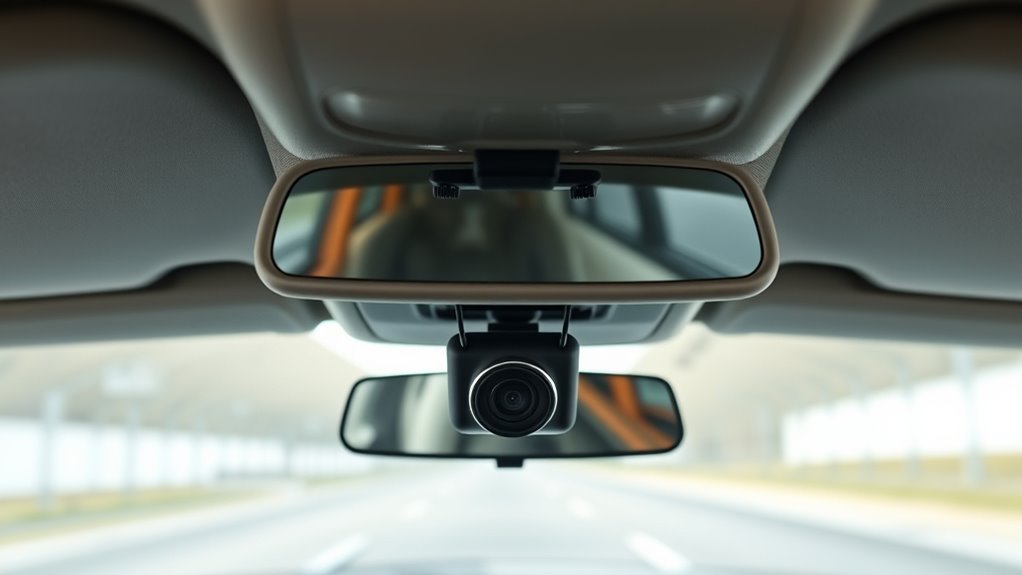
To guarantee your dash cam meets New Mexico standards, you need to choose the right mounting location and understand audio recording laws. Proper placement avoids violations and keeps your footage admissible in court, while compliance with one-party consent rules protects you legally. Dash cams are legal in New Mexico, and selecting an unobstructed location such as the dashboard or behind the rear-view mirror is recommended to ensure driving visibility. By following these guidelines, you can confidently use your dash cam without risking legal issues.
Legal Mounting Practices
Ensuring your dash cam complies with New Mexico’s legal mounting practices is vital to avoid violations and maintain clear visibility while driving. You must avoid obstructing your view with non-transparent objects, including dash cams, on the windshield or windows beside the driver. Proper placement is essential—aim for:
- Mounting near the rearview mirror to stay out of your line of sight.
- Placing it in the bottom right corner of the windshield on the passenger side.
- Using the dashboard as a primary, safe location to keep your view unobstructed.
Always test your setup before driving to confirm there’s no obstruction. Regularly check for stability to prevent shifting. Follow these tips to ensure your dash cam is both legal and safe.
Audio Recording Compliance
New Mexico’s one-party consent law allows you to record audio in your vehicle as long as at least one participant in the conversation agrees. This means you, as the driver or device operator, can lawfully record conversations involving passengers without their permission. However, recordings made where people have a reasonable expectation of privacy, like inside a private home, could still raise legal issues. To minimize risks, consider disabling audio or notifying passengers that recording is happening. Federal laws also come into play during interstate or telephone conversations, especially if the other party is in an all-party consent state. For commercial use, passenger notification and explicit consent are recommended. Always provide clear signage about audio recording to guarantee transparency and reduce potential disputes.
Frequently Asked Questions
Can I Use a Dash Cam With a Built-In GPS in New Mexico?
Yes, you can use a dash cam with a built-in GPS in New Mexico. The state has no specific laws restricting GPS features in dash cams, and they’re generally permitted as long as you follow mounting rules and privacy guidelines. Just guarantee the GPS doesn’t obstruct your view, and you’re good to go. Using a GPS-enabled dash cam can help with navigation and recording location data legally.
Are There Restrictions on Recording Audio From Passengers in Ride-Share Vehicles?
You can record audio from passengers in your ride-share vehicle in New Mexico, but it’s a tightrope walk—one-party consent rules apply, meaning you only need one person’s permission. Still, it’s wise to post signage or inform passengers, like giving a friendly tap on the shoulder, to avoid misunderstandings. Always check your platform’s policies too, since they might have stricter rules about recording. Staying transparent keeps everyone on the same page.
What Are the Consequences of Mounting a Dash Cam on the Windshield Illegally?
If you mount a dash cam illegally on your windshield in New Mexico, you risk getting a ticket for obstructing your view. Law enforcement may issue fines and add points to your driving record. You could also face court costs or even misdemeanor charges if the obstruction is severe. To avoid penalties, it’s best to install your dash cam on the dashboard or in a non-obstructing position.
Do Federal Laws Override State Dash Cam Recording Regulations?
Federal laws are like a gentle breeze, guiding but not overpowering your state’s rules. They set minimum standards, especially for audio recordings, but your state’s laws take precedence. So, if your state requires all-party consent or has specific mounting rules, those are the laws you must follow. You won’t be swept away by federal regulations alone; your state’s rules are the tide you must ride.
How Can I Ensure My Dash Cam Footage Is Admissible in Court?
To guarantee your dash cam footage is admissible, preserve the original files without edits or compression, and document every handling step. Keep timestamps, GPS data, and context by recording sufficient pre- and post-incident footage. Use verified transfer methods, create a detailed log of key clips, and produce unaltered files on a secure medium. Providing a forensic report or checksum further supports authenticity, making your footage more likely to be accepted in court.
Conclusion
Managing New Mexico’s dash cam laws is like walking a tightrope—you want to stay balanced and compliant. By understanding regulations, mounting correctly, respecting privacy, and staying mindful of audio rules, you’ll keep your recordings legal and protected. Think of your dash cam as a trusted companion, always there to help when needed. Stay informed, be cautious, and your journey will be smooth and secure, like a calm river flowing through the desert.