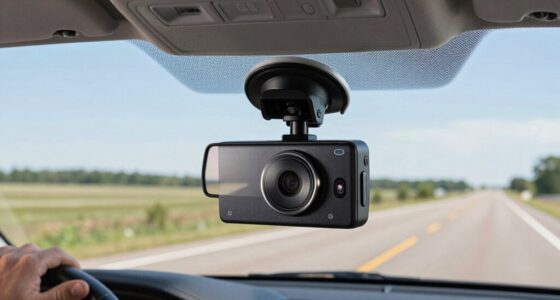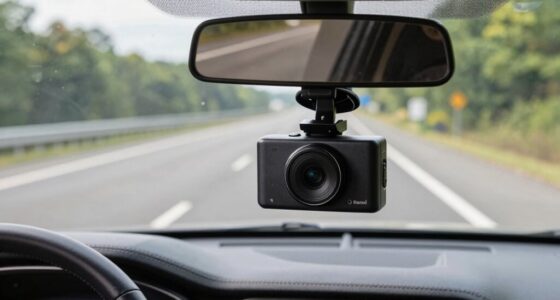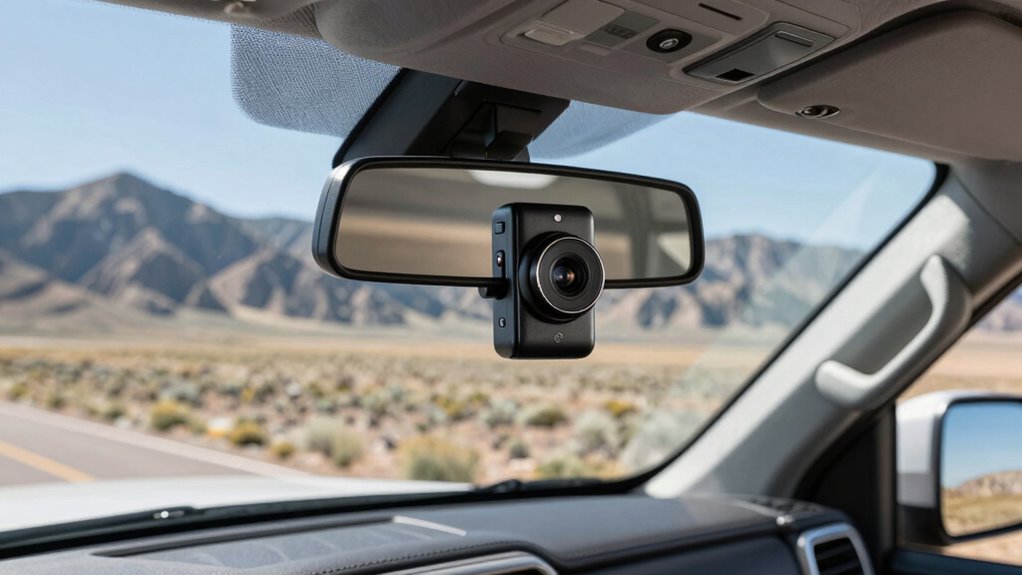

In Wyoming, you’re allowed to use dash cameras as long as they’re properly mounted on the dashboard or behind the rearview mirror, avoiding obstruction of views or airbags. Audio recording is legal if at least one person involved agrees, but it’s best to notify passengers. Respect privacy by avoiding recordings in private spaces. To learn how to install your dash cam legally and safeguard your rights, keep going for detailed tips and guidelines.
Key Takeaways
- Dash cameras are legal in Wyoming but must be mounted to avoid obstructing the windshield or view, typically behind the rearview mirror or on the dashboard.
- Proper mounting ensures compliance with Wyoming laws, prevents obstruction of airbags, wipers, or glare, and maintains clear footage.
- Wyoming is a one-party consent state, allowing audio recordings if at least one participant agrees; notify others when recording audio.
- Mounting devices should be low-profile, secure, and placed to maximize visibility without distracting the driver or violating laws.
- Recordings should be relevant and obtained legally; be cautious with private conversations and private property to respect privacy laws.

Pioneer DMH-1600NEX 6.8" Double-Din Digital Multimedia Receiver - Built in Bluetooth, Wired Apple CarPlay and Android Auto, Touchscreen, Rear Camera Input
Hands-Free Calling: This Pioneer in-dash receiver features built-in Bluetooth, enabling easy hands-free calling through compatible smartphones, with crystal-clear...
As an affiliate, we earn on qualifying purchases.
Wyoming Dash Cam Legal Overview
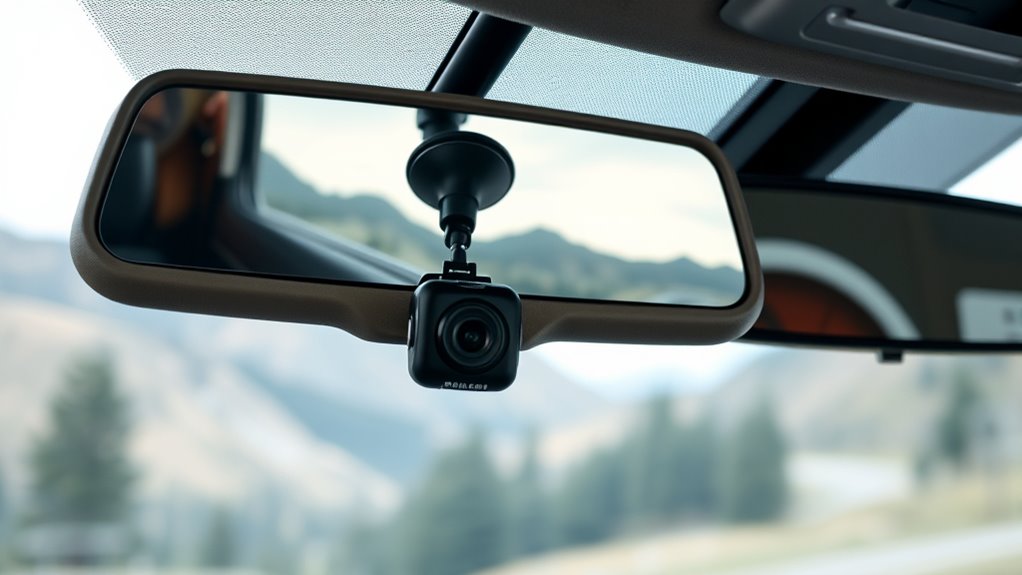
In Wyoming, dash cameras are legal to possess and use, but you must guarantee they are installed in a way that doesn’t obstruct your view. State law prohibits driving with any sign, poster, or material on the windshield or windows that substantially impair your clear vision. The safest placement is behind the rearview mirror or on the dashboard, outside the wiper sweep area, to avoid violations. Most fleet guidelines recommend mounting cameras behind the mirror or on the dashboard to prevent glare and reflection issues. As long as your dash cam doesn’t block your sightline, you can use it legally. Proper installation techniques help ensure compliance with Wyoming’s windshield obstruction laws while allowing you to record your drives effectively. Additionally, ensuring proper camera placement can help maintain clear visibility and avoid potential legal issues. Proper mounting techniques are essential to prevent glare or reflections that could interfere with your driving or recording. Maintaining awareness of visibility restrictions helps ensure your dash cam setup remains compliant with state laws. Being aware of privacy considerations is also important when recording on public roads to avoid legal complications.
Amazon Product B0FP54ZQ51
As an affiliate, we earn on qualifying purchases.
Authorized Mounting Locations and Placement Tips
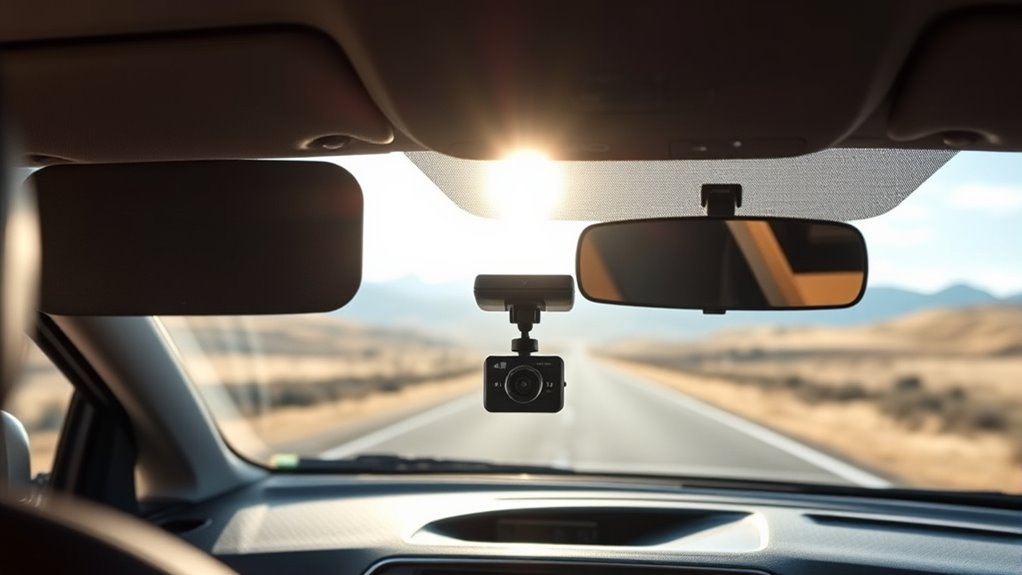
Choosing the right spot for your dash cam is key to staying within Wyoming’s laws and ensuring clear footage. Mounting it on the dashboard offers advantages like unobstructed views and easy access, while placing it behind the rearview mirror keeps it out of sight and legal. Remember to test your placement to avoid blocking your view and use secure brackets for safety. Proper mounting also helps avoid unintentional violations and ensures compliance with state laws. Additionally, understanding dash cam mounting regulations can help prevent potential legal issues. Being aware of privacy considerations can further ensure your dash cam use remains lawful and respectful of others’ rights, especially as privacy laws continue to evolve with technology. Recognizing mounting best practices helps safeguard both your footage quality and legal standing.
Dashboard Placement Advantages
Mounting your dash cam on the dashboard offers several key benefits that enhance its performance and legality. It provides a stable surface, preventing issues caused by windshield adhesion, and reduces vibration, resulting in clearer footage. This placement lowers the risk of the camera detaching during sudden stops and makes wiring and power connections easier to access. Additionally, positioning the camera at the right forward angle ensures ideal road capture, helping record lanes, signs, and incidents effectively. Dashboard mounting also complies with Wyoming laws, as long as it doesn’t obstruct your view. Proper placement increases video quality, legal compliance, and ease of use. For optimal results, ensure the camera is mounted in a location that minimizes glare and reflections while maintaining a clear view of the road ahead. Selecting an optimal mounting location helps prevent distractions and ensures consistent recording quality. Proper placement also takes into account view obstruction considerations to stay within legal requirements and maximize safety. Using a stable mounting surface minimizes vibrations that can blur footage and ensures consistent video clarity. Additionally, choosing a secure and approved mounting method can further enhance stability and durability during driving conditions. Ensuring that the camera is mounted in an area free from excessive vibration can help maintain high-quality footage over time.
Avoid Windshield Obstructions
To avoid violating Wyoming’s windshield obstruction laws, it is essential to select authorized mounting locations that keep your view unobstructed. Mount your dash cam on the dashboard or in the lower corners of the windshield, making certain it doesn’t block your line of sight. Avoid placing the device in areas where it may interfere with airbags or wiper blades, and steer clear of the central upper windshield zone. Use low-profile mounts like adhesives or suction cups positioned on the dashboard, and regularly check that your view remains clear. Keep the device below eye level and make certain it doesn’t create glare or reflections. Proper placement also helps ensure that recorded footage can be used effectively in legal situations. Additionally, understanding free floating considerations can help you choose mounting options that minimize vibrations and improve video quality. Selecting the right dash cam placement can further reduce potential distractions while maintaining legal compliance. Ensuring your camera is firmly mounted can also help prevent vibration distortion, which might compromise footage clarity.
Behind Rearview Mirror
Positioning your dash cam behind the rearview mirror can help you stay compliant with Wyoming’s windshield laws while maintaining a clear view of the road. While Wyoming’s laws are somewhat ambiguous, mounting behind the mirror is generally considered acceptable if it doesn’t obstruct your view. This placement keeps the camera out of your primary sightline, reducing glare and reflection risks. To guarantee compliance, aim for a high and centered position near the mirror. Proper placement minimizes legal risks and enhances safety. Ensuring your distraction-free environment aligns with your focus on safe driving practices is essential.
- Feel confident knowing your dash cam won’t distract or block your view
- Reduce glare that can impair your vision
- Keep your camera secure and stable during drives
- Avoid accidental obstruction violations
- Maintain a clear, unobstructed view for safer driving
Amazon Product B0CQGFYSNC
As an affiliate, we earn on qualifying purchases.
Size and Visibility Considerations for Dash Cameras
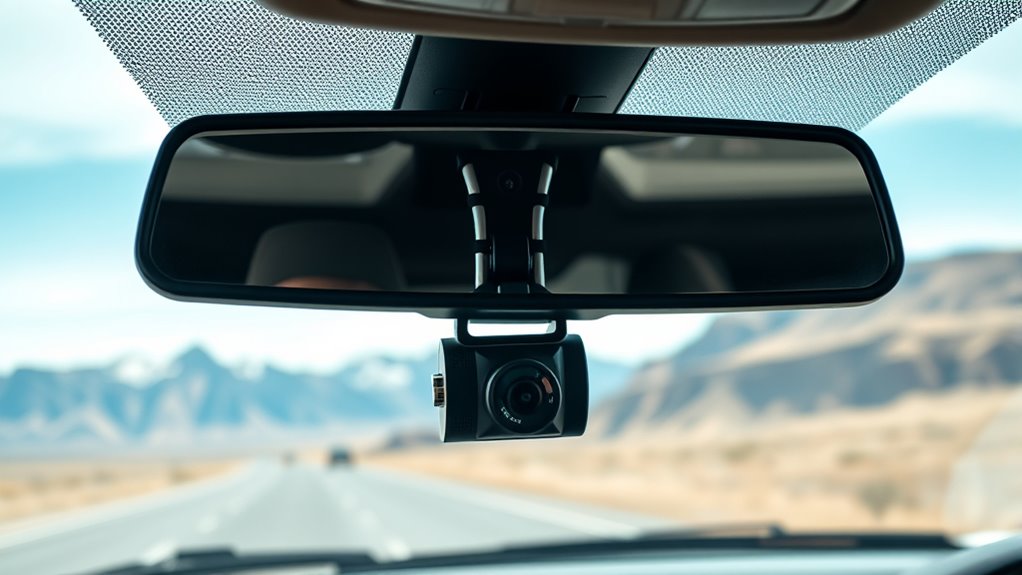
When installing dash cameras, size and visibility are critical to ensuring compliance with Wyoming’s windshield obstruction laws. Federal guidance recommends keeping the visible footprint within 8.5 inches below the upper wiper area and 7 inches above the lower edge, with many states adopting similar size limits, such as 5 to 7 square inches in designated zones. Dash cams mounted behind the rearview mirror or using low-profile, transparent mounts help avoid obstruction violations. Larger or bulky housings may be flagged as obstructions, especially if they block your view or interfere with safety systems. To minimize risks, choose compact, securely mounted units that stay within permitted zones and do not protrude into your sightlines, ensuring both safety and legal compliance. Proper mounting techniques are essential to prevent accidental violations and maintain clear visibility at all times. Additionally, choosing high-quality, low-profile mounts can reduce the risk of unintentional obstruction. Selecting mounts that are designed for low-profile installation can further help comply with size regulations and improve overall safety.
Amazon Product B0CRKN6MVW
As an affiliate, we earn on qualifying purchases.
Audio Recording Laws and Consent Requirements
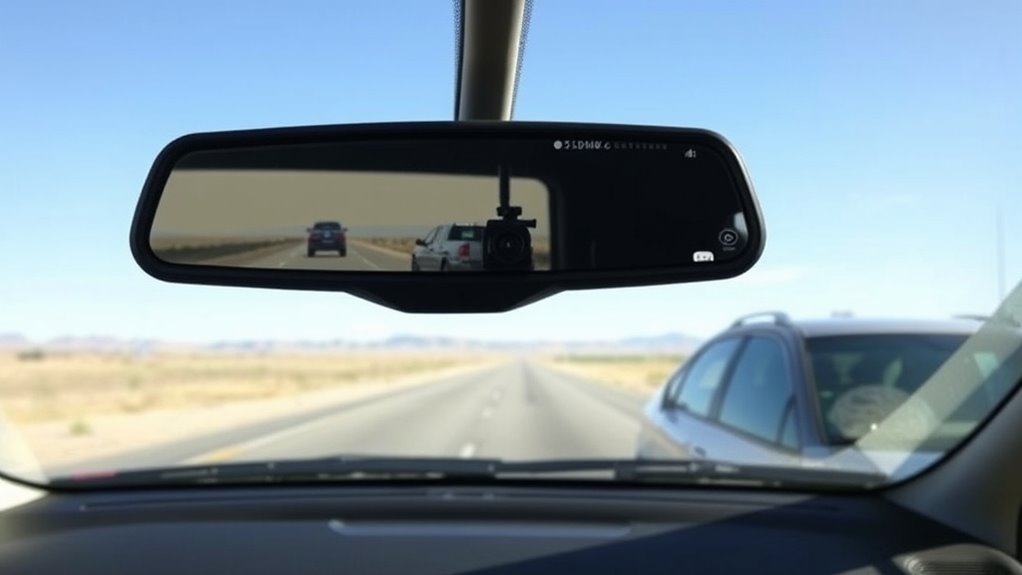
Since Wyoming is a one-party consent state, your dash cam can record audio as long as you’re participating in the conversation. You don’t need to get everyone’s permission, but it’s wise to notify passengers to avoid privacy issues. Keeping others informed helps you stay compliant and prevents potential legal complications. Notifying others also demonstrates good practice and respect for privacy rights. Additionally, understanding privacy policies and how they relate to audio recording can help ensure you remain within legal boundaries. Being aware of audio recording laws can further protect you from inadvertent legal violations, especially as regulations around cookie categories and user consent continue to evolve. Familiarizing yourself with state-specific laws can provide additional guidance on recording practices. Moreover, understanding the psychological impact of animal companionship can be useful if you consider recording interactions with pets or animals during your drives.
One-Party Consent Rules
Wyoming follows a one-party consent rule for audio recordings, meaning you can legally record a conversation if at least one participant, including yourself, agrees to the recording. This law generally allows you to record in your vehicle when you’re a participant, but recording others without their knowledge can carry risks. Understanding the legal limits of audio recording helps prevent accidental violations and ensures you stay within Wyoming law. Be aware that secretly recording conversations where you’re not a participant may violate federal or state laws. To stay compliant and protect yourself, consider these steps:
- Disable audio recording if you’re unsure about consent
- Clearly display notices in commercial vehicles
- Verbally inform passengers and get their consent
- Keep logs of when audio is recorded or muted
- Respect privacy expectations in private settings
- Familiarize yourself with audio recording laws to better understand the scope and restrictions of recording in different situations.
- Recognize that public recording may have fewer restrictions, but private conversations still require caution.
- Being aware of auditory processing issues can help you better understand situations where recording or privacy considerations are especially sensitive.
Recording Passenger Conversations
Recording passenger conversations with audio raises specific legal considerations in Wyoming, even though the state follows a one-party consent rule. As the driver, your consent suffices, but explicit permission from passengers is recommended to avoid privacy issues. Using a dash cam with audio requires clear awareness of these rules. To stay compliant, consider these practical steps:
| Action | Benefit |
|---|---|
| Inform passengers verbally | Ensures awareness and consent |
| Post visible notices/stickers | Creates implied consent |
| Disable audio recording | Avoids legal risks if unsure |
| Turn off sound on dash cam | Protects privacy when needed |
| Confirm agreement before recording | Maintains transparency |
Ignoring these practices risks lawsuits, criminal charges, or inadmissible recordings. Always prioritize clear communication and legal compliance.
Navigating Privacy Expectations for Passengers and Third Parties
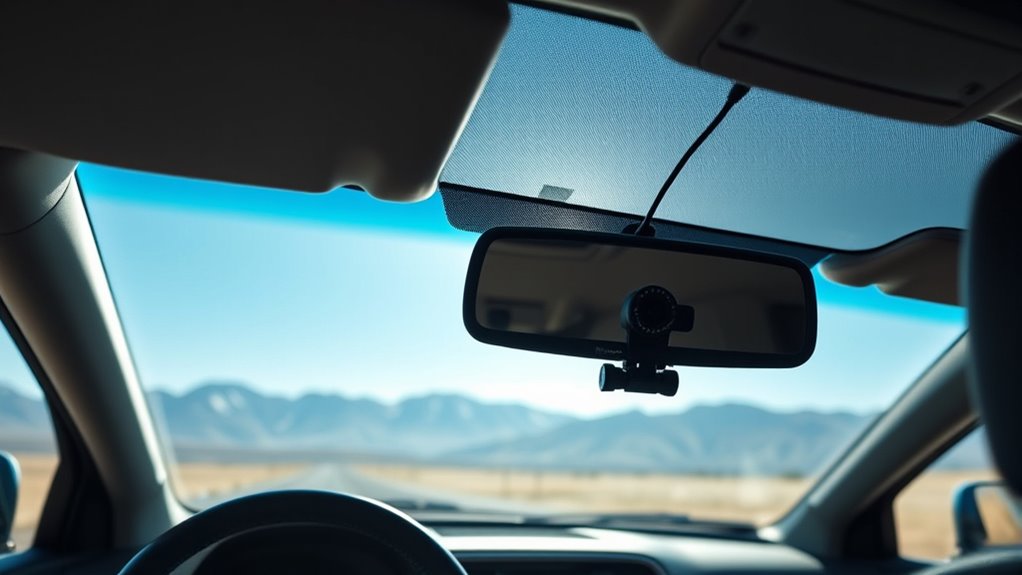
While dash cam operators in Wyoming have the legal right to record in public spaces, respecting passengers’ and third parties’ privacy expectations remains essential. You should notify passengers when audio recording is active to avoid privacy complaints and promote transparency. For third parties, recording streets and sidewalks is generally lawful, but capturing private conversations or privacy-sensitive locations can lead to legal issues. Be cautious about recording in spaces like restrooms, private yards, or inside homes through windows. Automated tracking or facial recognition increases privacy risks and potential liabilities. Remember, passengers and third parties may expect:
- Clear notification of audio recording
- Respect for private conversations
- Limited retention of sensitive footage
- Secure storage of recorded data
- Prompt response to privacy concerns
Balancing your recording rights with privacy expectations helps prevent disputes and legal trouble. Understanding applicable privacy laws and best practices is crucial for responsible dash cam use.
Using Dash Cam Footage in Legal and Insurance Cases
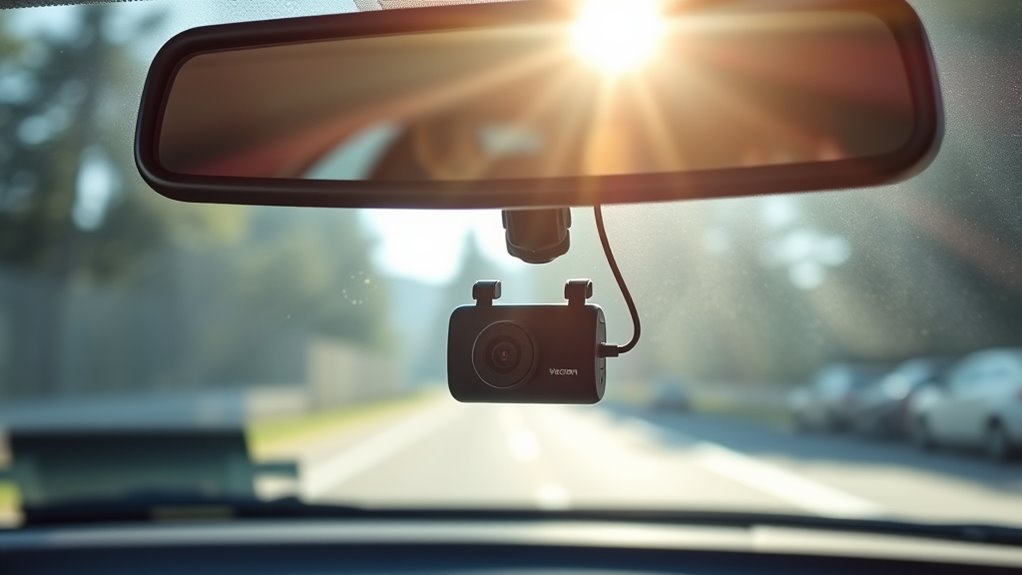
Using dash cam footage in legal and insurance cases requires understanding its evidentiary value and the rules that govern its use. For evidence to be admissible, it must be relevant, legally obtained, authentic, and untampered. Courts often accept dash cam footage to establish fault or support claims, provided it proves or disproves a key point without undue prejudice. Reliability depends on the trustworthy source and accurate recording, aligned with Wyoming Rules of Evidence Rule 402, which allows relevant evidence unless otherwise restricted. In criminal cases, courts review footage to assess suspicion and support findings, while prosecutors share videos with the defense. Insurance claims rely on footage to determine fault and substantiate claims, especially when recordings meet legal standards for audio and video. Police may seize footage during investigations, impacting case outcomes. Properly obtained footage is crucial for ensuring admissibility and strengthening a case in court.
Best Practices for Ensuring Compliance and Reducing Risks
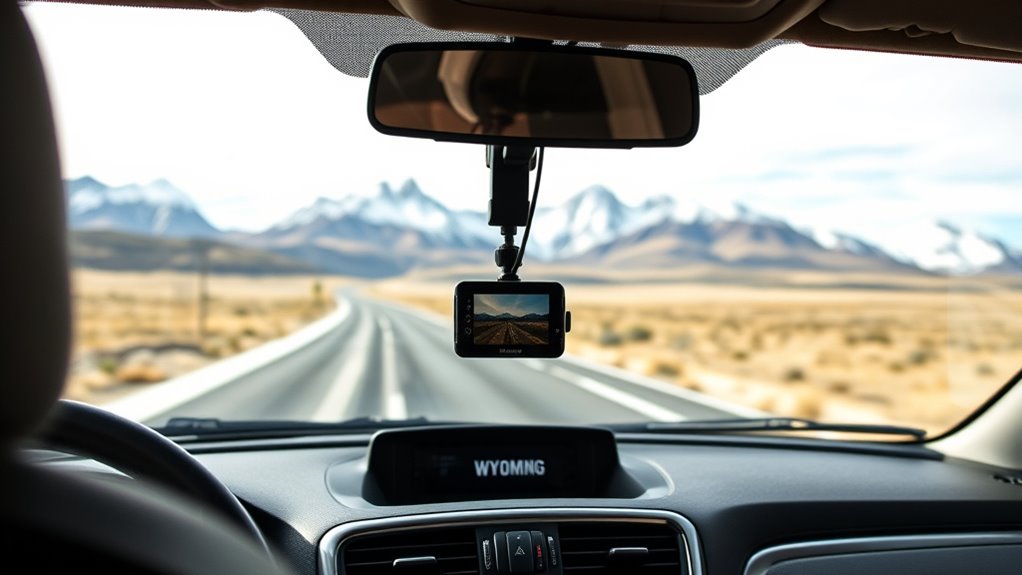
To guarantee compliance and minimize legal and privacy risks, you should establish clear policies and controls over how dash cam data is managed and accessed. Implement a strict data-retention schedule, deleting footage after 30–90 days, and use automated overwrite rules to prevent indefinite storage. Classify access levels—such as admin or safety investigators—and log all activity for audit trails. Protect data with encryption at rest and during transmission to reduce unauthorized disclosures. Maintain an incident-response plan for data breaches, outlining steps for notification and forensic review. To strengthen privacy protections, consider these practices:
- Regularly review and update your privacy policies
- Limit access to sensitive footage
- Train staff on legal recording boundaries
- Use notices and consent forms proactively
- Employ redaction tools for private property footage
Recommendations for Mounting and Recording Notices
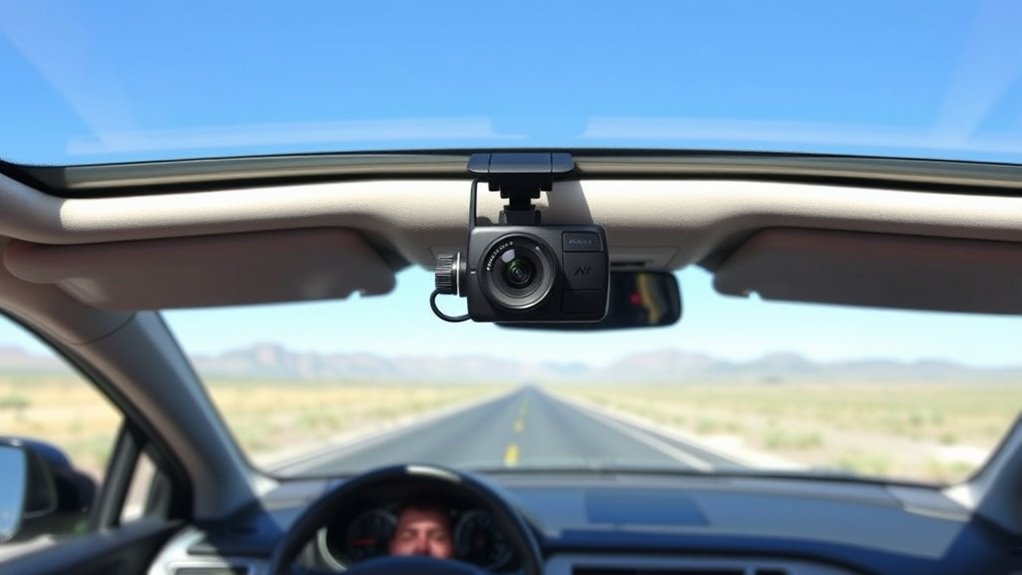
Proper mounting and clear recording notices are key to maintaining compliance and protecting privacy when using dash cams in Wyoming. To avoid obstructing your view, install your device on the dashboard or behind the rearview mirror, steering clear of lower windshield corners or center mounts that may lead to violations. Test your setup to confirm it doesn’t block visibility before driving. Remember, Wyoming law requires your dash cam not to impair forward visibility or interfere with safe operation. When recording audio, use single-party consent, and consider placing notices if recording passengers to meet privacy expectations. Keep documentation of your device’s placement in case of legal questions. Always verify local regulations beyond 2025 updates, and consult authorities if you’re unsure about your mounting or recording notices.
Legal Advice and Considerations for Sensitive Situations

When recording audio and video inside your vehicle, understanding Wyoming’s legal landscape is essential to avoid privacy violations and legal complications. You must be aware of the one-party consent rule, which allows you or your employer to record conversations if you’re a participant. However, recording private conversations off‑vehicle or in sensitive locations like restrooms can lead to privacy claims. To protect yourself, consider these precautions:
- Disable audio when consent isn’t clear
- Obtain explicit permission on private property
- Use notices to inform passengers of recording
- Limit recordings involving minors or visitors
- Document who gave consent to reduce disputes
- Be aware of specific privacy laws that may restrict recording in certain situations or locations.
Being cautious helps prevent civil or criminal issues, especially during sensitive incidents. Staying informed ensures your dash cam use remains lawful and respectful of others’ privacy.
Frequently Asked Questions
Can I Record Audio From Passengers Without Their Consent in Wyoming?
Yes, you can record audio from passengers without their consent in Wyoming if you’re the driver. Wyoming is a one-party consent state, so your consent suffices to record conversations inside your vehicle. To avoid issues, consider informing passengers beforehand or posting a sign indicating audio recording. Disable the microphone if conversations involve sensitive topics or if you’re uncertain about consent, ensuring you’re compliant with state laws and respecting privacy.
Are There Specific Size Restrictions for Dash Cams Mounted Inside the Vehicle?
Wyoming doesn’t set specific size restrictions for dash cams inside your vehicle. Instead, the law focuses on whether the camera obstructs your view while driving. You should mount the device on the dashboard or low enough on the windshield to keep your sightline clear. Avoid large or bulky mounts that block your vision, and steer clear of mounting behind wipers or in your primary line of sight to stay compliant.
Is It Legal to Record Law Enforcement During a Traffic Stop Without Their Knowledge?
Yes, it’s legal for you to record law enforcement during a traffic stop without their knowledge in Wyoming. Wyoming’s laws allow you to record conversations with one-party consent, meaning as long as you’re part of the conversation, the recording is lawful. Police have no expectation of privacy during public interactions like traffic stops, so your dash cam footage is generally admissible in court if legally obtained.
Can I Share Dash Cam Footage Publicly Without Facing Privacy Violations?
You can share dash cam footage publicly if it was recorded in public areas, like roads or parking lots, where there’s no reasonable expectation of privacy. However, be cautious about revealing sensitive info such as license plates, faces, or private conversations without consent. To avoid privacy violations, consider redacting personal details and mute audio if privacy concerns arise, especially when recording private property or private conversations.
How Long Can I Legally Retain Dash Cam Recordings in Wyoming?
In Wyoming, you can generally retain dash cam recordings for 30 to 90 days as a standard practice, unless footage is flagged for an incident or legal case. If the recordings are involved in criminal or civil investigations, you must keep them until the case concludes. It’s best to implement clear retention policies, regularly review footage, and guarantee secure storage to stay compliant and protect privacy.
Conclusion
By understanding Wyoming’s dash cam laws, you can navigate the road with confidence and respect for privacy. Remember, these regulations are the compass guiding your recording practices, ensuring you stay on the right side of the law. Think of your dash cam as a trusted witness—powerful yet bound by rules—helping you protect yourself without crossing the line into privacy violations. Stay informed, stay compliant, and drive with peace of mind.