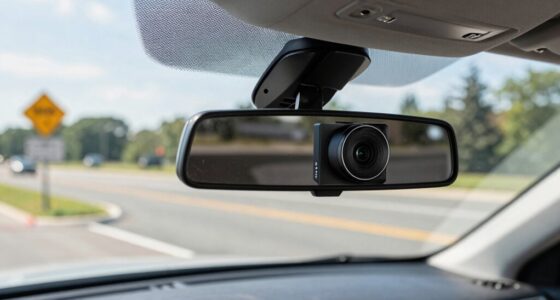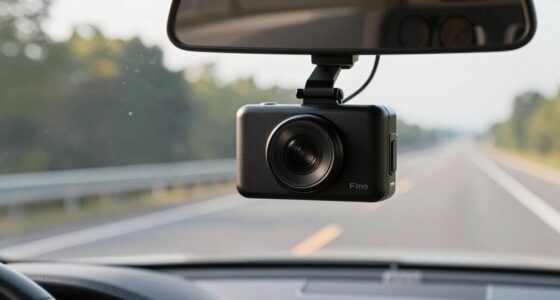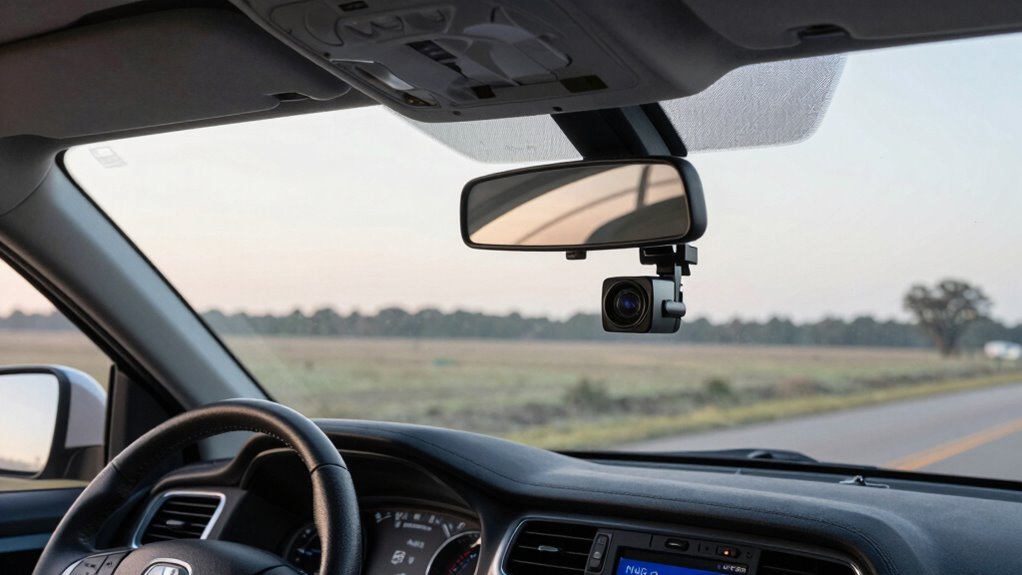

In Kansas, you should mount your dash cam behind or near the rearview mirror to avoid obstructing your view and guarantee safety. Kansas law allows you to record audio with one-party consent, so if you’re recording conversations, you only need your own agreement. Be mindful of privacy rights, especially in private spaces, and avoid recording without permission. Staying compliant with these basics helps you use your dash cam legally—more details await if you continue exploring.
Key Takeaways
- Mount dash cams behind or near the rearview mirror to avoid obstructing views and safety features, with low-profile units preferred.
- Kansas is a one-party consent state, allowing audio recordings of conversations with your own or consenting passengers.
- Recordings in private spaces or private conversations may violate privacy laws; inform passengers of recording.
- Ensure footage is clear, preserved properly, and compliant with privacy laws for legal admissibility in court.
- Regularly review and adapt to evolving laws and privacy regulations to maintain lawful dash cam use.
Proper Placement of Dash Cams on Kansas Vehicles

To guarantee your dash cam complies with Kansas laws, you must place it so it doesn’t substantially obstruct your view of the road. Kansas prohibits any nontransparent material on the windshield or windows that blocks or impairs your clear view of the highway. Mounting your camera behind or near the rearview mirror is typically compliant because it stays within the mirror’s visual zone and minimizes intrusion into your primary sightlines. Dashboard mounts are also recommended since they avoid obstructing your windshield altogether. When routing cables, ensure they don’t create visual obstructions or interfere with controls or airbags. Position your camera high in the center, slightly toward the passenger side, or in the upper-central windshield area, avoiding A-pillars or lower corners that could hinder peripheral vision during turns or at intersections. Additionally, contrast ratio plays a role in how clearly your dash cam captures details in various lighting conditions, so choosing a model with a good contrast ratio can improve footage quality. Proper camera placement also helps ensure compliance with vehicle safety laws, which aim to keep drivers’ views unobstructed. It’s also important to consider how nanotechnology could influence future dash cam features, such as enhanced image sensors or better glare reduction. Incorporating advanced materials in camera design might lead to more durable and clearer footage in challenging weather or lighting situations. Staying informed about regulatory updates can help ensure your dash cam remains compliant as laws evolve.
Audio Recording Rules and One-Party Consent
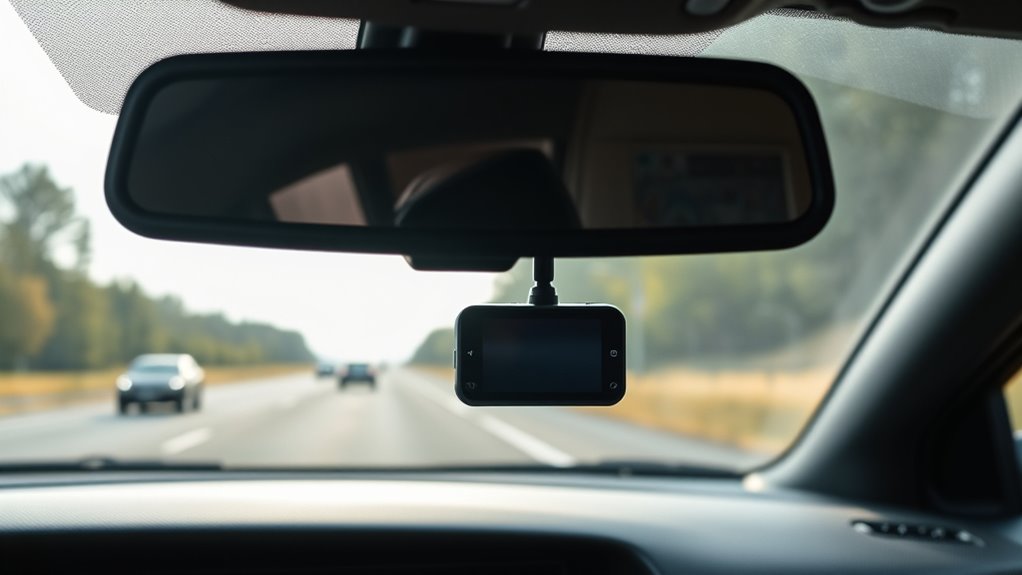
When installing a dash cam in Kansas, understanding the state’s audio recording laws is essential to stay compliant. Kansas is a one-party consent state, meaning only one person involved in the conversation needs to consent to recording. Usually, that’s you as the driver. If you’re recording audio inside your vehicle, your consent is sufficient, and you don’t need to get permission from passengers. However, it’s good practice to inform passengers about the recording, either through visible notices or verbal acknowledgment. Violating these laws can lead to fines, lawsuits, or criminal charges, especially if private conversations are recorded without consent. To stay compliant, always obtain driver consent, post warning notices, and disable audio when necessary, particularly in sensitive or private situations. Additionally, being aware of privacy laws can help prevent unintentional legal issues related to audio recording, especially when considering public versus private spaces. It’s also advisable to review state-specific regulations regularly, as laws regarding recordings can change over time. Being familiar with audio recording restrictions can further ensure you avoid legal complications. Moreover, understanding the scope of wave and wind conditions can help determine appropriate dash cam placement and usage in varying weather situations.
Legal Considerations for Dash Cam Footage Admissibility
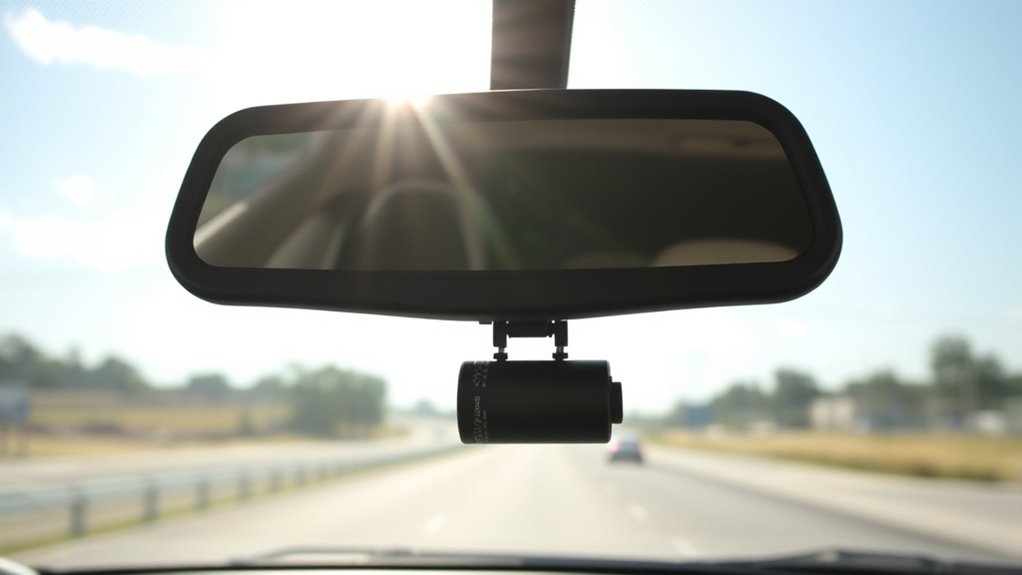
Legal considerations play a crucial role in determining whether dash cam footage can be used as evidence in Kansas courts. To be admissible, your footage must be of good quality and clearly demonstrate the truth of your statements. Courts treat police and civilian recordings equally, as long as they follow legal recording rules. Footage from public spaces is generally allowed without consent, supporting its use in court. High-quality videos carry greater evidentiary weight, especially when they accurately depict incidents. You must preserve the footage properly, avoiding alteration or deletion, which renders it inadmissible. Additionally, recordings must comply with laws on obstruction and consent. Properly recorded footage can identify inconsistencies, support your claims, and help establish facts in legal proceedings, making it a valuable tool for your case. In some jurisdictions, the legality of dash cam footage may depend on how the recording was obtained and whether it respects privacy laws, including privacy law compliance. Ensuring your recordings meet legal recording rules is essential for their acceptance in court. Moreover, understanding recording device requirements can help ensure your footage remains legally valid and admissible. Being aware of privacy laws and how they intersect with recording practices is also vital to avoid potential legal issues. For example, knowing the state-specific laws on recording can prevent unintentional violations that could compromise your case.
Size and Positioning Guidelines for Obstruction-Free Mounting
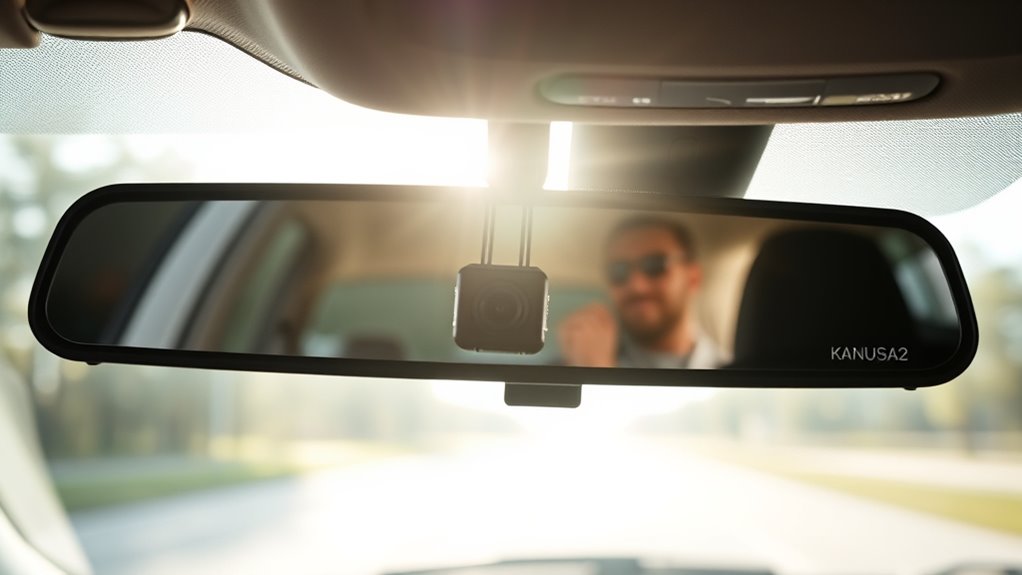
Ensuring your dash cam remains obstruction-free requires careful consideration of size and placement. Kansas prohibits mounting that “substantially obstructs” the driver’s view, so your device must avoid blocking sightlines or controls. Dashboard mounts are acceptable if wiring and placement don’t interfere, while windshield mounts are permitted only in non-obstructive areas—commonly behind or near the rearview mirror. Use small, low-profile units, typically under 5 inches, to minimize obstruction risk. Mounting on the dash as low as possible and angling the camera upward helps keep the view clear. Avoid placing the device where it could block wipers, airbags, or sight triangles. Positioning the camera just behind the mirror or in lower corner areas usually reduces interference, ensuring visibility and compliance. In addition, regularly check that your setup does not obstruct any safety features or block important sensors for optimal safety and legal adherence. Proper mounting techniques and awareness of industry trends can further ensure your dash cam remains both effective and compliant with Kansas laws. A well-placed dash cam can also serve as a valuable security zone by providing evidence in case of incidents. Additionally, selecting a compact design can help prevent accidental obstruction and make adjustments easier.
Navigating Privacy Laws and Interactions With Other Statutes
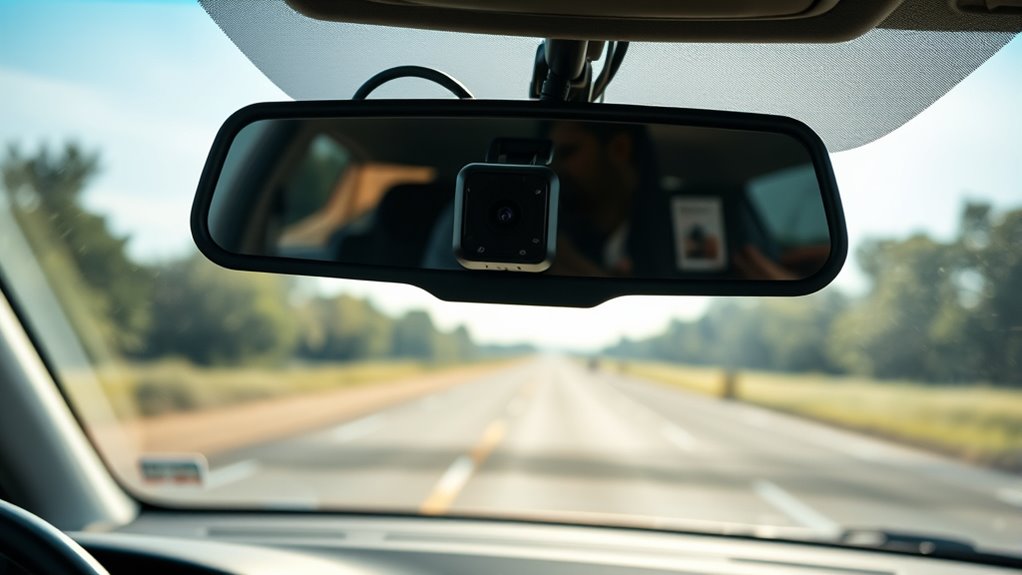
Managing privacy laws and related statutes is essential when mounting a dash cam in Kansas. Kansas law prohibits obstructing your view with nontransparent materials on your windshield or windows, so your dash cam should be placed behind the rearview mirror or on the dashboard to avoid citations. Be aware that commercial vehicle regulations may impose additional mounting standards. When recording audio, Kansas’s one-party consent law allows you to record conversations you’re part of, but recording others without their knowledge could lead to legal issues under federal or state wiretapping laws. Recording in public spaces generally poses fewer privacy concerns, but capturing private conversations or filming in private areas may violate privacy expectations. Always consider both privacy laws and other statutes to stay compliant while using your dash cam. Understanding the specific requirements for dash cam placement and recording practices can help you avoid legal complications and ensure your footage is admissible if needed. Additionally, being aware of privacy expectations in various settings helps prevent unintentional violations of others’ rights. It is also important to recognize how recording practices intersect with existing privacy laws to maintain lawful use of your dash cam. Being proactive about privacy considerations can further protect you from potential legal issues. Moreover, staying informed about regulatory changes can help you adapt your dash cam usage as laws evolve. Regularly reviewing local laws and privacy guidelines ensures you remain compliant over time.
Frequently Asked Questions
Are There Specific Kansas Laws About Recording Passengers’ Conversations Inside the Vehicle?
In Kansas, there are no specific laws requiring you to notify passengers about audio recording inside your vehicle. Since Kansas is a one-party consent state, your consent as the driver permits you to record conversations with passengers. However, it’s a good idea to inform them to avoid disputes and ensure transparency. Keep in mind that recording is legal if at least one party consents, which you as the driver already provide.
Can Dash Cam Footage Be Used Against Me in Kansas Criminal Cases?
Think of dash cam footage as your digital witness—it can be used against you in Kansas criminal cases. If the footage is relevant, authentic, and lawfully obtained, prosecutors may rely on it to show your actions or environmental conditions. Be aware that poor quality, edited videos, or recordings made in private spaces could be challenged. Always guarantee your recordings follow legal guidelines to avoid unintentionally helping the case against you.
What Are the Penalties for Improperly Mounting a Dash Cam in Kansas?
If you mount your dash cam improperly in Kansas, you risk fines, points on your driving record, and potential traffic citations. Violations occur if your dash cam blocks your view or uses nontransparent materials, especially on the windshield or side windows. To avoid penalties, mount your dash cam on the dashboard or behind the rearview mirror, ensuring it doesn’t substantially obstruct your vision or violate the law.
Is It Legal to Record Outside the Vehicle Using a Dash Cam in Kansas?
Think of your dash cam as a vigilant eye that extends beyond your windshield. It’s perfectly legal to record outside your vehicle in Kansas, especially in public areas like roads and parking lots. Just make sure your camera isn’t obstructing your view—mount it carefully on your dashboard or windshield. Remember, capturing footage in public spaces is allowed, but avoid private property without permission to respect privacy boundaries.
Are There Restrictions on Sharing Dash Cam Footage Publicly in Kansas?
You should be cautious when sharing dash cam footage publicly in Kansas. While there’s no specific law banning posting videos online, doing so could violate privacy rights or lead to legal issues, especially if it involves sensitive or private information. Avoid editing or deleting clips if they’re relevant to a legal case, and always consider consulting your attorney before sharing footage to prevent inadmissibility or legal penalties.
Conclusion
Understanding Kansas dash cam laws is like maneuvering a complex maze—you need to know the twists and turns to stay on the right path. By properly mounting your camera, respecting audio rules, and honoring privacy laws, you can capture valuable footage without crossing legal lines. Think of your dash cam as a trusted guide through Kansas’s legal landscape, helping you document the road ahead while steering clear of potential pitfalls. Stay informed and drive confidently.