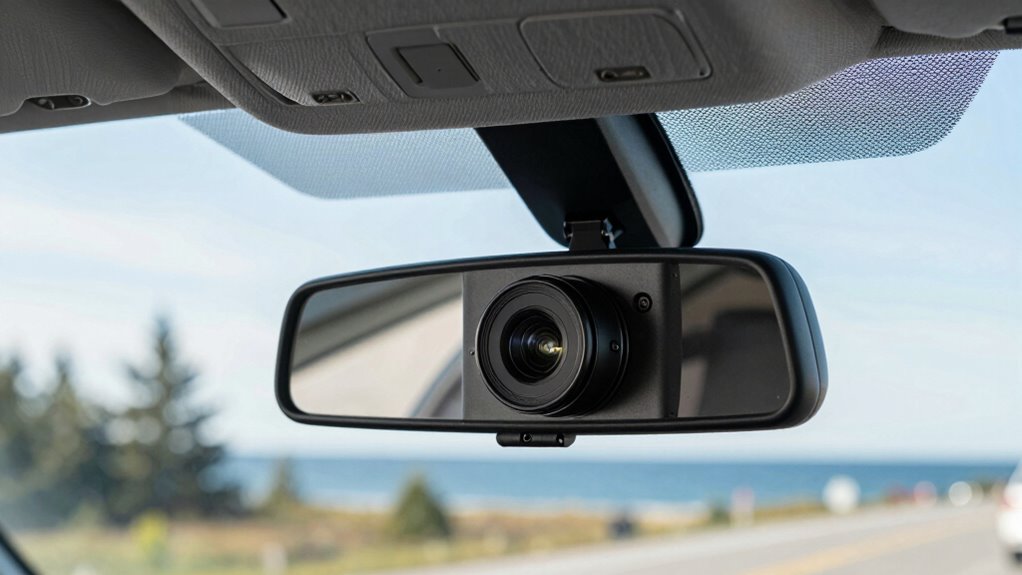
In Maine, you can mount your dash cam on the windshield or dashboard as long as it doesn’t block your view or interfere with airbags. The state follows one-party consent laws, so you only need to agree before recording audio inside your vehicle. Respect others’ privacy and avoid recording private spaces without permission. Proper placement, understanding consent laws, and handling footage responsibly helps you stay compliant—stay tuned to learn more about keeping your dash cam setup legal and safe.
Key Takeaways
- Dash cams must be mounted to avoid obstructing the driver’s view, typically on the windshield or dashboard, following Maine vehicle regulations.
- Maine is a one-party consent state, allowing audio recording if at least one person involved agrees; disable audio if privacy is uncertain.
- Recording in public spaces is generally legal, but private conversations or property require permission and careful handling to avoid privacy violations.
- Properly secure and position the dash cam to prevent safety hazards, ensuring it does not interfere with airbags or vehicle controls.
- Maintain recorded footage securely, avoid tampering, and document device setup to support legal use for insurance or law enforcement purposes.
Proper Placement of Dash Cams in Maine Vehicles
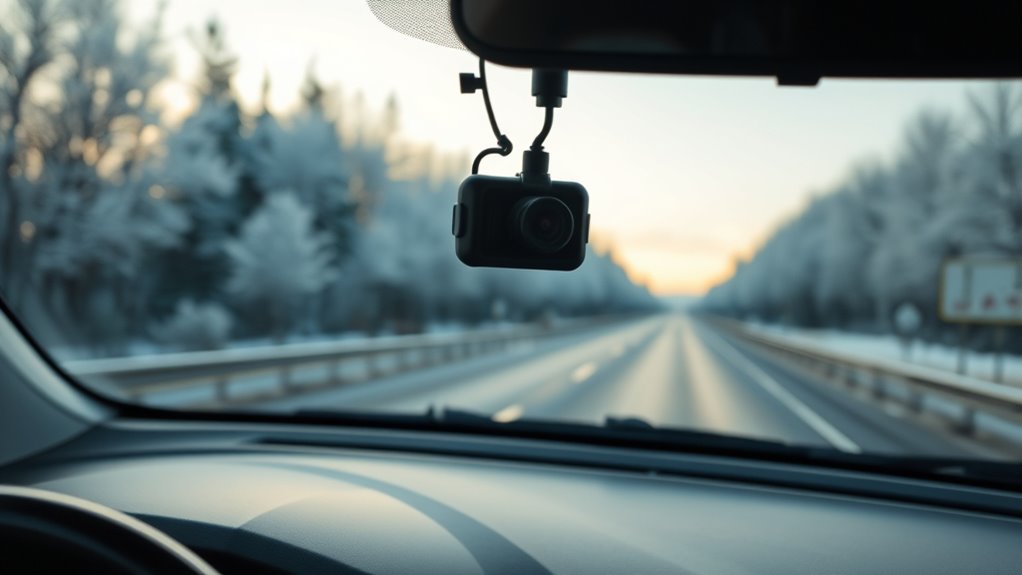
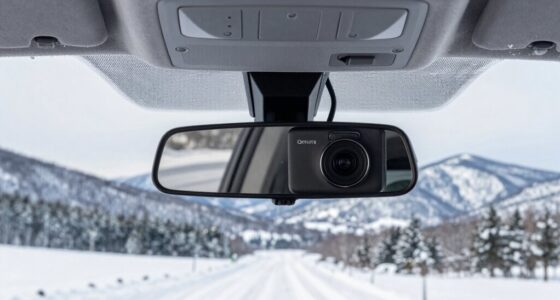
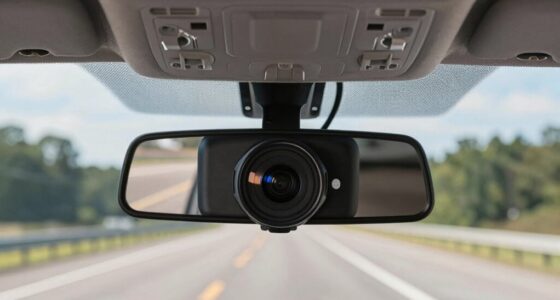
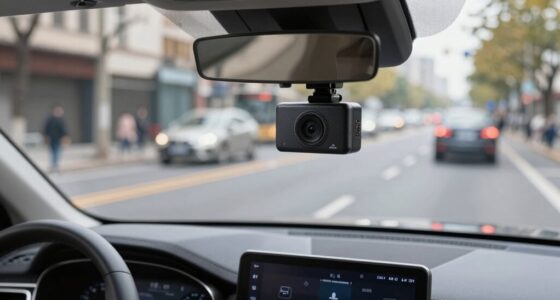
To properly place your dash cam in Maine vehicles, you need to make certain it doesn’t obstruct your view while driving. You can mount your dash cam on the windshield if it doesn’t block your line of sight, but there are exceptions for required or supplied vehicle equipment. Installing on the dashboard is also allowed, as long as it doesn’t interfere with your vision or controls. Keep the windshield clear of any vision-obstructing objects, and avoid mounting near the rearview mirror if it blocks your view. Lower windshield corners are acceptable if they meet size limits, or you can opt for dashboard placement as a simple alternative. Always verify your dash cam’s placement doesn’t interfere with airbags or controls, maintaining a clear, unobstructed view of the road. Maine law permits dash cams to be installed in various locations, provided they adhere to visibility standards and do not compromise safety. Additionally, proper placement techniques help ensure your device complies with state regulations and safety requirements. Properly securing your dash cam with appropriate mounting hardware can prevent it from becoming a distraction or falling off during drive. Ensuring your dash cam is mounted in a way that minimizes distraction hazards can further promote safe driving practices. Using correct mounting height techniques can help reduce glare and reflection issues that might impair your vision. Moreover, following vehicle safety guidelines can help avoid unintentionally violating any local or state laws regarding dashboard device placement.
Size and Obstruction Regulations for Mounting Devices
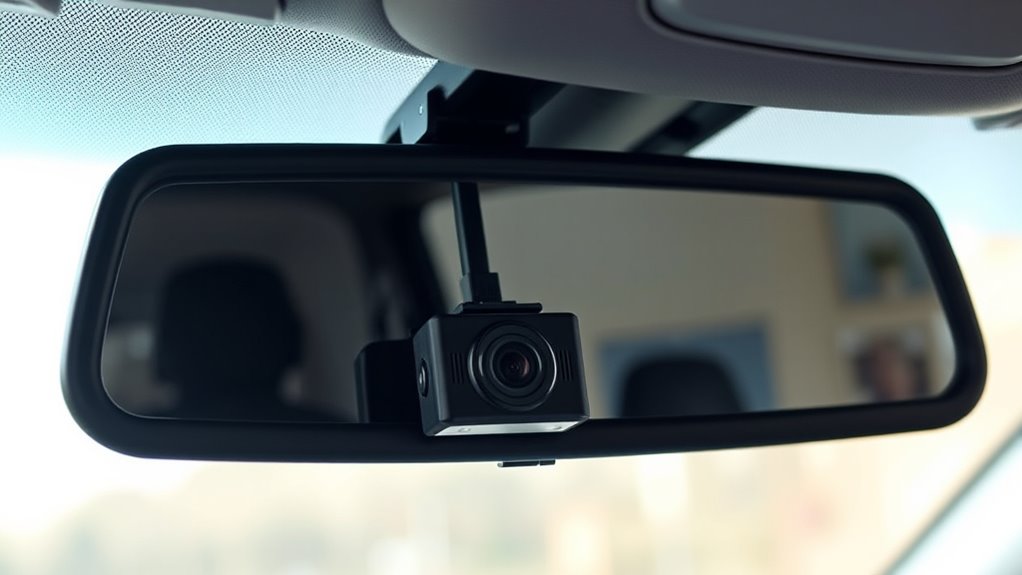
Since Maine law emphasizes maintaining a clear driver’s view, the size of your dash cam and mounting device plays a crucial role in compliance. You need to verify your device doesn’t obstruct your vision or interfere with safe driving. Proper positioning helps prevent accidental violations and ensures safety. To stay compliant, consider these points: 1. Keep the device within about five square inches on the driver’s side windshield to avoid obstruction complaints. 2. Avoid mounting near the top center or airbag zones, which could block visibility or interfere with safety features. 3. Route cables neatly and position the camera in areas least likely to impair your sightlines, such as the lower corners or behind the rearview mirror. Additionally, automated testing methods can assist in maintaining consistent compliance with mounting regulations. Understanding vehicle safety standards can also help you choose the right placement for your dash cam. Regularly monitoring your setup ensures your device remains within legal boundaries and functions correctly. Incorporating dash cam regulations and awareness of body modifications like piercings into your vehicle maintenance routine can further help you avoid citations and ensures your dash cam stays within legal boundaries.
Audio Recording Laws and Consent Considerations

In Maine, audio recording laws are governed by a one-party consent rule, meaning only one person involved in a conversation needs to agree before recording. As a driver, you can record audio inside your vehicle if you consent as a participant. This applies to oral communications intercepted by your dash cam. You don’t need the consent of all parties, only your own. However, recording in private places without permission can violate privacy laws and lead to civil damages or criminal charges. To stay compliant, consider informing passengers about audio recording through signs or verbal notices. If you’re unsure about consent, disable the audio feature. Remember, illegally obtained recordings are inadmissible in court and may impact insurance claims. Federal laws also set baseline standards, but Maine’s stricter rules take precedence. State-specific regulations also emphasize the importance of transparency and respecting private property rights when recording. Additionally, being aware of privacy laws can help prevent unintentional violations that could result in legal consequences. Moreover, understanding audio recording laws can help you navigate complex legal situations related to dash cam usage. Being familiar with wave and wind considerations is also helpful, especially when recording in outdoor environments, as they can affect audio quality and compliance. It is also wise to stay updated on changing regulations, as laws regarding recording practices can evolve over time. Furthermore, understanding the legal limitations on audio recordings can help you avoid potential violations and penalties.
Using Footage for Legal and Insurance Purposes

Using footage from your dash cam for legal and insurance purposes requires careful attention to certain criteria to guarantee its admissibility. First, verify your footage is authentic, supported by fact witnesses or sworn statements to confirm it’s unaltered. Second, the video must be clear enough to identify key events; grainy or dark footage may be rejected. Third, demonstrate relevance by showing how the footage helps establish fault, negligence, or law-breaking. Additionally, ensuring your device adheres to safety and privacy guidelines helps maintain its credibility in legal proceedings. Properly powering and installing devices can also influence footage quality and reliability. Furthermore, understanding video evidentiary standards ensures your footage meets legal requirements in court. Maintaining proper documentation of your footage and device setup can also support its credibility in disputes. To strengthen your case, remember: 1. Keep your footage legally obtained, avoiding obstruction or privacy violations. 2. Preserve the original, untampered recordings to prevent disputes. 3. Use high-quality videos, especially at night, to verify damages and liability confidently. Additionally, being aware of recent legal cases involving dash cam footage can help you better understand how courts assess such evidence.
Privacy Implications and Third-Party Rights

When using a dash cam, you need to consider passenger privacy and third-party rights. Recording in public spaces is generally allowed, but capturing audio or private moments without consent can violate privacy laws. To stay compliant, inform others that you’re recording and respect their privacy expectations. Additionally, be aware that some states have specific laws regarding audio recording and private conversations, which may require all-party consent to avoid legal issues. It’s also important to understand Free Floating principles that promote respecting personal boundaries and privacy during recordings.
Passenger Privacy Concerns
Passenger privacy concerns in Maine dash cam laws center on respecting individuals’ rights to private conversations and personal spaces. You need to be aware that audio recordings require only your consent, meaning passengers might be recorded without their knowledge. This can lead to feelings of betrayal or violation. To avoid issues, consider:
- Informing passengers beforehand about audio or video recording to build trust.
- Posting visible notices or warning stickers to clearly indicate recording practices.
- Disabling audio recording if you’re uncertain about everyone’s consent during a trip.
- Being aware of precise legal requirements related to audio recording and passenger rights to avoid unintentionally violating privacy laws.
- Understanding the importance of ethical considerations when handling recorded data to ensure respectful treatment of all parties involved. Additionally, being aware of privacy policies helps ensure compliance with relevant regulations and maintains trust with those recorded.
- Recognizing that recorded data should be stored securely to protect individuals’ privacy and prevent unauthorized access.
Public Recording Limits
Public recording laws in Maine set clear boundaries to protect individuals’ privacy rights while allowing for legitimate surveillance. You can record in public spaces where visibility isn’t limited, and video capture of public events is generally legal. However, you must avoid recording concealed body parts under clothing with mechanical equipment. When recording conversations, Maine follows single-party consent, meaning you can record if you’re part of the conversation; disable audio if privacy is uncertain. Recording on private property requires landowner consent and proper labeling, with law enforcement exceptions. Be mindful not to infringe on third-party rights by capturing private property or conversations without consent. Using visible notices and opting for video-only recordings help balance surveillance needs with respecting individual privacy rights. Dash cams are legal in Maine, but adherence to privacy laws and proper usage is essential to avoid legal issues. It’s also important to understand the privacy protections afforded to individuals to prevent unintentional violations. Recognizing potential security vulnerabilities can help users implement better safeguards for their recordings and devices. Additionally, understanding the role of consent in recording practices can prevent inadvertent privacy breaches. Being aware of public recording limits can help users navigate the balance between security and privacy effectively. Awareness of recording restrictions ensures compliance with state laws and respects personal boundaries.
Equipment Choices for Compliance and Safety

Choosing the right mounting options guarantees your dash cam stays compliant and doesn’t obstruct your view. You’ll want a device that’s secure and tamper-proof to prevent theft or damage. Additionally, consider your audio recording settings to stay within legal limits while capturing useful footage. Proper placement not only ensures safety but also helps avoid potential legal issues related to obstruction or privacy.
Mounting Options for Visibility
To guarantee your dash cam complies with Maine’s visibility requirements, selecting the right mounting options is essential. You should focus on positioning your device to avoid obstructing your clear view of the road, helping you stay safe and legal. Here are three effective mounting options:
- Dashboard mounts: Use low-profile adhesive mounts that bond flat to the surface, minimizing projection into your sightlines.
- Rearview mirror mounts: Clamp or clip mounts to your mirror stalk, keeping the camera within a narrow, less-obstructive zone.
- Peripheral windshield mounts: Place suction-cup mounts in small windshield corners, provided the device size and placement don’t reduce visibility.
Choose compact cameras and test visibility after installation. Proper placement ensures safety and compliance, keeping your focus on the road.
Secure and Tamper-proof Devices
Ensuring your dash cam is secure and tamper-proof is essential for maintaining both compliance and safety on Maine’s roads. You should choose a device with anti-tamper features like lockable bases and tamper-evident seals to prevent unauthorized removal or interference. Firmware locks help protect against unauthorized changes to settings, while event-triggered locks secure footage from deletion or overwriting. Select a camera with a rugged, impact-resistant, weatherproof housing to withstand vibrations, collisions, and extreme temperatures. Vibration-dampening mounts reduce shaky footage, ensuring clarity. Certified devices, such as the Matrack Fleet Dash Cam, often include automatic compliance checks for visibility and obstruction detection, helping you avoid fines. These features ensure your dash cam remains reliable, secure, and legally compliant during everyday use on Maine’s roads. Additionally, choosing a model with secure power connections and encrypted storage can further prevent tampering and protect your footage from unauthorized access.
Audio Recording Settings
Implementing the right audio recording settings on your dash cam helps you stay compliant with Maine’s laws and enhances safety on the road. To do this effectively:
- Disable audio recording when passengers lack a reasonable expectation of privacy, respecting their rights and avoiding legal issues.
- Inform passengers verbally or with signage that audio is being recorded, so everyone is aware and consents.
- Use dash cams with toggleable audio features and turn off the microphone if you’re unsure about consent, ensuring you don’t accidentally violate laws.
- Prior authorization is required for audio interception unless an exception applies, so always verify your recording practices align with legal standards to prevent civil or criminal penalties.
Best Practices for Recording and Data Management
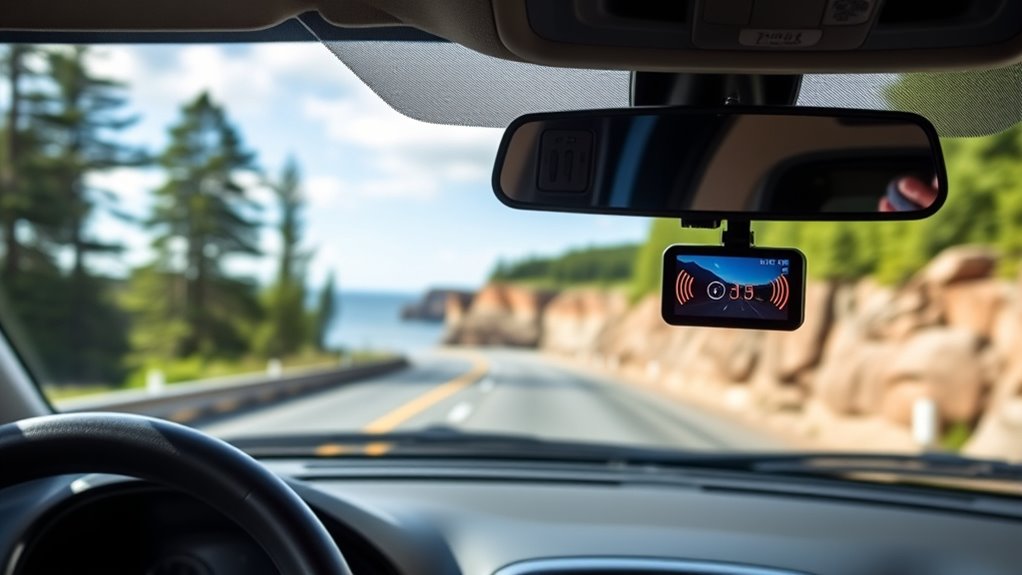
Effective recording and data management in Maine require strict adherence to mounting, audio, and storage protocols. Confirm your dash cam is mounted where it won’t obstruct your view, preferably on lower corners or behind the rearview mirror, avoiding the windshield center. Always inform passengers about recording using notices or verbal disclosures, and disable audio if consent isn’t obtained to prevent violations. Store footage securely, limiting access to authorized personnel, and set clear retention periods to delete uneventful recordings. Retain incident-related footage, as deletion can lead to penalties, and avoid editing videos in a way that alters timestamps, audio, or scenes. Follow privacy practices by disabling audio in private conversations. Regularly review your data management policies to ensure compliance and protect everyone’s privacy rights. Proper documentation helps demonstrate responsible data handling and can be useful if legal questions arise.
Frequently Asked Questions
Can I Record Audio in My Dash Cam Without Passenger Consent in Maine?
Yes, you can record audio in your dash cam without passenger consent in Maine if you’re the one recording, as Maine’s one-party consent law allows it. However, avoid recording private conversations between passengers without their consent to prevent legal issues. Always consider the context—private discussions inside the vehicle are protected. To stay compliant, disable audio when privacy is a concern, and provide clear notices if necessary.
Are There Specific Size Limits for Dash Cam Mounts in Maine?
Maine doesn’t specify strict size limits for dash cam mounts. You can mount your camera on the windshield or dashboard as long as it doesn’t block your view. Keep the device low enough to avoid glare or obstruction, and make certain it doesn’t interfere with airbags or controls. Just prioritize clear sightlines and proper cable routing, and you should be compliant with Maine’s general rules.
Does Maine Law Allow Recording Private Conversations Inside the Vehicle?
Yes, Maine law generally allows you to record private conversations inside your vehicle if you’re a party to the conversation, thanks to its one-party consent rule. However, recording conversations among passengers without their consent can be unlawful. To reduce legal risks, it’s best to inform passengers or get their explicit consent beforehand, especially in situations where privacy is expected, like parked vehicles or private settings.
Can I Use Dash Cam Footage as Evidence in Maine Court Without Proper Chain-Of-Custody?
You can’t just wing it when it comes to using dash cam footage as evidence in Maine court. Without proper chain-of-custody, your chances of the footage being admitted drop markedly—like building a house on shaky ground. To strengthen your case, preserve original files, document every transfer, and avoid editing. If you’re unsure, consulting an expert can help establish the footage’s authenticity, making it more likely to stand up in court.
Are There Restrictions on Recording Into Private Property From My Vehicle?
You can record into private property from your vehicle if you do so from a public vantage point, but avoid highly intrusive or harassing behavior. Maine doesn’t have a specific law against this, but privacy laws and torts may apply if your recording is intrusive or used for harassment. Be cautious about capturing private conversations, as Maine’s one-party consent law requires you to have at least one party’s approval.
Conclusion
Understanding Maine’s dash cam laws helps you stay compliant and protect your privacy. Did you know that nearly 60% of drivers use dash cams for safety and insurance claims? By following proper mounting, audio, and privacy rules, you can confidently record your drives without legal worries. Keep your equipment updated and practice good data management to guarantee your footage remains useful and secure. Staying informed makes your dash cam a helpful and responsible tool on the road.