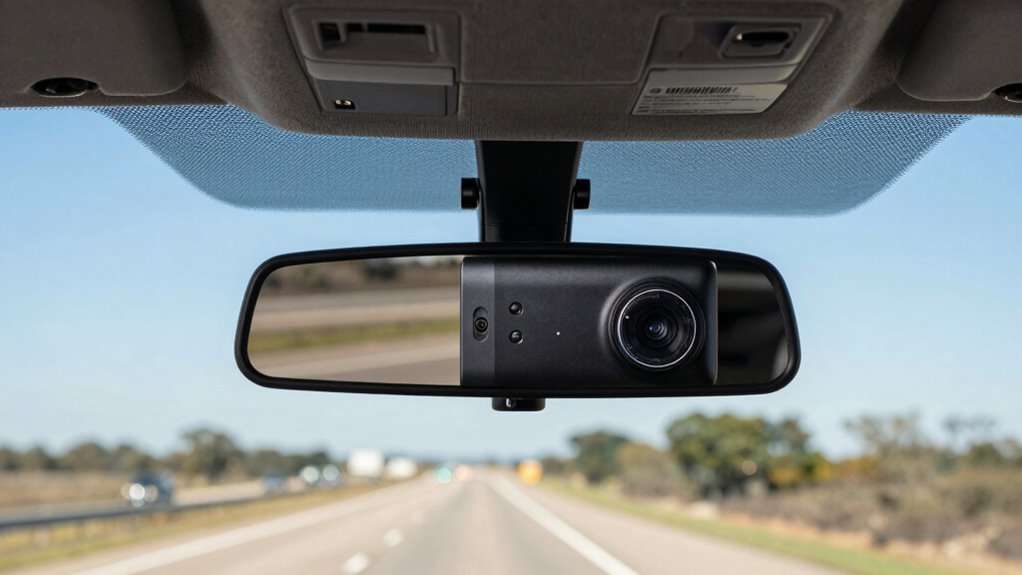

In Texas, you can use dash cams lawfully, but there are mounting rules—avoid placing cameras on the windshield where they block your view, and instead mount near or behind the rearview mirror or in lower corners. Audio recording is legal if at least one party consents, but secretly recording conversations can lead to privacy issues. Proper installation, respecting privacy, and knowing how to handle footage are essential. To discover best practices and stay compliant, keep exploring these important tips.
Key Takeaways
- Mount dash cams behind or near the rearview mirror; avoid obstructing the windshield to comply with Texas law.
- Recording audio is legal with at least one-party consent; inform passengers or mute audio to avoid privacy issues.
- Proper mounting involves securing cameras low on the dashboard or near the rearview mirror, without blocking visibility or airbags.
- Recording on public roads is permitted; secret recordings of private conversations may violate privacy laws.
- Handle footage carefully to ensure admissibility; avoid recording private areas without consent and maintain proper chain of custody.
Legal Status of Dash Cams in Texas
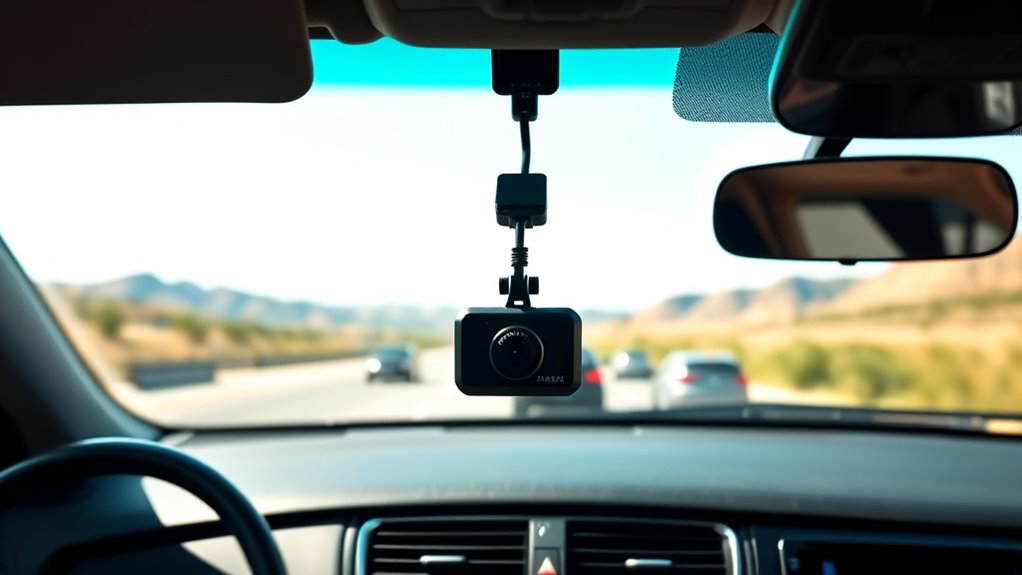
In Texas, the law does not explicitly address dash cams, making their use neither clearly legal nor illegal. You can record your road and vehicle interior in most situations without worry. Federal law generally allows dash cams nationwide, but Texas doesn’t have specific rules, so your use remains permissible under broad legal standards. There’s no requirement to have a dash cam installed in your vehicle. Law enforcement agencies often use dash cams, which helps promote acceptance. You’re free to operate a dash cam in personal or company vehicles as long as you don’t obstruct your view through the windows. Overall, Texas’s neutral stance means you can use dash cams confidently, but always stay aware of privacy considerations and state-specific rules. Additionally, Texas law permits the use of dash cameras as long as they do not interfere with safe driving or violate privacy laws. Being aware of privacy laws and how they relate to recording can help you avoid potential legal issues. It’s also beneficial to understand recording regulations to ensure compliance with both state and federal guidelines. Moreover, understanding vehicle recording laws can provide clarity on what is permissible in different scenarios. Staying informed about related legal standards can further help you navigate any potential disputes or legal questions. For example, knowing how audio recording laws apply in Texas can help ensure your recordings remain within legal boundaries.
Proper Mounting Locations and Restrictions
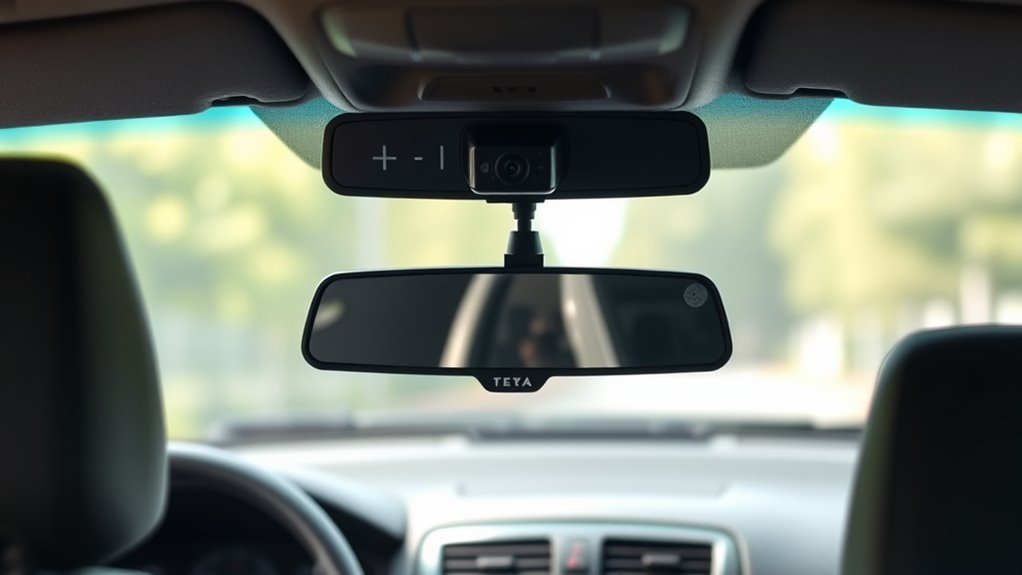
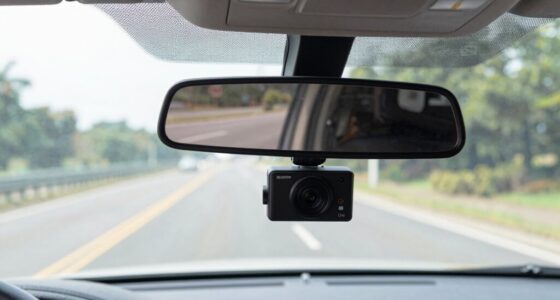
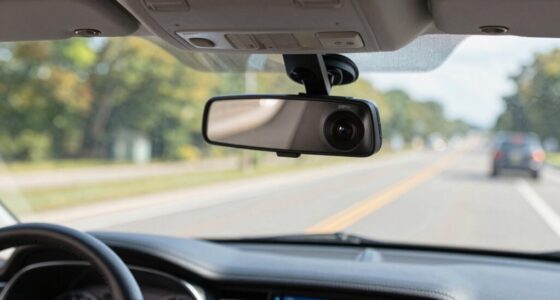
When mounting your dash cam, avoid placing it directly on the windshield where it could block your view. Instead, choose a safe spot on the dashboard or in a lower corner to keep your line of sight clear. This way, you stay within legal limits and guarantee your driving remains unobstructed. Proper placement ensures compliance with state laws. Additionally, consider the viewing angles to ensure the camera captures the necessary footage without interference. Proper camera positioning can also help maximize the quality of your recordings while maintaining legal compliance. To further ensure compliance, understanding dash cam laws in Texas can help you choose the best mounting location.
Avoid Windshield Placement
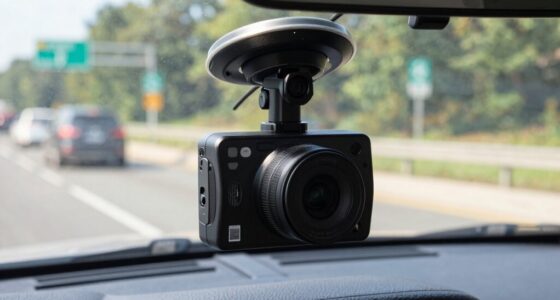
To comply with Texas laws and guarantee safe driving, you should avoid mounting your dash cam on the windshield. Texas Transportation Code 547.613 bans attaching objects that reduce your clear view through the windshield, making dash cams on the glass illegal. Several states, including Alabama and Massachusetts, have similar restrictions. Mounting on the windshield can also lead to a misdemeanor with fines up to $1,000. Improper placement risks obstructing your view through all windows, creating hazards. Instead, attach your dash cam to the bottom left or right corner of the dashboard, behind the rearview mirror, or on the passenger side. These locations keep your view unobstructed and avoid interference with airbags, ensuring both legal compliance and safe driving. Additionally, mounting the device properly can help prevent potential legal issues related to evidence admissibility in case of an accident.
Keep View Unobstructed
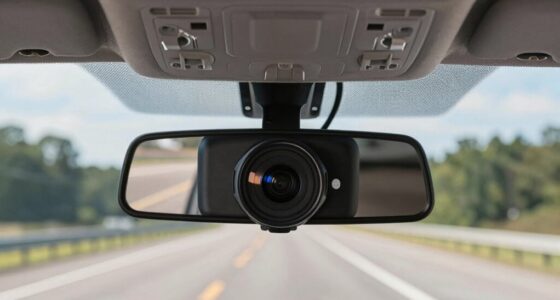
Proper mounting locations are key to keeping your view unobstructed and avoiding legal issues. Texas law prohibits placing objects on the windshield or windows that block or reduce your clear view, making enforcement focus on visibility rather than device type. To stay compliant, mount your dash cam behind or near the rearview mirror, so it doesn’t intrude on the primary sightline. Lower corners of the windshield, like the passenger side, are also acceptable if they don’t obstruct your view. Interior rear-window mounts are permitted if they don’t block rear vision or interfere with window operation. Mounting on A-pillars or using OEM-style mirror mounts can help keep your device out of sightlines. Always ensure your camera placement doesn’t diminish visibility of the roadway, side streets, or traffic signals. Additionally, understanding vehicle equipment regulations can help ensure your dash cam setup remains within legal boundaries, especially since regulations may vary by jurisdiction and are subject to updates. Being aware of dashboard camera placement can further assist you in complying with local laws. Properly securing your device with appropriate mounting accessories can also prevent distraction or accidental dislodging while driving.
Safe Dashboard Positioning
Choosing the right location for your dash cam is essential for safety, legal compliance, and ideal recording. Placing it low on the dashboard, toward the passenger side, helps keep it out of your primary sightlines while capturing a clear forward view. Mounting directly behind or near the rearview mirror minimizes obstruction of your primary vision and avoids interfering with airbag deployment zones. Avoid mounting on or over airbag covers, steering columns, or instrument clusters, as this can pose safety hazards during deployment. Ensure cables are routed safely, avoiding interference with airbags or controls. If you need to mount it on the windshield, keep it behind the rearview mirror and avoid obstructing any part of the glass. Proper positioning reduces distraction and guarantees your dash cam remains both effective and compliant with Texas laws. Using professional-grade mounts can also help ensure secure placement and optimal footage quality. Additionally, verifying the mounting location aligns with state regulations can prevent potential legal issues.
Rules for Audio Recording and Consent
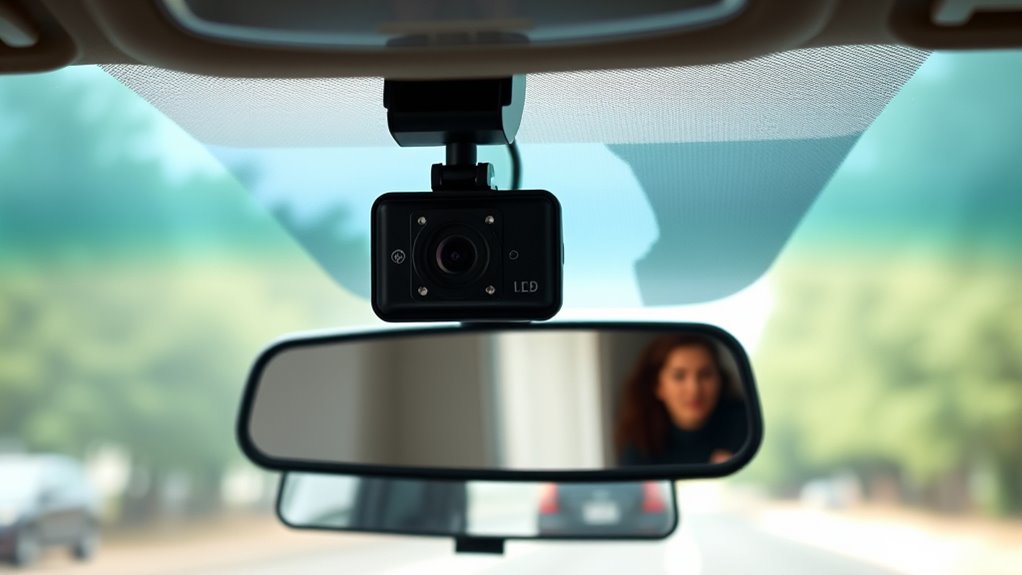
In Texas, you can record audio in your vehicle as long as one person involved consents, which is usually you if you’re a driver or passenger. If you’re recording conversations where you’re a participant, you don’t need to inform others, but recording private talks without consent can lead to legal trouble. Always consider whether the conversation takes place in public or private spaces to avoid crossing legal boundaries. Being aware of affiliate disclosure and privacy policies can help you stay informed about your rights and obligations when recording. Recognizing the importance of emotional regulation and understanding the context of the conversation can also influence the legality and ethics of audio recording. Additionally, understanding halal standards can be relevant when dealing with food-related recordings or disclosures in certain contexts. Moreover, being familiar with balanced decor principles can help you create a space that feels both harmonious and private, aligning with your recording needs. Knowing about essential oils for respiratory health can be useful if you need to create a calming environment during recordings or interviews.
One-Party Consent Rules
Texas law allows you to record conversations on public roadways as long as one person involved consents, which typically means you or someone else in the vehicle can legally record audio without violating privacy laws. This follows the one-party consent rule under Texas Penal Code §16.02. If you’re recording with a dash cam, it’s lawful as long as at least one participant in the conversation agrees, usually the driver. This rule applies to in-vehicle discussions and is different from all-party consent states. Be cautious: secretly recording private conversations can lead to criminal liability. To stay compliant, it’s best to mute audio when leaving your vehicle unattended or when privacy is expected. Remember, recording lawful conversations is permitted, but illegal interception can have serious consequences. Texas is a ‘one-party consent’ state, so only one person’s permission is needed to record audio legally. Additionally, understanding the privacy laws related to audio recording can help you avoid unintended legal issues. It’s also important to note that electric bikes are becoming more popular, which may lead to increased discussions about safety and legal regulations on the road. Moreover, being aware of dash cam laws can help you ensure your device is used appropriately and within legal boundaries, especially considering herbal teas and their relaxing effects, which can help reduce stress during long drives. Knowing the energetic alignment involved in your environment can also assist in maintaining legal and safe recording practices.
Passenger Notification Requirements
To legally record audio with a dash cam in Texas, you must inform passengers that their conversations are being recorded. This notification can be verbal, visible through signage or dashboard indicators, or implied by camera placement. It’s best to verbally disclose before passengers enter the vehicle, ensuring they’re aware of the recording. Muting the dash cam’s audio feature eliminates the need for notification. Failure to inform passengers risks violating Texas Penal Code 16.02 on private conversations, potentially making the footage inadmissible and exposing you to civil privacy claims. Exceptions exist for external sounds or public road noise. To stay compliant, document notifications with logs or witnesses, especially in rideshare or taxi services. When in doubt, mute audio or provide clear, upfront disclosure. Vetted – wave and wind can also be factors to consider when assessing recording conditions and privacy. Additionally, understanding body piercing regulations and customs can help ensure privacy and comfort in various situations. Being aware of privacy laws and how they apply to recording devices is crucial to avoid legal complications and protect individuals’ rights. Moreover, staying informed about audio recording regulations can prevent unintentional legal violations and safeguard everyone’s privacy rights.
Privacy Considerations When Using Dash Cams
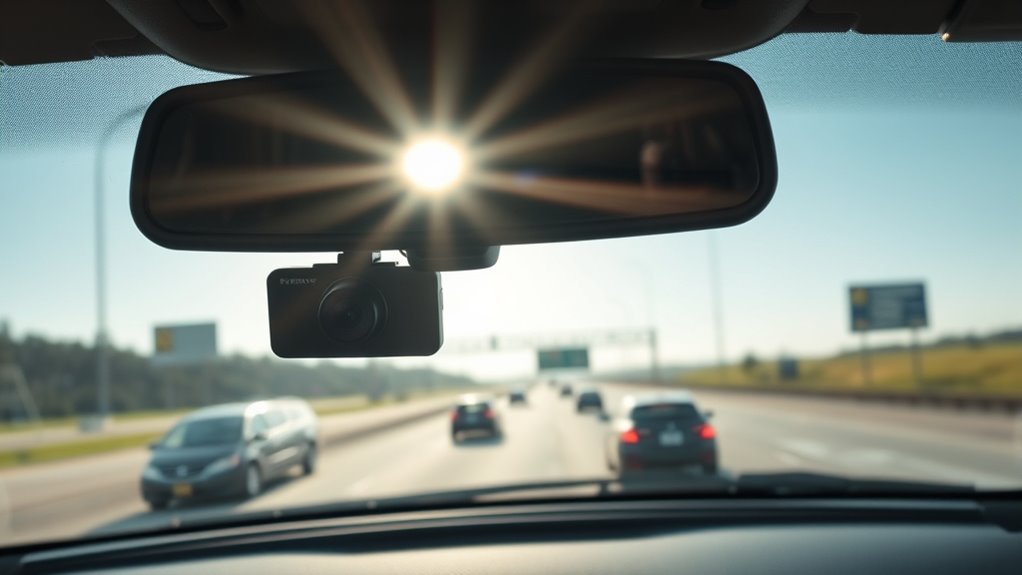
Using dash cams can enhance your safety and provide valuable evidence, but you must be mindful of privacy laws that regulate audio and video recordings. Texas follows a one-party consent rule for audio, meaning recording conversations is lawful if you participate or have consent from one party. Avoid secretly recording private conversations, as this can lead to criminal or civil penalties. When recording in public, filming roadways and intersections is generally legal, but directing cameras at private property risks privacy violations and court issues. Passengers should be aware of audio recording to prevent legal challenges; muting audio is recommended for safety compliance. Always verify footage complies with privacy laws, avoiding illegal interceptions and improper handling, to keep your recordings admissible and protected. Understanding the specific privacy restrictions is essential to ensure your dash cam use remains compliant with Texas laws.
Avoiding Distractions While Installing Dash Cams
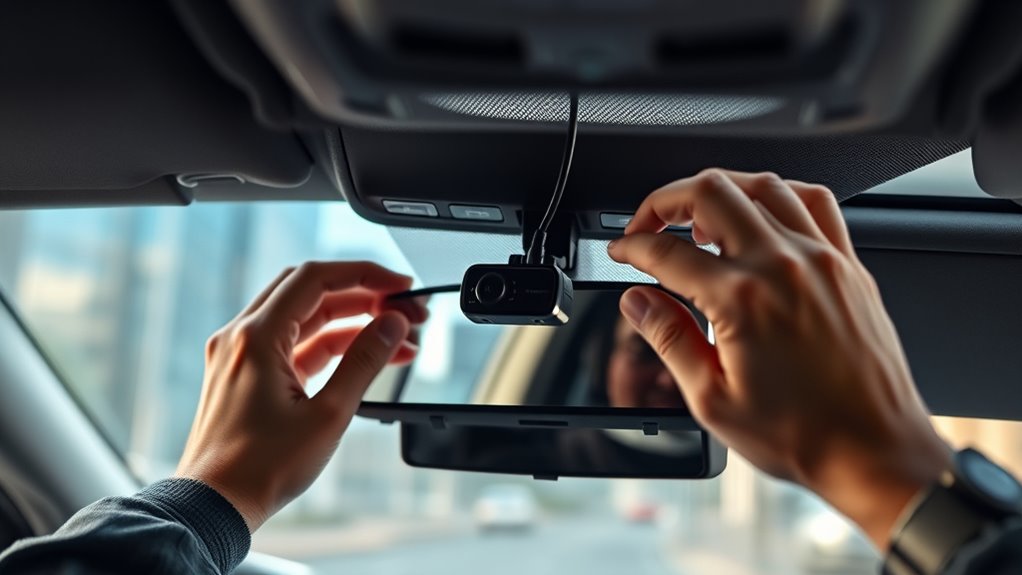
Installing a dash cam requires careful attention to placement and wiring to prevent distractions while driving. Choose a mount behind or near the rearview mirror to keep your view clear and avoid obstructing your sight lines. Test the camera’s angle before finalizing adhesion to guarantee an unobstructed view of the road and lanes. Route wires inside the headliner and down the A-pillar, using clips to keep cables tidy and out of sight. Secure cables with zip ties and avoid running them over airbag seams or near controls, steering, or pedals to prevent snagging or noise. Use adhesive mounts for a permanent hold, and keep tools and parts within reach to speed up installation. Park your vehicle and work in good lighting to minimize distractions. Proper wire management not only enhances safety but also ensures a clean and professional-looking setup. Additionally, ensuring that wiring is securely fastened minimizes the risk of interference with vehicle components, which is a key aspect of vehicle safety.
How Dash Cam Footage Can Support Legal Claims

Dash cam footage can be a powerful tool to support your legal claims by providing clear evidence of what happened during an incident. It helps establish liability, prove negligence, or refute false statements, making your case stronger in court. Additionally, authentic footage can streamline insurance disputes and lead to quicker resolutions. The reliability of video evidence often surpasses witness testimony, especially in complex accident scenarios.
Evidence in Court
In court, dash cam footage can be a powerful tool to support your legal claims, but it must meet specific criteria to be admissible. First, the footage needs to be relevant under Texas Rule of Evidence 401, meaning it must help prove or disprove key facts like accident cause or liability. Authentication is vital; you must show the footage hasn’t been altered through testimony, timestamps, or metadata. Providing a clear foundation, including testimony about the origin and accuracy of the footage, strengthens its credibility. The chain of custody must be documented to prevent tampering. If the footage accurately depicts the event and meets these standards, it can effectively support your case in court. Additionally, courts often require that the footage be properly preserved and stored to maintain its integrity throughout the legal process to ensure its authenticity.
Insurance Dispute Support
When you use dash cam footage to support your insurance claim, it can make a significant difference in resolving disputes quickly and fairly. Your footage shows whether you followed traffic laws, demonstrating your duty of care. It highlights any negligent acts or omissions that breach that duty, establishing liability. The video links the breach to the collision, proving causation, and documents the impact to verify damages. In hit-and-run cases, footage captures license plates and time-stamped details, helping police track the fleeing driver and hold them accountable. Clear, objective evidence reduces delays, minimizes disputes over fault, and often leads to faster settlements. Unlike biased witness statements or incomplete photos, dash cam videos are reliable, detailed, and time-stamped, making your claim stronger and more credible. In Texas, laws do not prohibit the use of dash cam footage, so your recordings are generally admissible and can be a powerful tool in your case.
Ensuring Footage Admissibility in Court

To guarantee your dash cam footage is admissible in court, you must first establish its relevance and authenticity according to Texas rules of evidence. Relevance means the footage must prove or disprove facts like liability or traffic violations, without unrelated content. Authenticity requires proof that the video is what it claims, using witness testimony, metadata, GPS data, or a chain of custody. Preserving the original files or accurate duplicates is essential, along with demonstrating the footage’s source and accuracy. Be mindful of privacy laws, especially regarding audio recordings. Keep in mind that courts rely on clear, reliable footage, and challenges often revolve around quality or tampering concerns.
| Aspect | Requirement |
|---|---|
| Relevance | Shows accident details, violations, or liability |
| Authenticity | Proven by witness testimony, metadata, or chain of custody |
| Preservation | Maintain original or verified copies |
| Privacy & Audio Compliance | Follow Texas laws; avoid private conversations without consent |
Common Mistakes to Avoid With Dash Cam Use
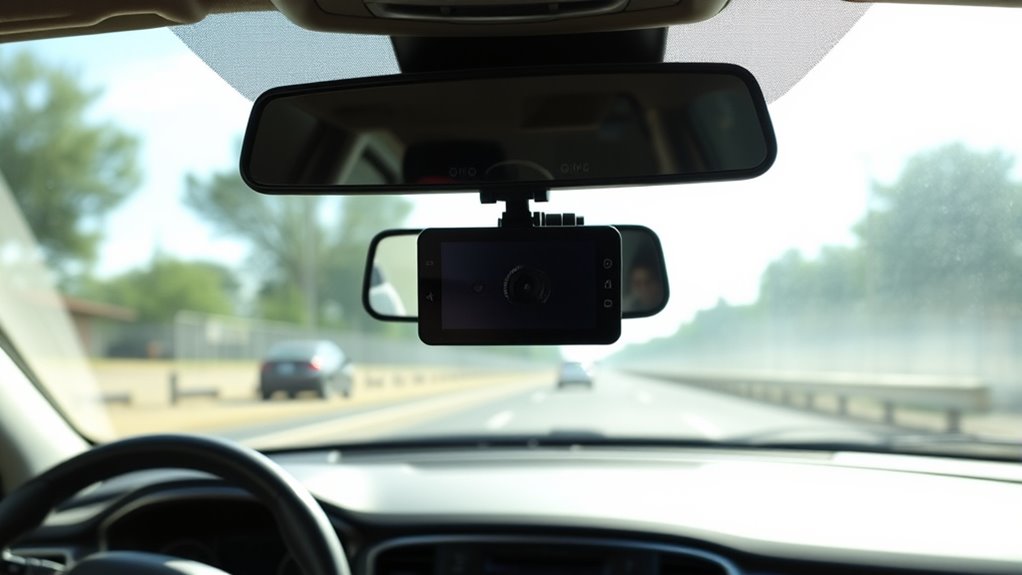
Proper placement of your dash cam is essential to avoid legal and safety issues. Mounting it in your primary sightline can cause traffic citations and weaken your legal defenses if involved in an accident, especially if it obstructs your view under Texas law. Avoid using large suction or adhesive mounts that extend beyond the allowed windshield area, as these can lead to citations. Routing cables across your sightline or airbag zones creates safety hazards and could be seen as contributory fault. Mounting behind the rearview mirror or lower on the windshield reduces obstruction risks. Also, recording audio without informing all participants may violate privacy expectations, and unsecured footage or automatic uploads can expose sensitive data. Ultimately, failing to preserve vital footage by overwriting or neglecting to lock files can jeopardize evidence in legal proceedings.
Tips for Maintaining Your Dash Cam Effectively
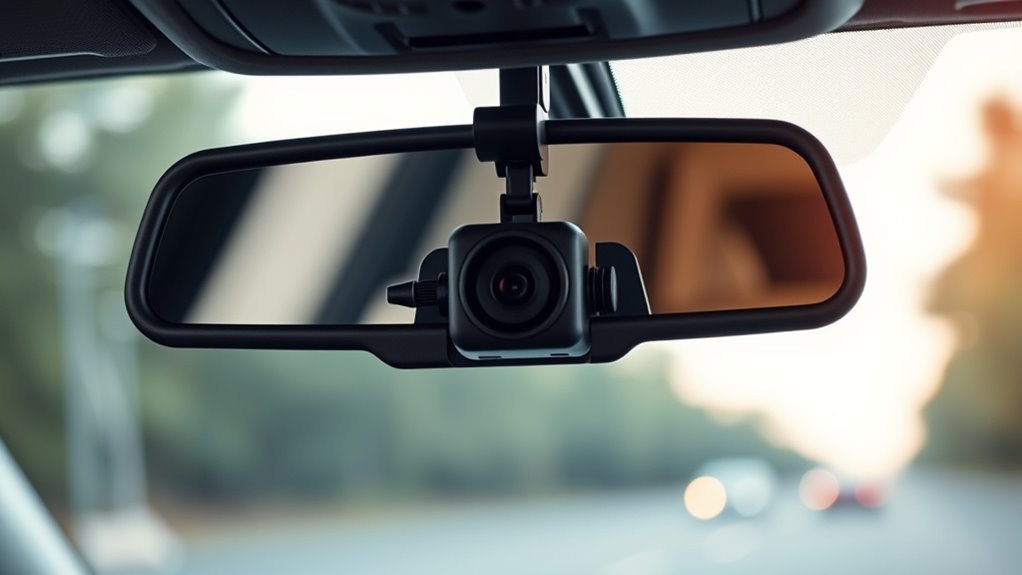
Regular maintenance of your dash cam is crucial to guarantee it records clear, reliable footage. Keep the lens and housing clean by using a microfiber cloth and lens-safe cleaner weekly to prevent dust, fingerprints, and smudges that can impair image quality. Inspect the lens and housing monthly for scratches or haze, replacing parts if necessary. Make certain vents and seams stay dust-free to prevent overheating, especially in hot climates. Use a CPL or UV filter to reduce glare and enhance contrast. Store your dash cam in a cool, dry place with the lens covered if you’re not using it for a while. Regularly check power cables and connectors for wear or damage, and keep firmware and app updates current to guarantee top performance. Proper upkeep extends your dash cam’s lifespan and recording quality. Additionally, ensuring your device is free from dust and debris is essential as it can cause overheating or sensor malfunction, which can lead to poor video quality or device failure over time.
Understanding Your Rights and Responsibilities
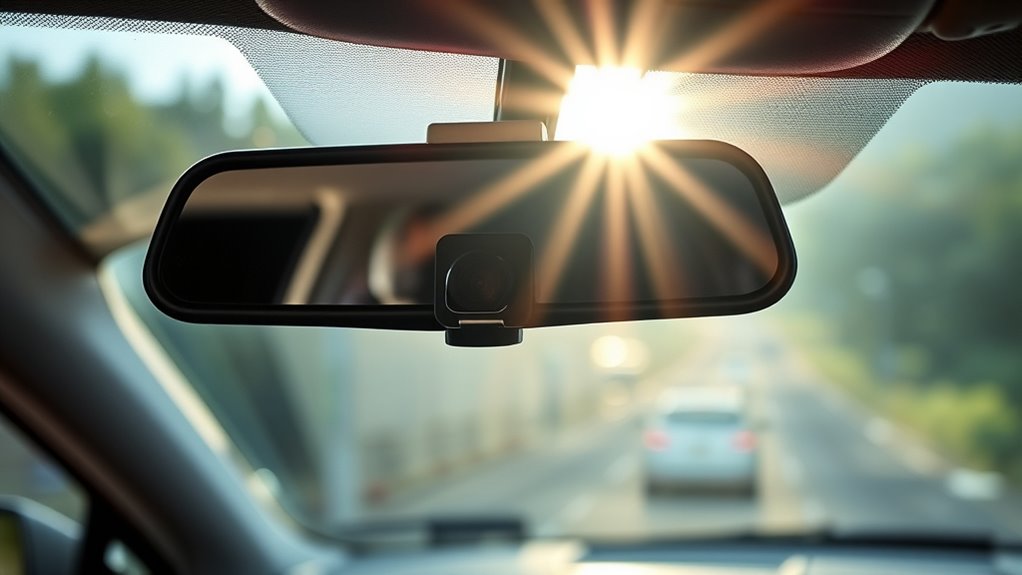
Understanding your rights and responsibilities when using a dash cam in Texas is crucial to prevent legal trouble and guarantee your footage is admissible. Texas law permits dash cams for private and commercial vehicles, but you must avoid obstructing your view or interfering with airbags, as these can lead to fines or safety violations. Be cautious with audio recordings; Texas is a one-party-consent state, so recording conversations requires at least one person’s permission. Recording private conversations without consent can violate wiretapping laws. Remember, exterior footage of public places is generally lawful, but interior recordings of private areas can breach privacy rights. Always handle footage carefully, especially if sharing with law enforcement—do not view footage while driving, and understand that police need warrants or consent to access files.
Frequently Asked Questions
Can I Use a Dash Cam to Record My Own Driving Habits?
Yes, you can use a dash cam to record your own driving habits. It’s legal in Texas as long as you follow mounting requirements and don’t obstruct your view. You can record video and audio of your driving, but remember, audio recordings need to comply with one-party consent laws. Just make certain your dash cam is properly mounted, and you’re good to go for personal review, insurance claims, or legal purposes.
Are There Specific Dash Cam Features Required by Texas Law?
Did you know that Texas has over 14 million registered vehicles, making dash cams increasingly essential? While no specific features are mandated by law, your dash cam must be mounted outside your line of sight to avoid obstruction and safety hazards. It should also record reliably, with clear timestamps and metadata. Avoid features that interfere with airbags or privacy, and guarantee your recordings comply with consent laws to stay legal and admissible.
How Long Can I Legally Store Dash Cam Footage?
You can store dash cam footage as long as your device’s memory allows since Texas law doesn’t specify a mandatory retention period. Loop recording automatically overwrites older files, typically after hours, days, or weeks based on capacity. To keep important footage, back it up immediately, and avoid deleting or tampering with files, especially if they might be used as evidence. Regular backups help preserve critical recordings longer.
Is It Legal to Share Dash Cam Videos Publicly in Texas?
You can share dash cam videos publicly in Texas, but you should proceed cautiously. No specific law bans sharing footage, but privacy laws still apply. Avoid sharing intimate or private conversations without consent, and be mindful of passenger audio recordings. Before posting, consider potential legal risks, especially if the footage contains sensitive information or could violate privacy rights. Consulting an attorney guarantees you don’t unintentionally compromise your legal position.
Do I Need Insurance Approval to Install a Dash Cam?
You don’t need insurance approval to install a dash cam in Texas. Imagine your vehicle as a canvas, and the dash cam as a brush capturing every detail of your journey. Just make certain your installation doesn’t block your windshield or interfere with airbags, as those could cause legal or coverage issues. Check your insurer’s policy on aftermarket devices, and avoid damaging or permanently altering your vehicle without approval.
Conclusion
By mastering dash cam laws in Texas, you’re turning your vehicle into an unstoppable fortress of evidence and privacy. Proper mounting, respectful recording, and vigilant maintenance transform your dash cam into a superhero shield that guards your rights and captures every vital moment. Avoid common pitfalls, stay within legal bounds, and you’ll have a trusted co-pilot that’s always ready to defend you—making your driving experience safer, smarter, and almost invincible.